TGRERA Ruling on Pre-EMI Dues: A Wake-Up Call for Hyderabad Developers
Published: May 2026
Implications for Builders and Landowners
The TGRERA's stance on pre-EMI dues and the invalidation of arbitrary flat cancellations is a critical development for all stakeholders in the real estate ecosystem. For developers, this necessitates a stricter adherence to project timelines and transparent communication with buyers. Delays can no longer be easily circumvented by forfeiting buyer deposits or imposing unforeseen financial burdens. This ruling emphasizes the need for robust financial planning and risk management to ensure project completion within stipulated periods. Landowners who partner with developers should also ensure their agreements include clauses that safeguard buyer interests and align with RERA guidelines, as any non-compliance could impact their land value and future development prospects.
Builders must reassess their financial models to absorb potential pre-EMI burdens if construction timelines are breached due to internal or external factors. Proactive engagement with homebuyers, offering clear explanations for delays, and exploring mutually agreeable solutions will become paramount. This ruling can be seen as a catalyst for improved corporate governance and customer-centric practices within the industry.
Strengthen financial planning to account for potential pre-EMI payouts.
Enhance transparency in project timelines and communication with buyers.
Review and update builder-buyer agreements to ensure RERA compliance.
Collaborate with landowners to ensure shared understanding of regulatory obligations.
Construction Trends, Approvals, and Supply Pipeline
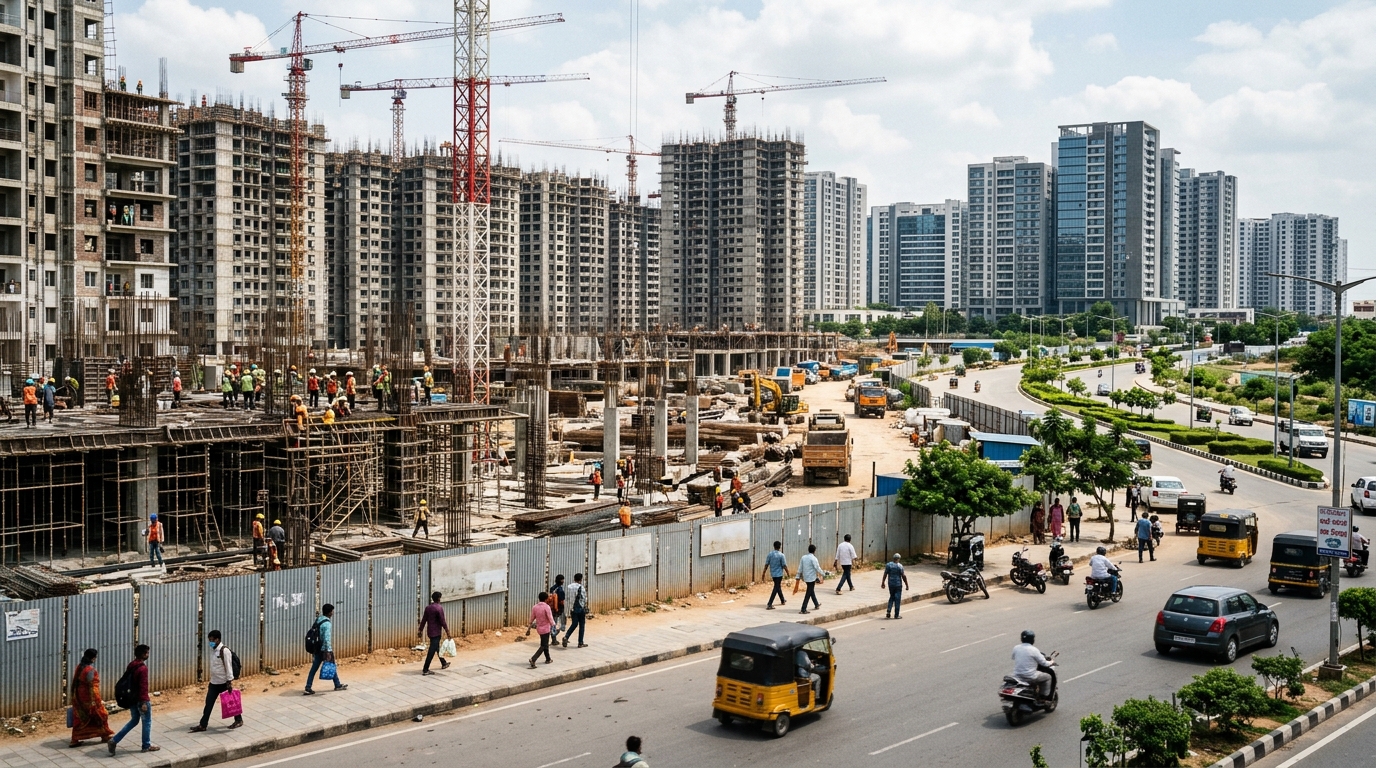
The Hyderabad real estate market, particularly areas like Gachibowli, Kokapet, and the Financial District, has witnessed a surge in demand for residential and commercial spaces. This demand often outpaces the actual construction progress, leading to potential delays. The TGRERA ruling acts as a regulatory check on this supply-demand imbalance, pushing developers to streamline their approval processes and ensure a consistent supply pipeline. Builders need to be more diligent in obtaining all necessary permits before launching projects and maintain a realistic construction schedule. Any bottleneck in the supply chain or labor availability must be anticipated and mitigated to avoid triggering the conditions of this ruling.
Developers must focus on building efficient construction management systems, leveraging technology for project tracking, and fostering strong relationships with suppliers and contractors. The regulatory environment is becoming increasingly stringent, and a proactive approach to compliance will be key to sustained success.
Prioritize obtaining all necessary construction and occupancy permits well in advance.
Develop contingency plans for supply chain disruptions and labor shortages.
Implement robust project management software for real-time progress monitoring.
Explore prefabrication and modular construction techniques to accelerate timelines.
Location-Specific Opportunities and Challenges in Hyderabad
Hyderabad, with its burgeoning IT sector and robust economic growth, continues to be a prime market. Areas like Gachibowli, Kokapet, and the Financial District are experiencing unprecedented demand, driven by both end-users and investors. This high demand creates a fertile ground for developers, but also amplifies the risks associated with delays. The TGRERA ruling directly addresses the potential for developers to exploit this demand by delaying project completion and burdening buyers. Builders operating in these high-demand zones must be acutely aware of the regulatory landscape and the heightened expectations of buyers who are investing significant capital.
The challenge lies in balancing aggressive sales targets with realistic project execution. Developers need to ensure that their marketing promises align with their actual construction capabilities. A failure to do so in these competitive locations could lead to significant financial penalties and reputational damage.
Conduct thorough market research to accurately forecast demand and supply dynamics.
Develop project timelines that are realistic and achievable, factoring in potential regulatory hurdles.
Focus on building quality and timely delivery as key differentiators in competitive micro-markets.
Leverage the growth potential of Gachibowli, Kokapet, and the Financial District while adhering strictly to RERA guidelines.
Navigating Risks and Execution Challenges
The TGRERA's directive highlights several execution risks inherent in real estate development, particularly concerning project financing and timeline management. Developers must ensure adequate capitalization and secure all necessary funding before project commencement. Unforeseen cost escalations, regulatory changes, and market volatility can all impact project timelines and lead to pre-EMI obligations. The risk of flat cancellation being deemed illegal also means developers cannot easily exit projects if they face financial difficulties; they must find alternative solutions that protect buyer investments.
Effective risk mitigation strategies, including obtaining comprehensive insurance, diversifying funding sources, and maintaining transparent communication channels with buyers and regulatory authorities, are crucial. Proactive engagement with legal and financial experts can help navigate these complexities and ensure smooth project execution.
Secure adequate project financing upfront and maintain healthy cash reserves.
Develop robust contingency plans for unexpected cost overruns and delays.
Foster strong relationships with all project stakeholders, including buyers, contractors, and suppliers.
Stay updated on evolving real estate regulations and compliance requirements.
Source: NewsMeter