Telangana's Land Monetisation Drive: A Catalyst for Hyderabad's Real Estate Renaissance
Published: November 2026
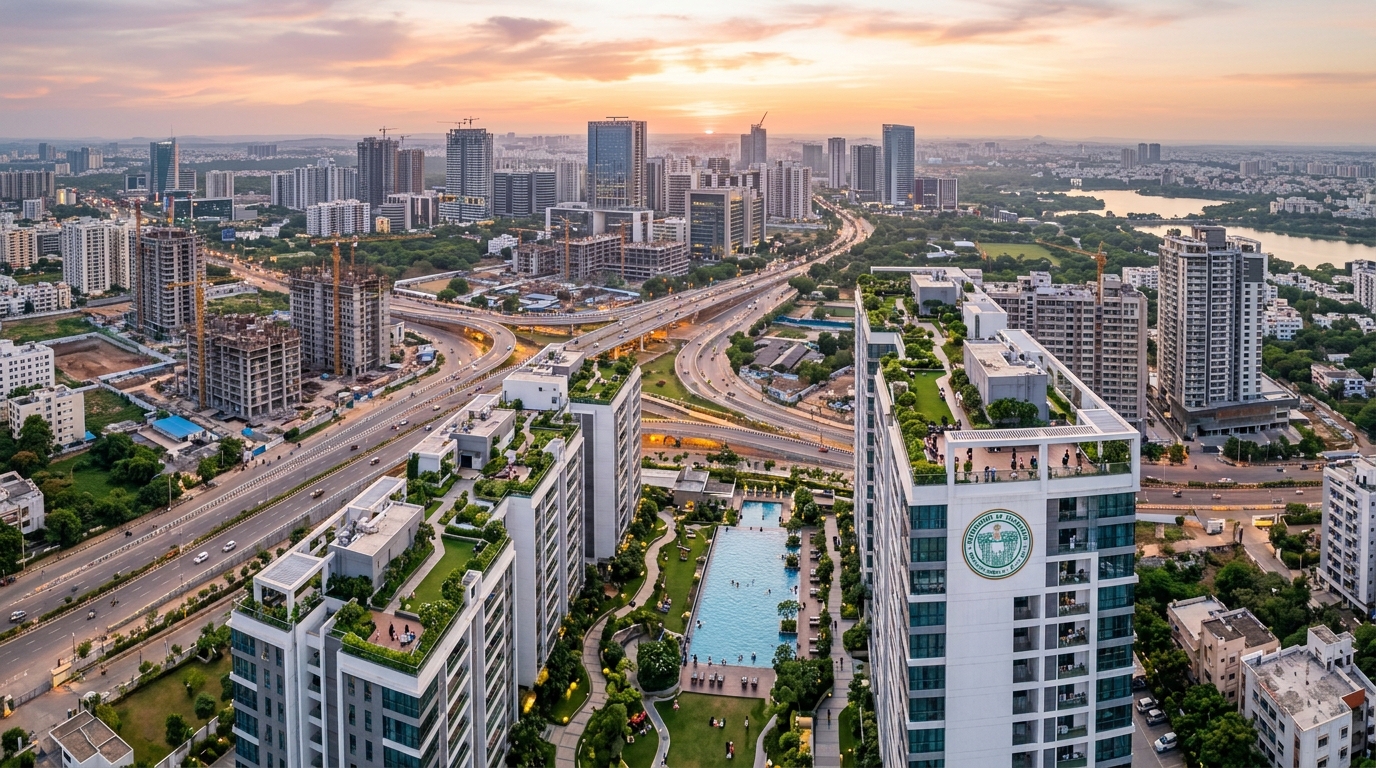
Unlocking Value: The Impact of Land Monetisation on Hyderabad's Real Estate
Telangana's government has embarked on an aggressive land monetisation strategy, identifying and releasing prime government-held lands for development. This proactive approach is not merely about revenue generation; it's a well-orchestrated plan to reshape Hyderabad's urban landscape and inject vitality into its real estate sector. By bringing underutilized government land into the market, the state is effectively increasing the available land bank for commercial and residential development, directly addressing potential supply constraints in burgeoning areas.
The implications for market dynamics are profound. Increased supply, particularly in strategic locations, can lead to a more balanced market, potentially tempering speculative price surges while fostering sustainable demand. For developers, access to these parcels offers opportunities to undertake large-scale, integrated projects that cater to the evolving needs of the city's growing population and its robust economic base. This influx of developable land is poised to stimulate new project launches across various segments, from premium residential to Grade A commercial spaces.
- Increased land supply for development.
- Stimulated new project launches.
- Potential for market stabilization.
Institutional Investor Appetite: Capitalizing on Strategic Land Releases
This land monetisation drive is a clear signal to institutional investors, including private equity funds, REITs, and sovereign wealth funds, that Hyderabad is a key growth market. The government's initiative in parceling and offering these lands, often with clear development guidelines, significantly de-risks investment for large players. The focus on prime locations means these parcels are likely to be situated in or near established business districts and rapidly developing residential corridors, aligning with institutional mandates seeking stable, long-term returns.
The direct release of government land streamlines the acquisition process, reducing the lengthy due diligence and approval cycles often associated with private land deals. This efficiency, combined with the inherent value of well-located land, makes these opportunities highly attractive for capital infusion. We anticipate a significant inflow of institutional capital towards projects developed on these monetised parcels, particularly in commercial real estate and large-format residential townships, driven by the expectation of consistent rental yields and capital appreciation in Hyderabad's thriving economy.
- De-risking of investments through clear land parcels.
- Streamlined acquisition and development processes.
- Attraction of significant institutional capital for commercial and residential projects.
Micro-Market Dynamics: Hyderabad's Growth Corridors in Focus
The success of Telangana's land monetisation strategy is intrinsically linked to the growth trajectory of Hyderabad's key micro-markets. Areas like Gachibowli, the Financial District, and Kokapet are prime beneficiaries. These regions are already established as IT and business hubs, boasting high demand for both commercial office spaces and residential accommodations. The availability of government land in these sought-after zones will directly fuel further expansion and densification.
For instance, the Financial District and Gachibowli, known for their concentration of IT and BFSI companies, will likely see a surge in demand for Grade A office spaces on these new land parcels. Simultaneously, the adjacent residential areas, including Kokapet, which has witnessed rapid transformation, will experience increased demand for high-quality housing. This strategic land release is poised to reinforce the dominance of these micro-markets, attracting further investment and talent, and solidifying Hyderabad's position as a preferred destination for businesses and residents alike.
- Enhanced development in IT and business hubs (Gachibowli, Financial District).
- Increased residential demand in emerging and established corridors (Kokapet).
- Reinforcement of micro-market dominance and attractiveness.
Policy & Regulatory Underpinnings: A Foundation for Growth
The Telangana government's land monetisation efforts are underpinned by a forward-thinking policy framework aimed at facilitating ease of doing business and sustainable urban development. By strategically releasing land, the government is not only looking to boost state revenue but also to guide the city's expansion in a planned and organized manner. This proactive policy stance creates a predictable environment for developers and investors, reducing uncertainty and encouraging long-term commitments.
The clear demarcation of land use, transparent bidding processes, and potential for streamlined approvals associated with these government land parcels signify a commitment to robust governance. Such policies are crucial for attracting and retaining significant capital investments, as institutional investors prioritize markets with stable regulatory environments and clear development pathways. This approach signals a mature real estate market where policy plays a pivotal role in shaping growth and ensuring long-term viability.
- Facilitation of ease of doing business.
- Planned and organized urban expansion.
- Creation of a predictable and stable regulatory environment for investors.
Source: urbanacres.in