Hyderabad's Plot Width Reversal: A Game Changer for Redevelopment and Infill Projects
Published: November 2026
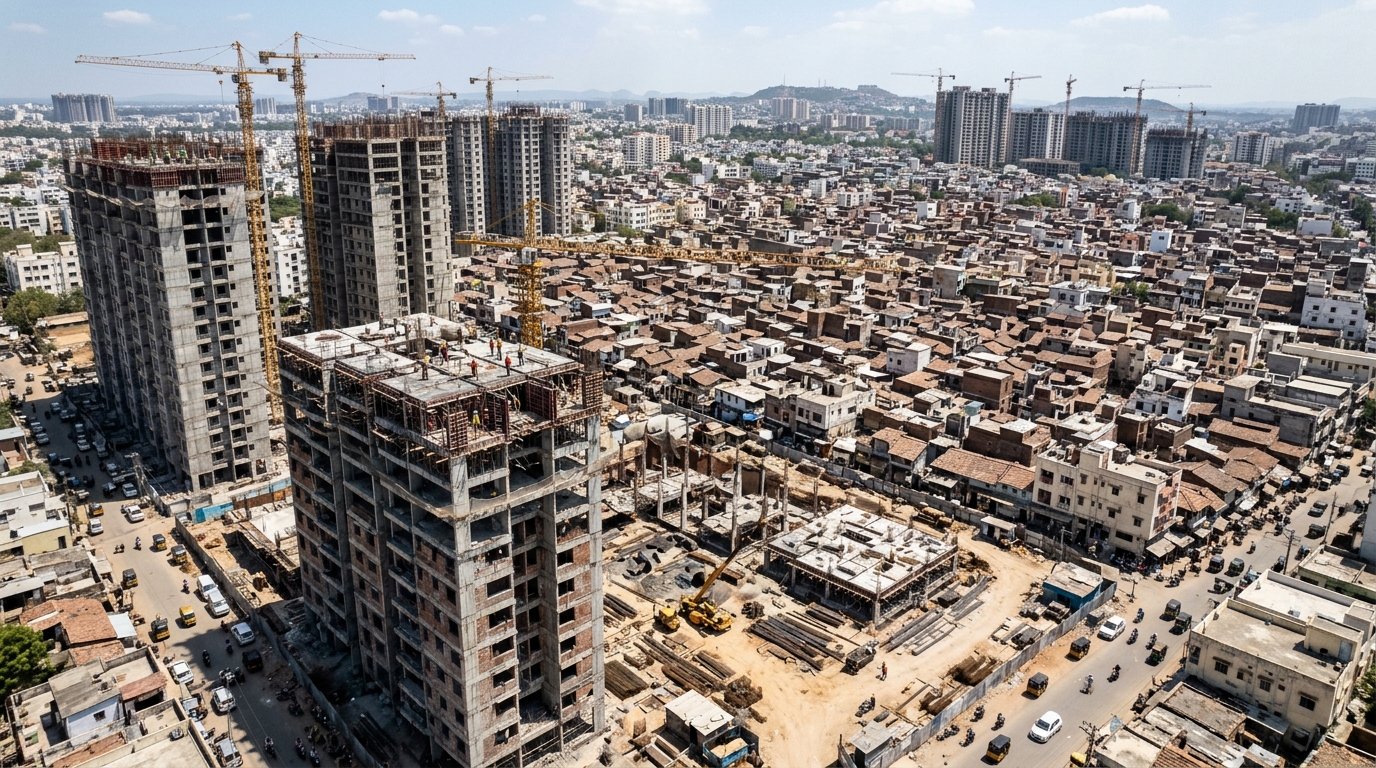
Unlocking Redevelopment Potential: What Builders and Landowners Need to Know
The reversal of the stringent 20-foot plot width rule for reconstructing old buildings in Hyderabad is a direct response to industry feedback and, importantly, a boon for both developers and individual plot owners. Previously, many existing, smaller plots in older, well-developed neighborhoods became unviable for new construction under the old norms. This change now makes it feasible to redevelop these parcels, creating much-needed housing and commercial spaces in prime urban locations. For landowners, it means their smaller, older properties can finally be leveraged for modern construction, increasing their asset value and potential returns. Developers gain access to a larger inventory of buildable land in established areas where new land parcels are scarce, allowing for more targeted and efficient infill development.
This easing of restrictions directly addresses a long-standing bottleneck in urban renewal. It facilitates the replacement of dilapidated structures with contemporary buildings, enhancing the urban fabric and potentially increasing property values in these areas. The implications are profound for the housing market, enabling the creation of more diverse housing typologies and catering to a wider range of buyer preferences within already desirable neighborhoods.
- Increased feasibility of redeveloping smaller, older plots.
- Enhanced asset value for landowners.
- Expanded land inventory for developers in established zones.
- Facilitation of infill development and urban renewal.
- Potential for diverse housing and commercial space creation.
Construction Trends, Approvals, and the Supply Pipeline
This policy adjustment is likely to stimulate a surge in redevelopment projects, particularly in older, well-connected parts of Hyderabad. We can anticipate a shift towards boutique apartment complexes, independent villas on reconfigured plots, and potentially small-scale commercial developments. The approval process, while still requiring adherence to building codes and zoning regulations, should see a smoother pathway for projects that were previously hindered by the plot width constraint. This streamlining could expedite project timelines and reduce pre-construction delays. Consequently, the supply pipeline for residential and commercial units in these redeveloped areas will likely expand, addressing the persistent demand for properties in established urban centers. Developers focusing on efficient construction methodologies and smart designs will be best positioned to capitalize on this revitalized market segment.
The move also signals a more pragmatic approach from the authorities, recognizing the realities of urban landholding and the need for practical solutions to housing shortages. This could foster a more positive environment for construction activity, encouraging investment in projects that contribute to urban densification and improved living conditions. However, developers must remain vigilant about local municipal guidelines and any specific conditions attached to these relaxed norms to ensure compliance and avoid future complications.
- Increased focus on boutique residential and small commercial redevelopments.
- Potentially faster approval timelines for eligible projects.
- Expansion of the supply pipeline in established urban areas.
- Emphasis on efficient construction and smart design.
- Encouragement of urban densification.
Location-Specific Opportunities in Hyderabad
While this policy has broad implications, certain micro-markets within Hyderabad stand to benefit more significantly. Established areas with a high density of older constructions and limited new land availability are prime candidates. Think of older neighborhoods within the central city zones, areas undergoing gradual gentrification, and even pockets within otherwise rapidly developing corridors that still retain older housing stock. Specificially, while Gachibowli, Kokapet, and the Financial District are known for their large-scale, modern developments, the impact here will be more about enabling the redevelopment of older, surrounding residential enclaves or smaller commercial plots that might have existed before the IT boom. Developers looking for value-addition opportunities should scout these less obvious, but potentially high-return, redevelopments.
The key is to identify areas where infrastructure is already robust, connectivity is excellent, and where there's inherent demand for housing or commercial spaces but limited supply due to previous regulatory constraints. The ability to build on smaller plots means these projects can cater to a more diverse demographic, including end-users looking for smaller, more affordable units in prime locations, or businesses seeking niche commercial spaces.
- Established central city neighborhoods with older housing stock.
- Areas with existing robust infrastructure and connectivity.
- Older residential pockets surrounding IT and Financial hubs.
- Identifying high-demand, low-supply areas due to previous constraints.
- Catering to diverse buyer demographics with smaller, well-located units.
Navigating Risks and Execution Challenges
Despite the positive outlook, developers must be aware of potential risks and execution challenges. Firstly, the 'old building reconstruction' clause might still have nuances in its interpretation by municipal authorities. Thorough due diligence on each plot's existing status and the exact legal framework for reconstruction is paramount. Secondly, dealing with multiple landowners for consolidated development on adjacent smaller plots can be complex and time-consuming. Negotiation, consensus building, and clear legal agreements are crucial. Thirdly, the supply pipeline expansion, while addressing demand, could lead to increased competition. Developers need a strong value proposition, focusing on quality, timely delivery, and innovative designs to stand out.
Execution risks also include potential delays due to unforeseen structural issues in older buildings, the availability of skilled labor for demolition and reconstruction, and managing neighborhood disruptions during the construction phase. Furthermore, market fluctuations and financing challenges remain inherent risks in any real estate development. A robust project management framework, strong stakeholder engagement, and a clear understanding of the local market dynamics will be vital for successful execution and mitigating these challenges.
- Thorough due diligence on plot status and legal interpretations.
- Complexities in consolidating multiple adjacent plots from different owners.
- Increased competition due to expanding supply.
- Potential delays from unforeseen structural issues in old buildings.
- Managing neighborhood impact and stakeholder relations.
Source: Prop News Time