Hyderabad's Mega Cricket Stadium: A Game Changer for Real Estate Developers
Published: September 2026
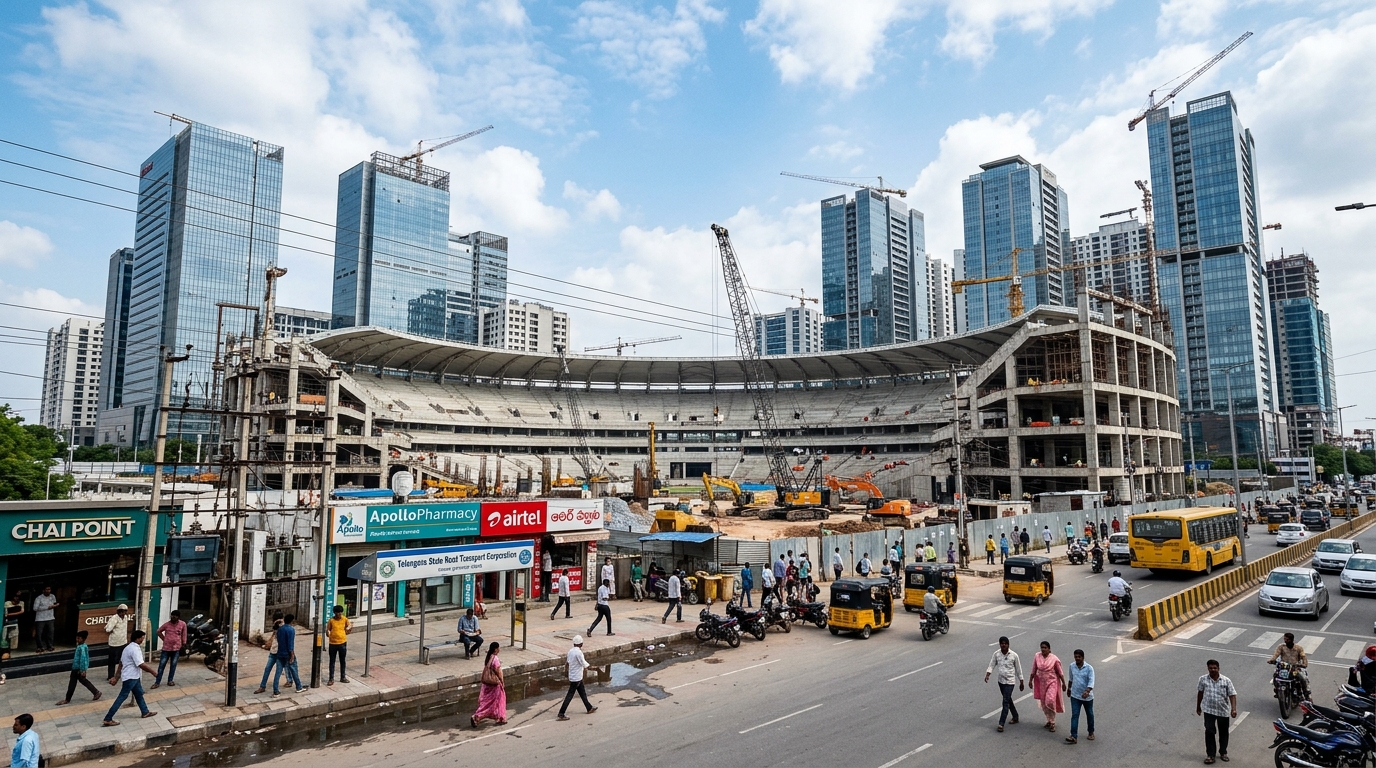
Unlocking Opportunities for Builders and Landowners
The sheer scale of a 1.32 lakh+ capacity stadium signifies a massive influx of visitors and a heightened focus on infrastructure development in its vicinity. For landowners and developers, this translates into a potential surge in demand for a diverse range of real estate products. We're looking at opportunities for hospitality (hotels, resorts), commercial spaces (retail, entertainment zones, co-working spaces), and of course, residential developments to cater to the increased population and transient workforce. Early movers who can secure land parcels in proximity or with good connectivity to the stadium precinct stand to benefit the most. The key will be to identify underserved segments within the real estate market that will be directly or indirectly impacted by this landmark project.
Beyond direct stadium-related demand, the enhanced city profile and improved infrastructure spurred by such a project often lead to a broader appreciation of property values across Hyderabad. Developers specializing in integrated townships or strategically located plotted developments could see a significant uplift in interest and sales, even in areas further afield but benefiting from improved city-wide connectivity.
- Identify and acquire land parcels with excellent connectivity to the proposed stadium site.
- Explore development opportunities in hospitality, retail, entertainment, and residential sectors.
- Target integrated townships and mixed-use developments to capitalize on holistic demand.
- Analyze market trends for premium and affordable housing based on projected population growth.
Navigating Construction Trends, Approvals, and Supply Pipeline
The construction of a stadium of this magnitude will undoubtedly strain the existing construction supply chain. Developers must proactively plan for the procurement of specialized construction materials, skilled labor, and advanced machinery. Anticipating potential bottlenecks in the supply pipeline for concrete, steel, and specialized architectural components will be crucial. Furthermore, the sheer scale of the stadium project will likely involve extensive coordination with multiple government agencies for environmental clearances, building permits, and infrastructure development approvals. Developers need to factor in longer approval cycles and engage with authorities early on to streamline their own project timelines.
This mega-project also presents an opportunity to adopt and showcase cutting-edge construction technologies and sustainable building practices. The demand for faster project completion and enhanced durability will push the adoption of pre-fabricated elements, advanced structural designs, and smart construction management systems. Builders who can demonstrate efficiency and innovation in their construction methodologies will gain a competitive edge.
- Secure long-term contracts for essential construction materials to mitigate price volatility.
- Invest in training and recruitment of specialized labor force to meet project demands.
- Explore partnerships with pre-fabrication and modular construction companies.
- Develop robust relationships with regulatory bodies to expedite approval processes.
- Integrate sustainable construction practices and smart technologies into development plans.
Location-Specific Opportunities: Gachibowli, Kokapet, and the Financial District
The proximity of the proposed stadium to established and rapidly developing areas like Gachibowli, Kokapet, and the Financial District is no coincidence. These hubs are already characterized by robust infrastructure, a skilled workforce, and a vibrant commercial ecosystem. For developers, this presents a highly opportune environment. Kokapet, with its ongoing development of large land parcels, could become a prime location for integrated residential and commercial projects catering to the stadium's impact. The Financial District and Gachibowli, already magnets for IT and business, will likely see an even greater demand for premium office spaces, serviced apartments, and luxury retail, driven by increased corporate tourism and events.
The improved connectivity and enhanced civic amenities that will accompany the stadium development will further boost the attractiveness of these micro-markets. Developers should focus on projects that leverage the existing infrastructure while adding value through unique amenities and high-quality construction, targeting both end-users and investors seeking capital appreciation in these high-growth corridors.
- Prioritize land acquisition and project development in and around Gachibowli, Kokapet, and the Financial District.
- Develop luxury residential and premium commercial spaces with amenities catering to a high-net-worth demographic.
- Explore opportunities for serviced apartments and boutique hotels to cater to transient visitors.
- Integrate retail and entertainment options to create self-sufficient developments within these micro-markets.
Risks and Execution Challenges for Developers
While the potential rewards are immense, the execution of projects tied to a mega-infrastructure development like a new cricket stadium is fraught with challenges. Foremost among these are land acquisition complexities, potential land title issues, and the ever-present risk of cost overruns due to market fluctuations in material prices and labor. The timeline for the stadium's completion itself could be subject to delays, impacting the phased development of surrounding real estate projects. Regulatory hurdles and potential environmental impact assessments can also add significant time and cost to project execution.
Another critical risk is the potential for a supply-demand mismatch if the real estate development outpaces the actual increase in population or sustained visitor numbers. Over-saturation of certain real estate segments, particularly retail and hospitality, could lead to reduced occupancy rates and profitability. Developers must conduct thorough feasibility studies, understand the long-term economic impact, and adopt flexible development strategies to mitigate these risks and ensure project viability.
- Conduct thorough due diligence on land titles and environmental compliance.
- Develop robust financial models with contingency plans for cost escalations.
- Maintain flexible project timelines and phased development strategies.
- Continuously monitor market absorption rates to avoid oversupply.
- Diversify real estate offerings to cater to a broader spectrum of demand.
Source: Trade Brains