Hyderabad's Land Boom: Navigating Opportunities and Challenges in Gachibowli, Kokapet, and the Financial District
Published: October 2026
Unprecedented Land Value Appreciation: What it Means for Stakeholders
Recent news highlights a dramatic increase in land prices, particularly in Hyderabad's buzzing IT and financial hubs like Gachibowli, Kokapet, and the Financial District. For developers, this signifies a higher cost of acquisition, demanding a re-evaluation of project viability and profit margins. However, it also validates the immense potential of these micro-markets, driven by sustained commercial and residential demand. Landowners stand to gain significantly, but strategic partnerships with experienced developers will be crucial to unlock maximum value and navigate the complexities of large-scale developments.
This appreciation is a clear indicator of a strong supply-demand imbalance. As more businesses establish a presence and attract talent to these areas, the demand for both residential and commercial spaces continues to outstrip available land. Developers who can secure prime parcels now are positioned for substantial returns, provided they can execute effectively and cater to the evolving needs of the end-user.
- For Developers: Assess higher acquisition costs against projected sales revenue. Focus on premium segments and niche offerings to justify increased project costs.
- For Landowners: Consider joint ventures or outright sale to developers with a proven track record in high-value markets. Understand local development regulations thoroughly.
- Market Indicator: The land price surge is a direct reflection of robust economic activity and a lagging supply of developable land.
Construction Trends, Approvals, and the Supply Pipeline
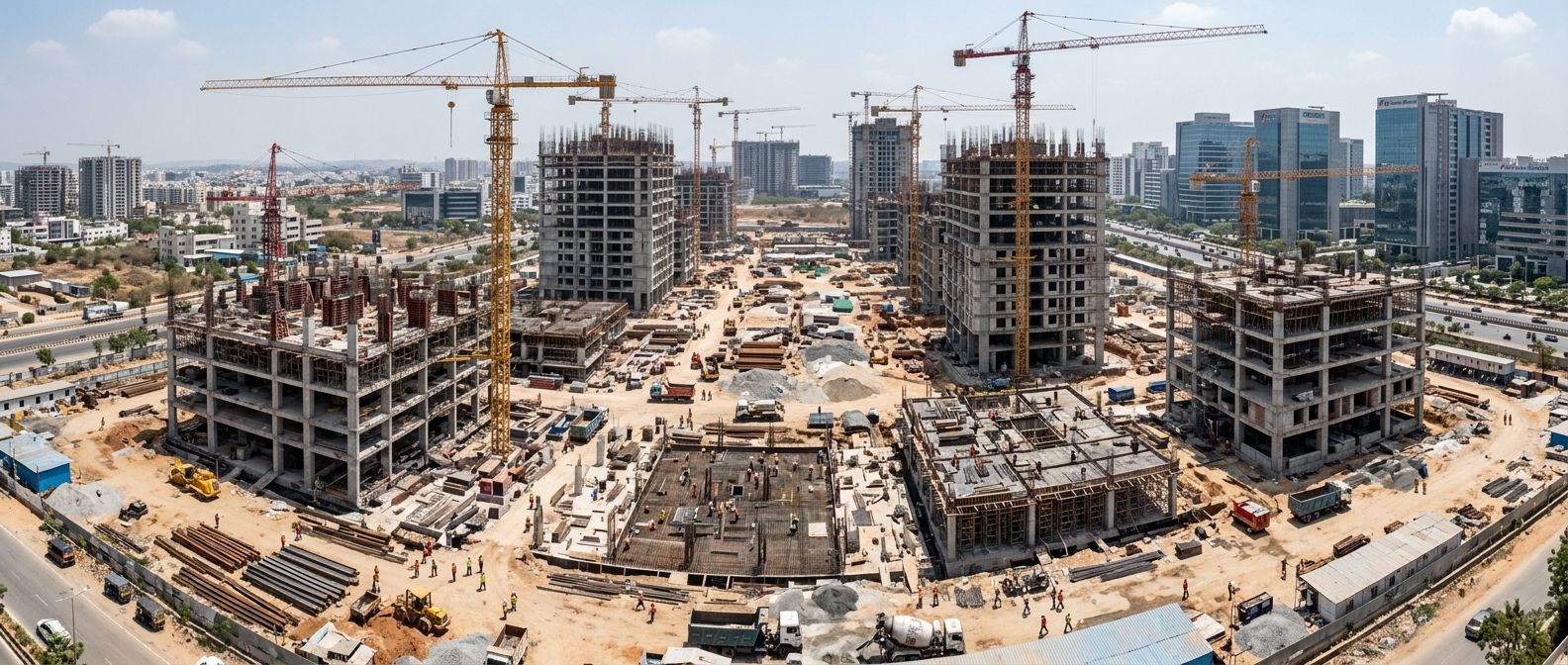
The escalating land costs necessitate a streamlined and efficient construction process. Developers must prioritize innovative building technologies and materials that reduce construction time and costs without compromising quality. The approval process in Hyderabad, while improving, can still present a significant hurdle. Proactive engagement with regulatory bodies and a thorough understanding of local zoning laws are paramount to avoid project delays.
The current supply pipeline in these sought-after areas is becoming increasingly constrained. New project launches need to be strategic, focusing on addressing specific market gaps. This could involve mixed-use developments that integrate residential, retail, and office spaces, or niche offerings like co-living or co-working spaces that cater to the modern workforce. The challenge lies in translating the land value appreciation into tangible projects that are both commercially successful and meet the aspirational demands of the target demographic.
- Construction Efficiency: Explore pre-fabricated components, modular construction, and smart building technologies.
- Approval Management: Establish dedicated teams for liaison with municipal authorities and ensure all documentation is meticulously prepared.
- Supply Pipeline Strategy: Focus on high-density, mixed-use developments or specialized residential products like premium apartments or villas.
Location-Specific Opportunities in Hyderabad's Growth Corridor
Gachibowli, Kokapet, and the Financial District are no longer just commercial hubs; they are emerging as integrated urban living destinations. Gachibowli benefits from its established IT infrastructure and a growing residential population. Kokapet, with its vast land parcels, offers significant potential for large-scale integrated townships and premium developments. The Financial District, while primarily commercial, is seeing spillover demand for high-end residential and hospitality offerings.
Developers should consider the specific micro-market dynamics within these areas. For instance, proximity to educational institutions, healthcare facilities, and retail centers will command premium pricing. The 'walk-to-work' concept is increasingly relevant, making integrated developments highly attractive. The scarcity of land in these core areas further amplifies the value of any new development that comes to fruition.
- Gachibowli: Leverage existing infrastructure for residential projects catering to IT professionals.
- Kokapet: Explore large-scale integrated township developments or premium villa communities.
- Financial District: Focus on luxury apartments, serviced residences, and boutique commercial spaces catering to high-net-worth individuals and multinational corporations.
Risks and Execution Challenges
While the potential is immense, developers face significant risks. The increased land acquisition cost directly impacts project affordability for end-users, requiring a careful balancing act. Market volatility, changes in economic conditions, and shifts in consumer preferences can affect sales velocity. Execution challenges include attracting and retaining skilled labor, managing construction timelines, and ensuring timely delivery of quality projects.
Furthermore, developers must contend with the possibility of regulatory changes or policy shifts that could impact development plans. Conducting thorough due diligence on land titles and obtaining all necessary environmental and construction permits are non-negotiable. Building strong relationships with local authorities and engaging with the community are also crucial for smooth project execution and long-term success in these competitive markets.
- Financial Risk: High acquisition costs require robust financial planning and access to adequate funding.
- Execution Risk: Manage construction timelines, labor availability, and material procurement efficiently.
- Market Risk: Conduct thorough market research to understand demand-supply dynamics and potential price sensitivity.
- Regulatory Risk: Stay abreast of all local building codes and zoning regulations, and maintain open communication with authorities.
Source: regnews.in