Hyderabad's Construction Boom: Navigating the ICRA Report's Implications for Developers
Published: October 2026
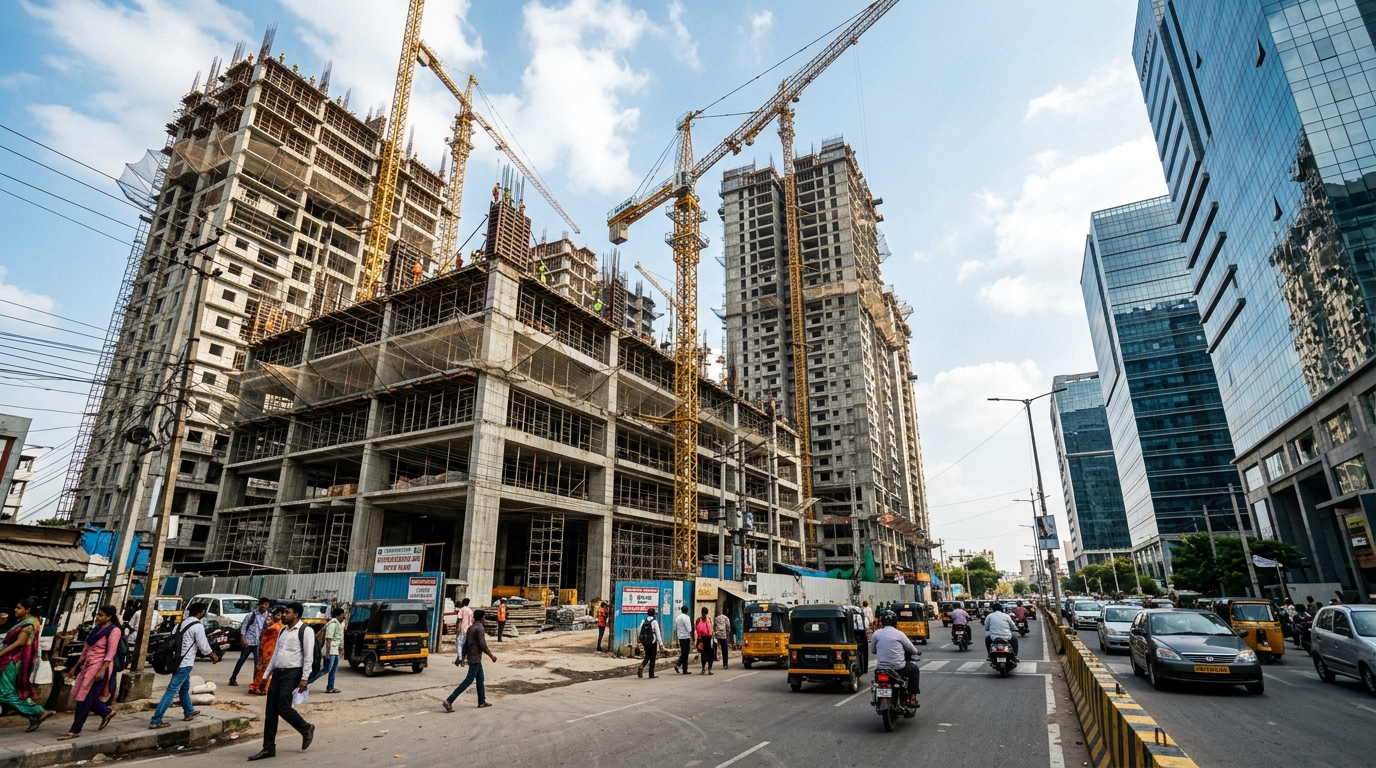
Understanding the Developer Landscape: Construction Outpacing Sales
ICRA's assessment that Hyderabad's construction activity is exceeding its sales velocity warrants a strategic re-evaluation for all stakeholders in the real estate sector. For builders, this signals a potential shift in market dynamics, where inventory build-up could become a significant concern if not managed proactively. Developers need to meticulously analyze absorption rates for different project typologies and micro-markets. Landowners, on the other hand, might face increased negotiation leverage if developers become more cautious about acquiring land for immediate project launches. The key takeaway is the imperative for developers to align their construction timelines with realistic sales projections, moving away from a purely aspirational launch strategy to one driven by confirmed demand.
This situation underscores the importance of robust demand forecasting and phased development. Instead of launching entire projects at once, developers might benefit from a staggered approach, releasing inventory in tranches based on sales velocity. This mitigates the risk of carrying excess unsold inventory. Furthermore, it puts a premium on projects with strong unique selling propositions (USPs) that can attract buyers even in a potentially saturated market.
Proactive inventory management strategies for builders.
Refined land acquisition approaches for landowners.
Emphasis on demand-driven and phased development.
Prioritizing projects with strong USPs.
Construction Trends, Approvals, and the Supply Pipeline
The report implicitly points to efficient construction processes and potentially streamlined approval mechanisms in Hyderabad, contributing to the rapid build-out. However, this speed also necessitates a closer look at the underlying supply pipeline. Developers need to scrutinize the types of projects being launched – are they addressing genuine market needs or catering to speculative demand? The current construction pace might be fueled by a robust pre-approval pipeline, but the long-term sustainability hinges on sustained end-user interest. Developers should focus on constructing projects that offer tangible value, such as well-designed homes, essential amenities, and connectivity, rather than relying on rapid market expansion alone.
Understanding the approval cycle is crucial. If approvals are indeed fast-tracking construction, it presents an advantage. However, developers must also ensure that this speed doesn't compromise quality or adherence to regulatory norms. A balanced approach to construction, focusing on sustainable practices and long-term asset value, will be more resilient. The supply pipeline needs to be continually assessed for its composition, residential, commercial, retail, and its alignment with the evolving demographic and economic trends of Hyderabad.
Analyze the composition and demand for different project typologies.
Ensure quality and regulatory compliance amidst rapid construction.
Focus on value-driven construction with essential amenities.
Monitor the overall supply pipeline for market alignment.
Location-Specific Opportunities: Gachibowli, Kokapet, and the Financial District
While the ICRA report speaks broadly about Hyderabad, specific micro-markets like Gachibowli, Kokapet, and the Financial District are critical to consider. These hubs, known for their IT and financial services presence, have traditionally driven demand for both residential and commercial real estate. If construction is outpacing sales here, it suggests a saturation point might be nearing, or that the current offerings are not perfectly aligned with the needs of the influx of professionals. Developers in these areas must differentiate their projects. This could mean focusing on niche segments, offering integrated living solutions, or prioritizing affordability and accessibility for the growing workforce.
The demand in these areas is largely driven by employment growth. Developers who can effectively link their projects to job creation hubs and provide last-mile connectivity solutions will likely fare better. For landowners in these prime locations, understanding the absorption rates of comparable projects is crucial before agreeing to any development terms. The opportunity lies in identifying undersupplied niches within these high-demand corridors, rather than simply adding to the existing inventory of similar offerings.
Differentiate projects through niche offerings and integrated solutions in IT/Financial hubs.
Focus on affordability and accessibility for the workforce.
Leverage last-mile connectivity as a USP.
Landowners should assess comparable project absorption rates.
Risks and Execution Challenges in a Rapidly Building Market
The primary risk for developers in a market where construction outpaces sales is an increase in unsold inventory, leading to cash flow strain and potential price corrections. Execution challenges include maintaining construction quality under pressure to deliver quickly, managing rising input costs, and ensuring timely project completion to avoid penalties or reputational damage. Furthermore, the perception of an oversupplied market can deter potential buyers, making sales velocity even harder to achieve. Developers need robust financial planning, efficient project management, and agile marketing strategies to navigate these challenges.
For landowners, the risk is associated with delays in project execution or a developer's inability to achieve projected sales, impacting their returns. This emphasizes the importance of due diligence on the developer's financial stability and track record. The ability to adapt to changing market demands and consumer preferences will be a key differentiator for successful developers. This might involve incorporating smart home technology, sustainable features, or flexible living spaces into their projects.
Mitigate cash flow strain from unsold inventory.
Maintain construction quality and manage input costs.
Develop agile marketing and sales strategies.
Conduct thorough due diligence on developer financial health.
Source: Deccan Chronicle