Hyderabad's GCC Boom: Unlocking Untapped Potential for Builders and Landowners
Published: September 2026
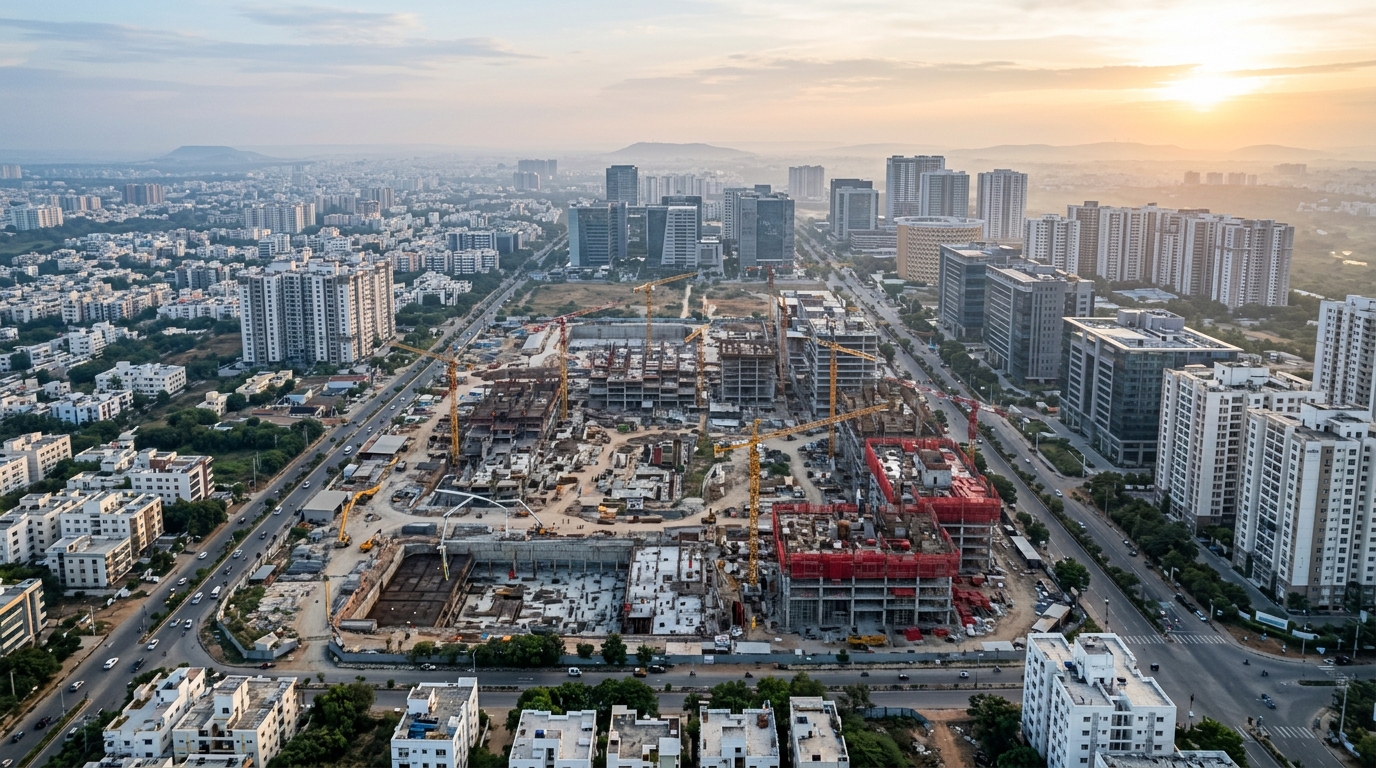
The Hyderabad Advantage: Opportunity Knocks for Developers
The recent surge in GCC establishment in Hyderabad, outperforming Bengaluru, signals a significant shift in the commercial real estate landscape. For builders, this translates to an immediate and sustained demand for Grade A office spaces, co-working facilities, and ancillary commercial developments. Landowners in strategic micro-markets stand to gain immensely from the increased land valuation and development potential.
The projected 50-70 new GCC centers within the year indicate a robust pipeline of future leasing requirements. This sustained demand necessitates proactive planning and execution from developers to secure a competitive edge. Identifying and acquiring land parcels in areas with existing and upcoming IT and business park infrastructure will be crucial.
Increased demand for Grade A office spaces.
Opportunities for mixed-use developments integrating commercial, residential, and retail.
Potential for long-term rental income and capital appreciation for landowners.
Construction Trends, Approvals, and Supply Pipeline Dynamics
The rapid pace of GCC expansion in Hyderabad necessitates an accelerated construction and approval cycle. Developers need to streamline their project management and navigate regulatory processes efficiently. The supply pipeline must adapt to this accelerated demand, focusing on speed without compromising quality.
We are likely to see a trend towards modular construction, pre-fabricated elements, and sustainable building practices to meet the rapid timelines. The demand for smart building technologies and enhanced connectivity will also be paramount. Collaboration with regulatory bodies to expedite approvals for strategically important projects will be key.
Emphasis on fast-track construction methodologies.
Increased adoption of pre-fabricated and modular building components.
Focus on sustainable and green building certifications (e.g., LEED, IGBC).
Requirement for robust digital infrastructure integration in new developments.
Prime Locations and Micro-Market Opportunities
While the entire city benefits, specific micro-markets are poised for exponential growth. Gachibowli, Kokapet, and the Financial District are already established hubs and will continue to attract significant GCC investments. Developers should focus on these established corridors and also explore emerging growth pockets that offer a better land acquisition cost and potential for value creation.
The spillover effect from these prime locations will also create opportunities in peripheral areas. Understanding the specific needs of GCCs, proximity to talent pools, infrastructure, and amenities, will guide location selection for new developments.
Gachibowli: Established IT corridor with existing infrastructure and talent.
Kokapet: Emerging tech hub with significant new developments and infrastructure.
Financial District: Prime location for large-scale corporate campuses.
Peripheral areas: Identifying nascent growth corridors with future potential.
Navigating Risks and Execution Challenges
Despite the promising outlook, developers must be cognizant of potential risks. The primary challenges include timely land acquisition, navigating complex regulatory frameworks, managing skilled labor shortages, and maintaining cost-effectiveness amidst rising material prices. A tight supply-demand mismatch, if not addressed proactively, could lead to inflated construction costs and project delays.
Execution requires meticulous planning, robust financial management, and a keen understanding of the evolving tenant requirements. Building strong relationships with local authorities and stakeholders will be crucial for smooth project execution. Diversifying development strategies to cater to different scales of GCC operations, from large campuses to smaller co-working spaces, can mitigate some of these risks.
Land acquisition complexities and rising land costs.
Navigating bureaucratic approvals and potential delays.
Skilled labor availability and retention challenges.
Managing construction costs and material price volatility.
Ensuring compliance with evolving ESG (Environmental, Social, and Governance) mandates from GCCs.
Source: Hindustan Times