Hyderabad's Divergent Real Estate Landscape: Housing Cools Amidst Office Leasing Boom
Published: September 2026
Divergent Market Signals: Housing vs. Office
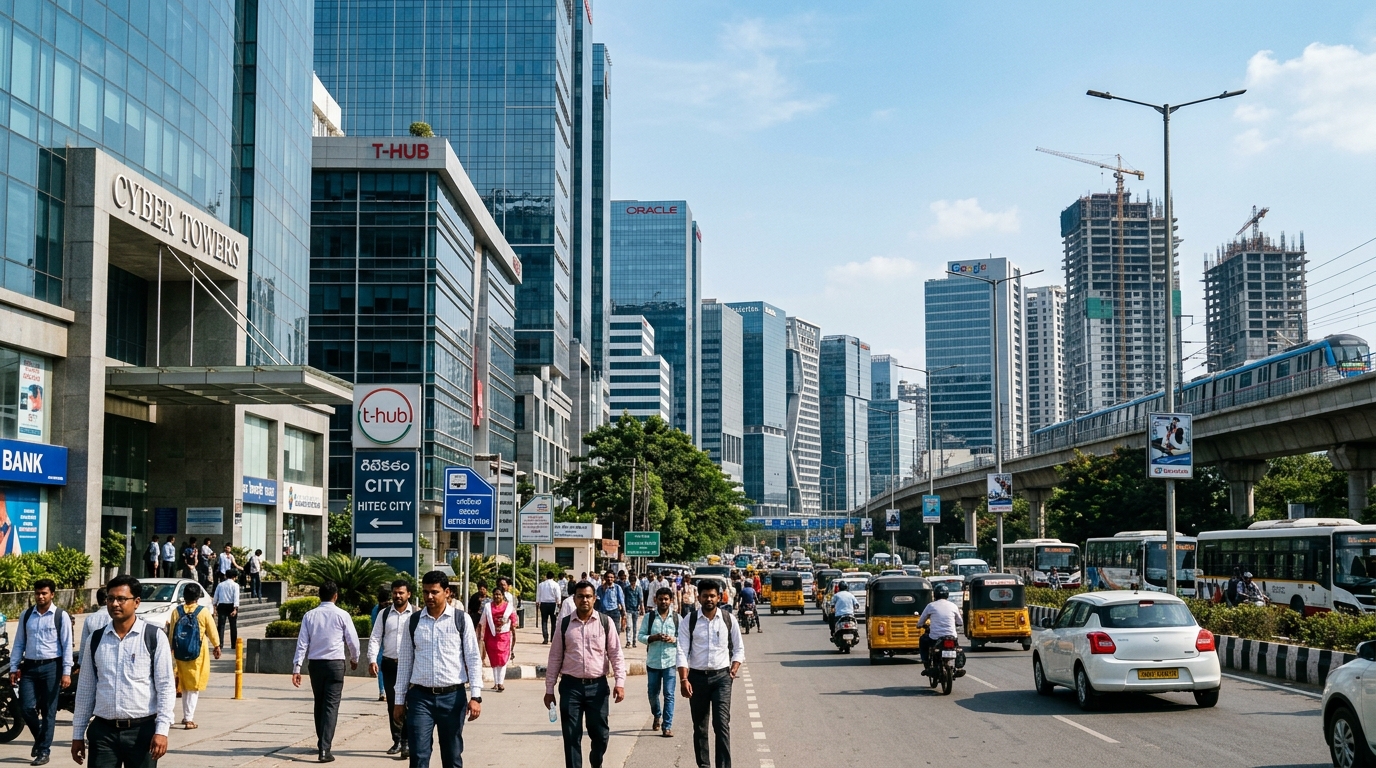
Recent reports from Hyderabad highlight a bifurcated real estate market. The residential segment is exhibiting a slowdown, characterized by moderating growth. This cooling off could be attributed to a confluence of factors, potentially including price stabilization after a period of strong appreciation, increased interest rates impacting affordability, and a natural ebb in demand post-pandemic fervor. Conversely, the office leasing market is defying this trend, reaching record highs. This robust performance indicates strong underlying demand for commercial space, driven by expansion of existing businesses and new entrants, particularly in the technology and IT-enabled services sectors.
The contrasting performance between housing and office spaces has significant implications for demand, supply, and pricing. For residential, a slowdown suggests a shift from a seller's market towards a more balanced or even buyer-favored environment in certain micro-markets, potentially leading to price stabilization or marginal corrections. For commercial real estate, the record leasing activity points to sustained demand, which can support rental growth and attractive yields, while also potentially spurring new office supply development in the medium term.
- Residential: Moderating growth, potential price stabilization.
- Office: Record leasing, sustained demand, potential for rental appreciation.
Institutional Investor Appetite: Capital Flow Towards Commercial
The surge in office leasing activity is a clear magnet for institutional investors. Record absorption rates and sustained demand create a favorable environment for yield generation and capital appreciation in the commercial sector. This is likely to attract significant domestic and international capital, seeking stable, long-term income streams. Institutional investors often prioritize markets with strong job creation, robust economic indicators, and a healthy pipeline of demand for quality office space. Hyderabad's performance in this regard is increasingly compelling, positioning it as a prime destination for commercial real estate investment.
The cooling residential market, while potentially less attractive for speculative investment, might still offer opportunities for long-term hold strategies or for investors focused on specific sub-segments or micro-markets experiencing persistent localized demand, such as those with excellent infrastructure and proximity to commercial hubs. However, the prevailing sentiment is likely to see a stronger capital allocation towards the booming office sector.
- Increased institutional investor interest in Hyderabad's office market.
- Focus on stable income generation and capital appreciation through commercial assets.
- Potential for a shift in capital allocation from residential to commercial real estate.
Micro-Market Dynamics: Gachibowli, Kokapet, and the Financial District
The news implicitly points to the continued strength of Hyderabad's established and emerging IT corridors. Areas like Gachibowli, Kokapet, and the Financial District are the epicenters of this office leasing boom. These micro-markets benefit from existing infrastructure, a skilled talent pool, and a concentration of leading IT andITES companies, creating a self-reinforcing cycle of demand. The record leasing figures are almost certainly concentrated within these prime commercial hubs.
The slowdown in residential growth might be more pronounced in areas further away from these employment centers or those that have seen rapid price escalation. Conversely, micro-markets adjacent to these commercial hubs might still experience sustained residential demand due to the ongoing influx of professionals working in these areas. Developers and investors would need to conduct granular analysis within these specific micro-markets to identify nuanced opportunities and risks.
- Prime commercial hubs like Gachibowli, Kokapet, and the Financial District are primary beneficiaries of office leasing demand.
- Residential market moderation might be more evident in peripheral areas.
- Localized demand within micro-markets remains crucial for residential sector analysis.
Policy and Regulatory Landscape
While the provided news does not explicitly detail policy impacts, sustained high office leasing and healthy commercial real estate activity can indirectly influence policy. Governments often incentivize commercial development through streamlined approvals, infrastructure development, and tax benefits to attract businesses and create employment. Conversely, a cooling residential market might prompt discussions around affordability measures or demand-side incentives. The Telangana government's proactive approach to facilitating business and infrastructure development has been a key enabler of Hyderabad's growth, particularly in the IT sector, and this underlying supportive policy framework is crucial for both segments of the market.
- Government policies supporting business growth and IT sector expansion are crucial enablers.
- Potential for policies addressing housing affordability if the slowdown persists significantly.
- Infrastructure development in commercial corridors remains a key focus area.
Source: AP7AM