Hyderabad's Commercial Real Estate Boom: Is It a Golden Opportunity for Institutional Investors?
Published: October 2026
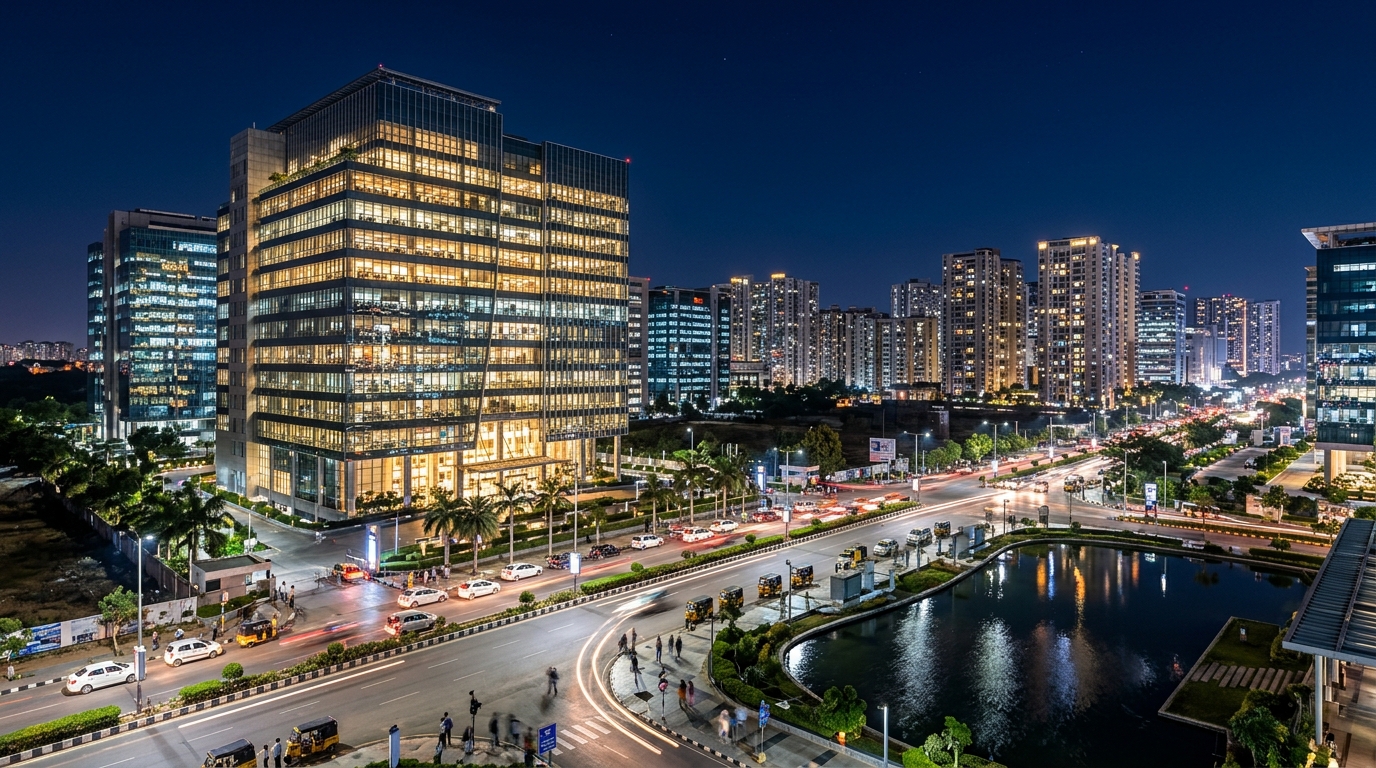
Unprecedented Demand Driving Hyderabad's Commercial Market
Hyderabad's commercial real estate sector is experiencing a significant upswing, largely fueled by the sustained growth of its IT and IT-enabled services (ITeS) industry. The city has cemented its position as a premier destination for global technology companies, leading to a surge in demand for prime office spaces. This robust demand is not merely speculative; it's a direct consequence of job creation and expansion plans by established and emerging tech giants seeking a talent pool and conducive business environment.
The sustained demand is creating upward pressure on rental values. As vacancy rates tighten, especially in established hubs like Gachibowli and the Financial District, developers and landlords are in a stronger position to command higher rents. This trend is particularly pronounced in Grade A office spaces, which are highly sought after by multinational corporations prioritizing quality infrastructure, amenities, and strategic location.
- Job creation in the IT/ITeS sector as a primary demand driver.
- Expansion plans of global tech companies boosting absorption rates.
- Upward pressure on rental values due to limited Grade A supply.
Supply Dynamics and Emerging Micro-Markets
While demand is strong, the supply side is also responding, albeit with a lag. New commercial projects are underway, particularly in peripheral yet well-connected areas like Kokapet and the wider Financial District. These new developments are crucial in meeting the burgeoning space requirements and preventing an unsustainable spike in rental yields that could deter further investment. The focus is on creating integrated ecosystems that offer not just office spaces but also amenities like retail, F&B, and recreational facilities, aligning with global 'walk-to-work' concepts.
The absorption rates in established micro-markets like Gachibowli are indicative of the ongoing demand. However, the strategic development and rapid infrastructure improvements in areas like Kokapet are positioning them as future growth corridors, attracting pre-leasing commitments from large corporations even before project completion. This signifies a proactive approach to capturing future demand and diversifying the available supply.
- New commercial projects focusing on integrated development.
- Expansion of supply in well-connected peripheral areas.
- Pre-leasing trends indicating confidence in emerging micro-markets.
Institutional Investor Perspective: Capitalizing on Hyderabad's Potential
For institutional investors, Hyderabad's commercial real estate presents a compelling proposition. The city's consistent growth trajectory, backed by favorable government policies and a strong economic base, offers stability and attractive long-term returns. The current market conditions, with rising demand and a measured increase in supply, create an opportune window for strategic acquisitions and development partnerships.
The influx of foreign direct investment (FDI) into the IT sector directly translates into capital flow into commercial real estate. Institutional investors, ranging from sovereign wealth funds to private equity firms, are actively evaluating opportunities in Hyderabad. Their focus is on acquiring stabilized assets with high occupancy and rental growth potential, as well as participating in the development of new, Grade A commercial spaces in strategically important micro-markets. The potential for capital appreciation, coupled with steady rental income, makes Hyderabad a key destination in their Asia-Pacific real estate portfolios.
- Attractive risk-return profile for institutional investors.
- FDI in IT sector correlating with capital inflow into real estate.
- Interest in both stabilized assets and development opportunities.
Policy and Regulatory Landscape
While the provided news doesn't detail specific new policies, the underlying growth is often supported by existing government initiatives aimed at promoting ease of doing business, attracting investment, and developing world-class infrastructure. Policies related to IT parks, SEZs, and urban development play a crucial role in shaping the commercial real estate landscape. For instance, efficient urban planning and infrastructure development in areas like Gachibowli and the Financial District have been instrumental in their success.
Continuous monitoring of regulatory frameworks, including land use policies, development approvals, and tax structures, is essential for institutional investors. Any potential policy shifts that further streamline development or offer incentives for commercial real estate can act as additional catalysts for investment and contribute to sustainable market growth.
- Existing government policies fostering IT growth and infrastructure development.
- Importance of 'ease of doing business' initiatives.
- Need for investors to monitor evolving regulatory frameworks.
Source: regnews.in