Hyderabad's Building Code Shake-up: Navigating New Plot Width Rules and Their Investment Ripples
Published: November 2026
Understanding the New Plot Width Mandate and Its Initial Reaction
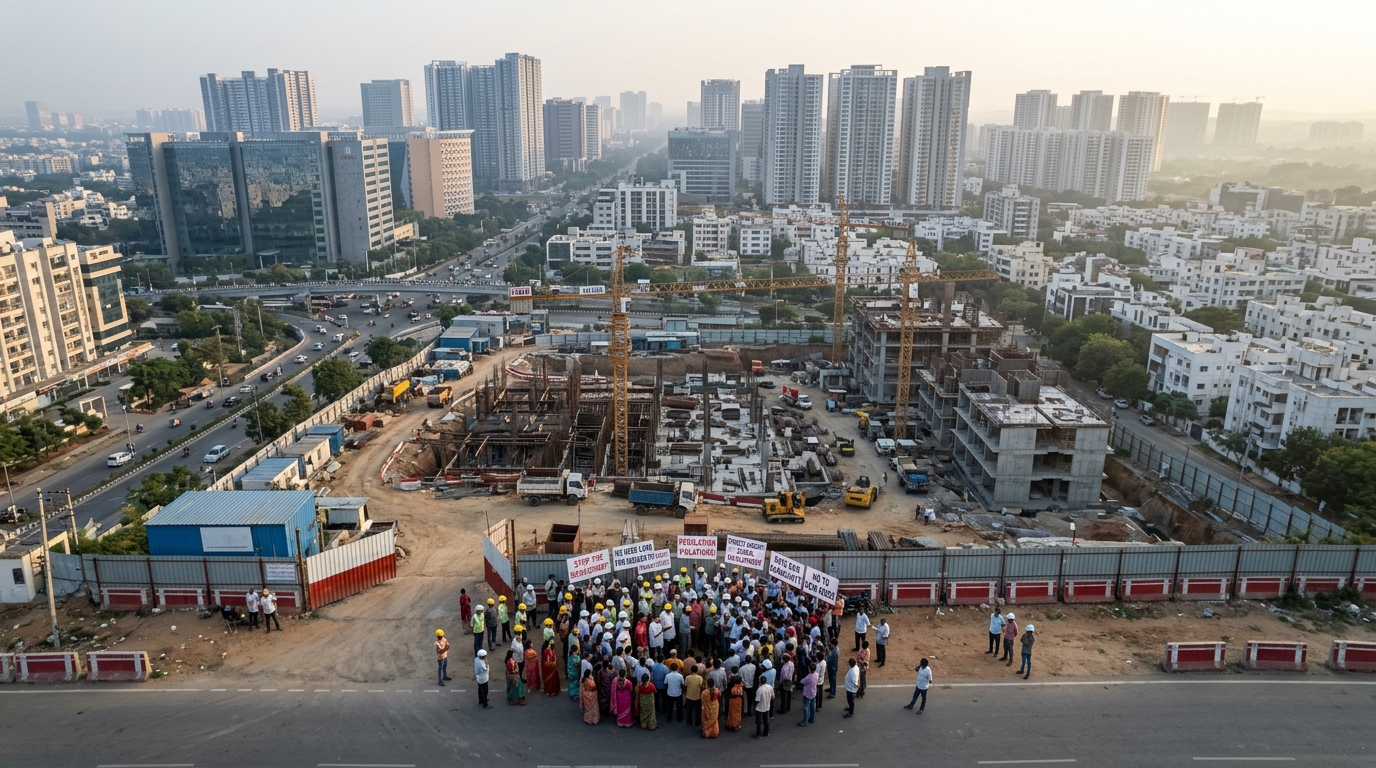
Hyderabad's municipal authorities have introduced a stringent 20-ft plot width restriction for new constructions. This rule, aimed at potentially improving urban planning and infrastructure utilization, has already ignited protests from various stakeholders, including builders and plot owners. The immediate reaction suggests a disruption to traditional development models, particularly in areas where smaller plot sizes are prevalent or historically common.
The government's concurrent move to ease permissions for older buildings suggests a dual approach: addressing current development challenges while acknowledging the existing built environment. This differentiation in policy could create bifurcated market dynamics.
Market Implications: Demand, Supply, and Pricing Adjustments
The 20-ft plot width restriction will inevitably impact the supply side of the residential market. Developers will need to acquire larger contiguous parcels of land to create developable units, which could lead to an increase in land acquisition costs. This, in turn, is likely to translate into higher per-unit development costs and, consequently, higher property prices for newly constructed homes in compliant developments. For investors, this means a potential shift towards larger, more integrated projects rather than smaller, individual plot developments.
In the short to medium term, this policy could inadvertently boost demand for existing properties built on larger plots or in areas where the new rule is less applicable due to existing zoning. It might also spur interest in redeveloping older, smaller plots if the relaxed norms for existing structures are favorable, creating opportunities for value-add investors. The long-term impact on affordability and housing stock availability will depend on how effectively developers adapt to the new constraints and whether alternative development models emerge.
- Potential decrease in the supply of smaller, more affordable housing units.
- Increased demand for larger land parcels, driving up land acquisition costs.
- Upward pressure on prices for new constructions adhering to the stricter width rule.
- Elevated interest in pre-existing properties and redevelopment opportunities.
Institutional Investor Perspective: Navigating Risk and Opportunity
Institutional investors, known for their long-term outlook and focus on scalability, will be closely scrutinizing the implications of this new regulation. The increased complexity in land acquisition and the potential for delayed project timelines due to compliance challenges could be viewed as increased risk. However, for those focused on mid-to-high-end residential or integrated township developments, the restriction might inadvertently create a more favorable competitive landscape by deterring smaller, less capitalized players.
Capital flow is likely to be directed towards developers who can demonstrate a clear strategy for navigating these new rules, possibly through master-planned communities or by acquiring larger land banks. Investors might also explore opportunities in commercial real estate or well-established residential enclaves that are less affected by this specific plot width mandate. The government's move to ease permissions for old buildings could also attract investors interested in the refurbishment and repositioning of existing assets.
Policy and Regulatory Impact: Shaping Hyderabad's Urban Fabric
The 20-ft plot width rule represents a significant policy intervention designed to influence the physical form of urban development. Its success will hinge on effective enforcement and the government's ability to balance regulatory rigor with market realities. The relaxation of norms for older buildings acknowledges the need for pragmatic urban management, allowing for the rehabilitation of existing stock without stifling essential upgrades.
This policy shift could set a precedent for future urban planning in Hyderabad and potentially other Tier-1 cities in India. It highlights a growing emphasis on planned development and a move away from organic, un-coordinated growth. For real estate consultants and analysts, understanding the nuances of these regulations and their regional impact is crucial for advising clients on market entry and investment strategies.
Micro-Market Relevance: Gachibowli, Kokapet, and the Financial District
In Hyderabad's rapidly developing corridors like Gachibowli, Kokapet, and the Financial District, where large-scale residential and commercial projects are common, the 20-ft plot width restriction might have a less immediate disruptive effect on established large-format developments. However, it could influence the planning and execution of future phases or smaller, infill projects within these areas. The demand for larger integrated developments, which are already prevalent in these micro-markets, could be further strengthened.
Developers operating in these prime micro-markets, accustomed to large land acquisitions, will need to ensure their future projects align with these new width stipulations. The government's intention to streamline approvals for older buildings might also present opportunities for adaptive reuse or redevelopment in pockets within these areas, potentially adding to the diverse real estate offerings.
Source: The Times of India