Hyderabad Villa Project Scandal: A Stark Warning and Call to Action for Developers
Published: May 2026
Implications for Builders and Landowners: Trust, Transparency, and Due Diligence
The recent alleged fraud in a Hyderabad villa project, involving INR 39 crore, sends a chilling message to the entire real estate ecosystem. For developers, this incident intensifies the scrutiny on their business practices. It's no longer enough to simply have a viable project; building and maintaining investor trust through absolute transparency in all dealings is paramount. This includes clear communication on project timelines, budget allocations, and regulatory compliance. Landowners entering into joint ventures or development agreements must exercise extreme due diligence, scrutinizing the developer's track record, financial stability, and legal standing. The risk of association with fraudulent practices can severely damage reputations and future ventures.
This scandal amplifies the need for stringent due diligence on both sides. Developers should proactively showcase their commitment to ethical practices, perhaps through certifications or transparent project management platforms. Landowners should engage legal and financial experts to vet potential partners thoroughly. Failure to do so can lead to protracted legal battles, financial losses, and irreparable damage to brand reputation, especially in a competitive market like Hyderabad.
Enhance transparency in all investor communications and project financials.
Conduct thorough due diligence on all joint venture partners and landowners.
Prioritize building a strong reputation for ethical conduct and project delivery.
Establish clear escalation protocols for addressing investor concerns proactively.
Navigating Construction Trends, Approvals, and the Supply Pipeline
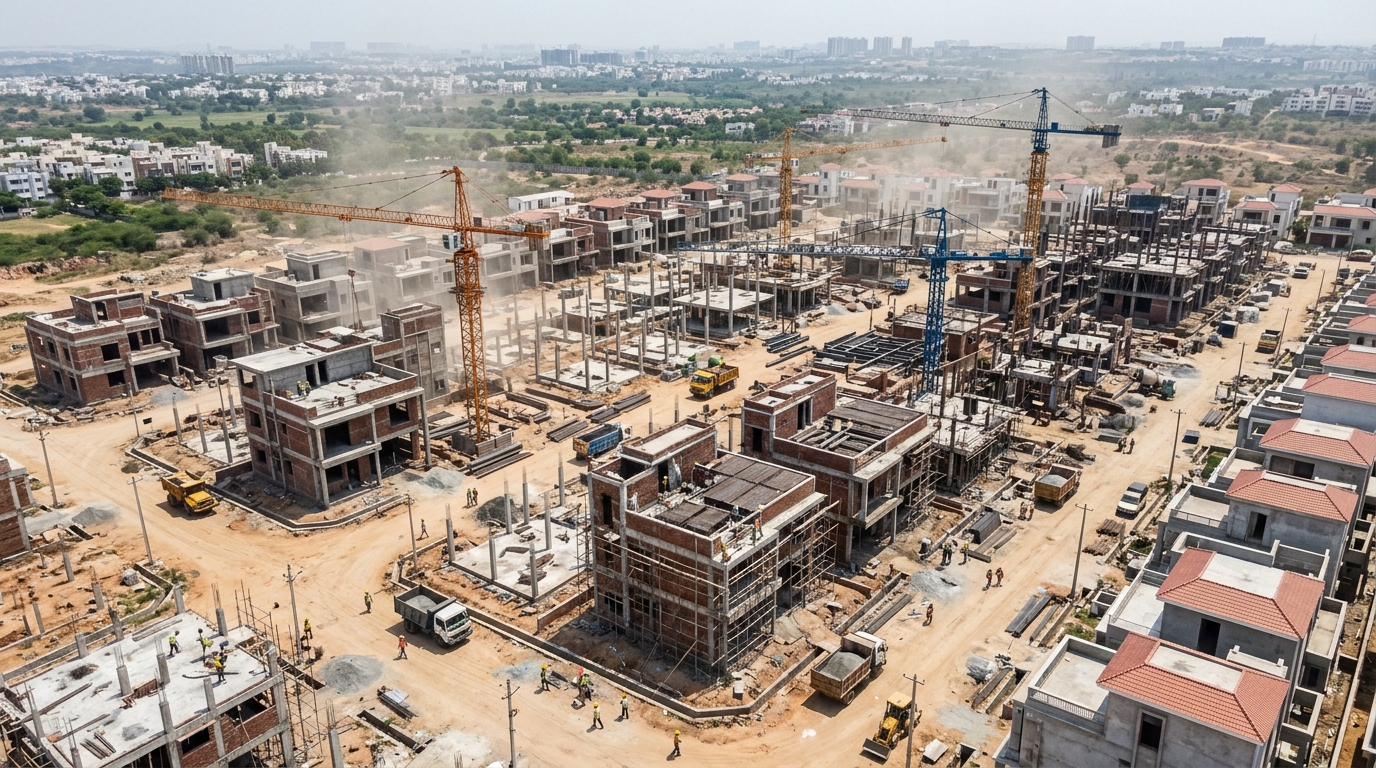
The Hyderabad real estate market, particularly its premium villa segment, is characterized by high demand. However, this incident brings to the forefront the execution risks inherent in construction. Developers must ensure their project timelines are realistic and factoring in potential delays due to supply chain disruptions, labor availability, or unforeseen site conditions. The approval process, while often lengthy, is a critical gatekeeper. Any shortcuts or misrepresentations during this phase can lead to severe repercussions, as suggested by the current investigation. A robust supply pipeline, both in terms of materials and skilled labor, needs to be secured well in advance to avoid compromising project quality and timelines.
The scam also highlights the potential for inflated project costs or diversion of funds, underscoring the importance of stringent cost control measures and regular audits. Developers must be able to demonstrate a clear and auditable trail of all expenditures related to the project. For landowners, understanding the developer's construction methodology and quality control processes is vital. In a market experiencing rapid growth, a strong and consistent supply of quality construction materials and a reliable labor force are essential for successful project completion and investor satisfaction.
Develop realistic project timelines with buffer for potential delays.
Ensure strict adherence to all building plan approvals and zoning regulations.
Establish strong relationships with reliable suppliers and labor contractors.
Implement rigorous cost control and regular financial audits.
Location-Specific Opportunities and Risks in Hyderabad's Growth Corridors
Hyderabad's peripheral growth corridors, including areas like Gachibowli, Kokapet, and the Financial District, have witnessed unprecedented demand for premium residential properties, especially villas, driven by IT expansion and a burgeoning population of high-net-worth individuals. This demand-supply mismatch often creates an environment ripe for rapid development. However, this rapid growth also attracts opportunistic players, making it imperative for legitimate developers to differentiate themselves through ethical practices and demonstrable project execution capabilities. The alleged scam in this region serves as a cautionary tale, emphasizing that even in high-demand areas, investor confidence is fragile and easily eroded by malfeasance.
Developers looking to capitalize on the Hyderabad growth story must focus on building sustainable businesses rooted in integrity. For landowners in these prime locations, the opportunity is immense, but so is the risk. Partnering with developers who have a proven track record of on-time delivery and transparent dealings is crucial. The perception of these areas as secure investment destinations can be severely impacted by such incidents, making it vital for the industry to collectively uphold high standards. Targeting specific micro-markets with detailed feasibility studies and understanding local demand drivers is key to successful development.
Conduct in-depth market research for specific micro-markets within Hyderabad.
Focus on differentiated offerings that cater to the discerning buyer in prime locations.
Leverage the high demand in areas like Gachibowli, Kokapet, and the Financial District with ethical practices.
Understand and mitigate local regulatory nuances and community engagement needs.
Mitigating Risks and Executing Projects Effectively
The Hyderabad villa project fraud underscores the critical importance of robust risk management and flawless execution. Developers must move beyond superficial marketing and focus on tangible aspects: securing all necessary permits upfront, engaging reputable contractors, implementing stringent quality control at every stage of construction, and maintaining open lines of communication with investors throughout the project lifecycle. The supply pipeline is particularly vulnerable in a booming market; securing long-term contracts for materials and labor, and exploring alternative sourcing options can mitigate disruptions.
Execution challenges in the current climate can range from obtaining timely approvals to managing a fluctuating labor force and unpredictable material costs. This alleged scam highlights that even with high demand, a project's success hinges on the developer's ability to navigate these complexities ethically and efficiently. Builders should consider adopting advanced project management technologies to enhance transparency and real-time tracking for all stakeholders. Landowners should ensure their agreements include performance-based clauses and clear exit strategies in case of developer default or malfeasance.
Implement comprehensive risk assessment and mitigation strategies.
Prioritize timely and accurate regulatory compliance.
Invest in robust project management software for enhanced transparency and tracking.
Develop contingency plans for supply chain disruptions and labor shortages.
Source: Prop News Time