Hyderabad Real Estate: A Strategic Broker Meet Signals a New Era of Partnerships for Developers
Published: May 2026
Strengthening the Developer-Broker Ecosystem in Hyderabad
Housed.com's initiative to convene real estate brokers signifies a strategic move to bolster partnerships within the Hyderabad market. This direct engagement acknowledges the pivotal role brokers play in the sales pipeline and customer acquisition. For developers and landowners, this translates to a more streamlined and effective route to market, potentially leading to faster inventory turnover and better price realization. The focus on strengthening these ties suggests a proactive approach to addressing market needs and fostering a collaborative environment, which is vital for navigating the complexities of the current real estate landscape.
The benefits extend beyond just sales. A robust broker network can provide invaluable real-time market intelligence, feeding back information on buyer preferences, pricing sensitivities, and emerging micro-market trends. This data can inform crucial decisions regarding project design, amenity offerings, and even the phasing of construction. For landowners looking to partner with developers, a well-connected broker network can facilitate introductions to credible and experienced builders, ensuring a more secure and profitable venture.
Enhanced sales velocity through direct broker engagement.
Access to critical, real-time market intelligence.
Improved project viability through informed decision-making.
Facilitation of credible landowner-developer partnerships.
Construction Trends, Approvals, and the Supply Pipeline
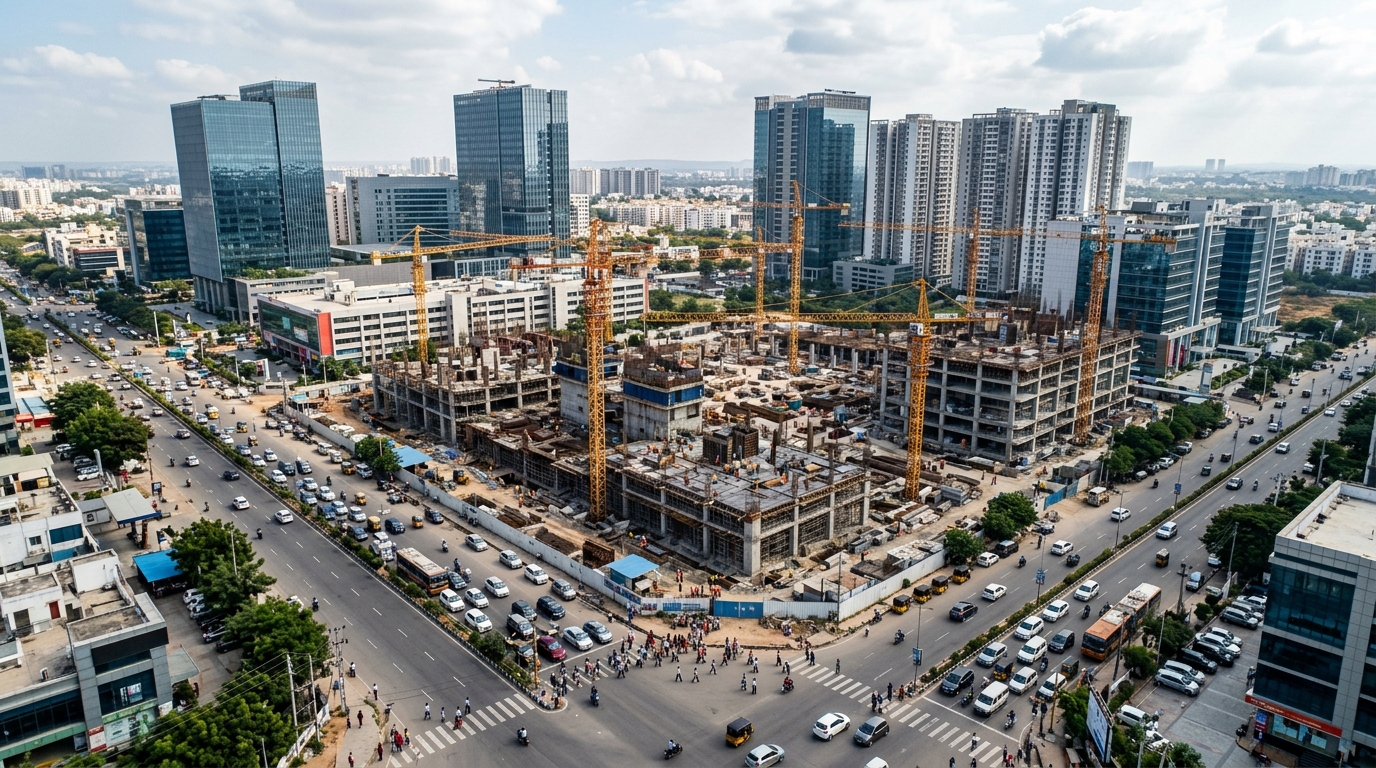
The emphasis on partnership in Hyderabad's real estate sector indirectly points towards an increasing demand for efficient construction and faster project execution. Developers need to be cognizant of current construction trends, including the adoption of prefabrication, modular construction, and smart building technologies to optimize timelines and costs. With potential growth fueling demand, the ability to navigate the approvals process swiftly and efficiently becomes paramount. Any bottleneck in approvals can lead to significant delays, impacting project profitability and market competitiveness.
The supply pipeline in Hyderabad, particularly in burgeoning corridors like Gachibowli, Kokapet, and the Financial District, is a critical consideration. While demand is robust, especially for residential and commercial spaces catering to the IT and BFSI sectors, the pace of new project launches and their timely completion is key. A supply-demand mismatch, either an oversupply or a significant undersupply, can have profound effects. Developers must strategically assess the existing and planned inventory against projected demand to avoid market saturation or missed opportunities. The proactive engagement with brokers suggests a forward-looking approach to manage this pipeline effectively.
Adoption of advanced construction technologies for efficiency.
Streamlining the approvals process for timely project delivery.
Strategic assessment of supply-demand dynamics in key micro-markets.
Phased project launches aligned with market absorption rates.
Location-Specific Opportunities: Gachibowli, Kokapet, and the Financial District
The areas surrounding Gachibowli, Kokapet, and the Financial District in Hyderabad are experiencing unprecedented growth, driven by the expansion of IT, ITeS, and financial services industries. This influx of talent and corporate presence creates a sustained demand for high-quality residential, commercial, and mixed-use developments. Developers focusing on these locations should cater to the specific needs of the discerning buyer and tenant base, modern amenities, robust infrastructure, sustainable design, and proximity to workplaces and lifestyle hubs.
Kokapet, in particular, has emerged as a prime destination for luxury residential projects and commercial hubs, benefiting from its proximity to the Financial District and Gachibowli. The demand here is for premium offerings, commanding higher price points. The Financial District continues to attract major corporations, fueling demand for Grade A office spaces and upscale residential accommodations. Builders who can deliver projects that align with the aspirational lifestyles of professionals in these areas are poised for success. The strengthening of broker networks through such initiatives will be instrumental in reaching these target demographics effectively.
Focus on premium residential and commercial projects in Gachibowli.
Develop luxury and mixed-use offerings in Kokapet.
Cater to Grade A office space demand in the Financial District.
Leverage broker networks for targeted customer outreach in these prime locations.
Risks and Execution Challenges for Developers
Despite the promising outlook, developers in Hyderabad face inherent risks and execution challenges. The rapid development in prime areas can lead to increased land acquisition costs and fierce competition. Ensuring timely project completion amidst potential labor shortages, material price volatility, and unforeseen regulatory changes requires robust project management and contingency planning. The current market buoyancy also means that any misjudgment in market trends or product offering can lead to slower sales velocity and financial strain.
Execution challenges also lie in maintaining quality standards while adhering to aggressive timelines and cost structures. Developers must also be mindful of evolving buyer expectations, including a growing emphasis on sustainability, smart home features, and community living. The success of initiatives like the Houssed.com broker meet underscores the importance of a strong, collaborative approach to overcome these challenges. Building trust and transparency with brokers, landowners, and end-users is critical for long-term success and mitigating execution risks. A proactive strategy that addresses potential roadblocks from the outset is key to sustained growth in this dynamic market.
Managing rising land acquisition costs and competitive pressures.
Mitigating risks of labor shortages and material price fluctuations.
Navigating potential regulatory changes and approval delays.
Maintaining quality and adapting to evolving buyer expectations.
Ensuring transparency and trust across all stakeholder relationships.
Source: Dailyhunt