Amaravati vs. Hyderabad: A Developer's Strategic Outlook for Wealth Creation in South India's Next 3 Years
Published: May 2026
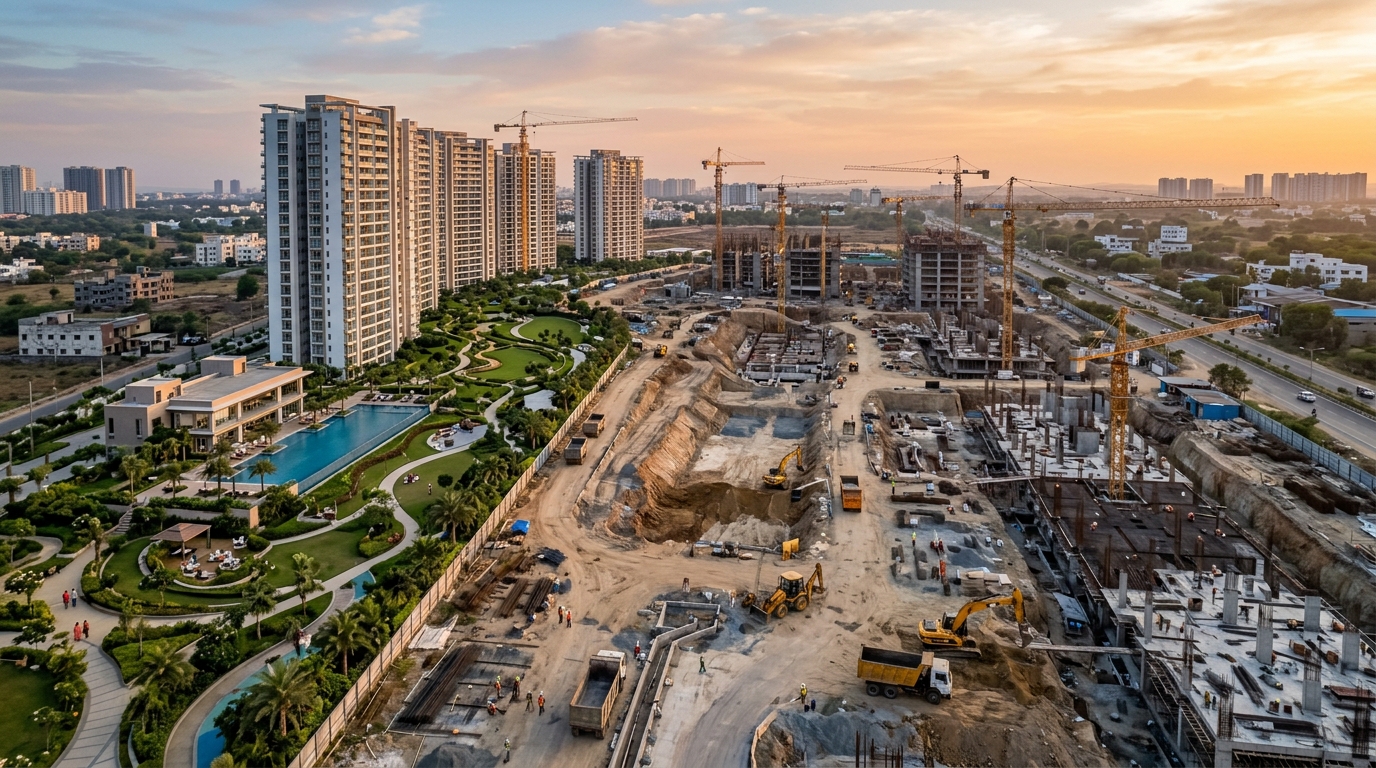
The Strategic Divergence: Amaravati's Promise vs. Hyderabad's Momentum
The Trade Brains article highlights a fundamental divergence in real estate development potential between Amaravati and Hyderabad. While Amaravati, as a planned capital, offers a 'greenfield' opportunity with the potential for significant long-term appreciation driven by government investment and planned infrastructure, Hyderabad already boasts a robust economy, established infrastructure, and a proven track record of real estate growth. For developers and landowners, this translates into distinct strategic choices. Investing in Amaravati at this nascent stage could offer higher percentage returns if development accelerates as planned, but it carries higher risk due to policy uncertainties and slower execution. Hyderabad, particularly its established and emerging corridors, presents a more predictable, albeit potentially lower percentage, return on investment with lower execution risk.
Landowners in Amaravati stand to benefit immensely from a structured development plan, but their returns are directly tied to the pace and efficacy of government execution. In Hyderabad, landowners in sought-after micro-markets like Gachibowli, Kokapet, and the Financial District are already experiencing sustained demand, but the opportunity lies in identifying pockets of untapped potential or areas poised for future infrastructure upgrades that will unlock further value.
- Amaravati: High risk, high reward; dependent on government execution and policy stability.
- Hyderabad: Moderate risk, steady reward; driven by existing economic drivers and sustained demand.
Construction Trends, Approvals, and Supply Pipeline
The construction landscape in Hyderabad is characterized by a dynamic supply pipeline, with developers actively responding to robust demand for residential, commercial, and retail spaces. Areas like Gachibowli and the Financial District are witnessing a flurry of activity, including the development of Grade-A office spaces to cater to the IT and BFSI sectors, alongside premium residential offerings. The approval process in Hyderabad, while often complex, is generally more streamlined due to established regulatory frameworks. This allows for a more predictable project execution cycle.
In contrast, Amaravati's construction pipeline is heavily contingent on policy and funding. While the vision for a modern city is clear, the actual pace of infrastructure development and subsequent private sector construction is slower. Approvals would likely be centralized and tied to the master plan's implementation. The supply pipeline here is nascent, offering opportunities for first-mover advantage in specific asset classes once the fundamental infrastructure is in place. The key for developers will be to accurately forecast the demand evolution in Amaravati, which is intrinsically linked to the pace of government job creation and the establishment of ancillary businesses.
- Hyderabad: Active supply pipeline, driven by sustained demand; established approval processes.
- Amaravati: Nascent supply pipeline, dependent on infrastructure development; potential for first-mover advantage.
Location-Specific Opportunities: Hyderabad's Established Hubs
Hyderabad's established corridors offer distinct micro-market opportunities. Gachibowli, a major IT and educational hub, continues to command strong rental yields and capital appreciation for both commercial and residential properties. The demand for housing here is driven by a young, affluent workforce. Kokapet, known for its large land parcels and luxury residential projects, is attracting premium developers and buyers seeking exclusivity and high-end amenities.
The Financial District further solidifies Hyderabad's position as a business powerhouse, driving demand for corporate office spaces and premium residences. The interplay between these hubs creates a ripple effect, with infrastructure development in one area often benefiting its surroundings. Developers looking for immediate returns and established demand should focus on these proven markets. The key challenge here is identifying sub-locations within these hubs that are yet to be fully saturated or are poised for the next wave of development due to upcoming infrastructure projects or policy shifts.
- Gachibowli: IT & education hub; strong demand for residential and commercial.
- Kokapet: Luxury residential focus; prime land parcels and exclusivity.
- Financial District: Corporate hub; demand for office and premium residential.
Risks and Execution Challenges
The primary risk for developers in Amaravati revolves around policy continuity and the speed of government execution. Any shift in political will or a slowdown in infrastructure development can significantly delay projected timelines and impact investment returns. Land acquisition, though a planned capital, can still present complexities. The lack of a pre-existing economic ecosystem means developers will be building in anticipation of future demand, a strategy that requires meticulous forecasting and risk mitigation.
In Hyderabad, while the market is more mature, the risks are different. Intense competition among developers can lead to oversupply in certain segments if market absorption is not carefully monitored. Rising construction costs, labor availability, and navigating a complex regulatory environment remain persistent challenges. For both locations, the risk of a broader economic downturn impacting real estate demand cannot be ignored. Developers must focus on robust financial planning, flexible project execution, and a deep understanding of local market dynamics to mitigate these risks effectively.
- Amaravati: Policy uncertainty, slow government execution, speculative demand.
- Hyderabad: Intense competition, potential oversupply, rising costs, regulatory hurdles.
Source: Trade Brains