ArcelorMittal's Hyderabad Lease: A Beacon for Developers in India's IT Hub
Published: July 2026
Opportunity Knocks: What This Means for Builders and Landowners
The significant lease commitment by ArcelorMittal in Hyderabad is more than just a single transaction; it's a strong indicator of sustained corporate interest and expansion within the city's prime business districts. For developers, this translates into a heightened demand for Grade A office spaces, particularly in areas that have historically attracted multinational corporations and tech giants. This lease validates ongoing market assumptions about Hyderabad's continued growth as a key commercial hub. Landowners in strategically located areas can anticipate increased interest from developers looking to acquire land for future projects, potentially driving up land values. The ripple effect will encourage investment in not just office developments but also ancillary services and residential projects catering to the growing workforce. This trend also suggests a potential for increased demand for build-to-suit (BTS) opportunities, where developers can collaborate directly with corporations to create bespoke office environments.
This sustained demand from established global players like ArcelorMittal underscores the resilience of Hyderabad's commercial real estate market, even amidst global economic uncertainties. It signals confidence in the city's infrastructure, talent pool, and business-friendly environment. Developers with a keen understanding of corporate leasing requirements and a pipeline of well-located, modern office spaces are poised to benefit significantly. The ability to deliver spaces that meet high standards of sustainability, technology, and employee well-being will be crucial for securing such high-value tenants.
Increased demand for Grade A office spaces.
Potential for rising land values in prime locations.
Opportunities for build-to-suit (BTS) developments.
Encouraged investment in ancillary and residential projects.
Navigating the Construction Landscape: Trends, Approvals, and Supply
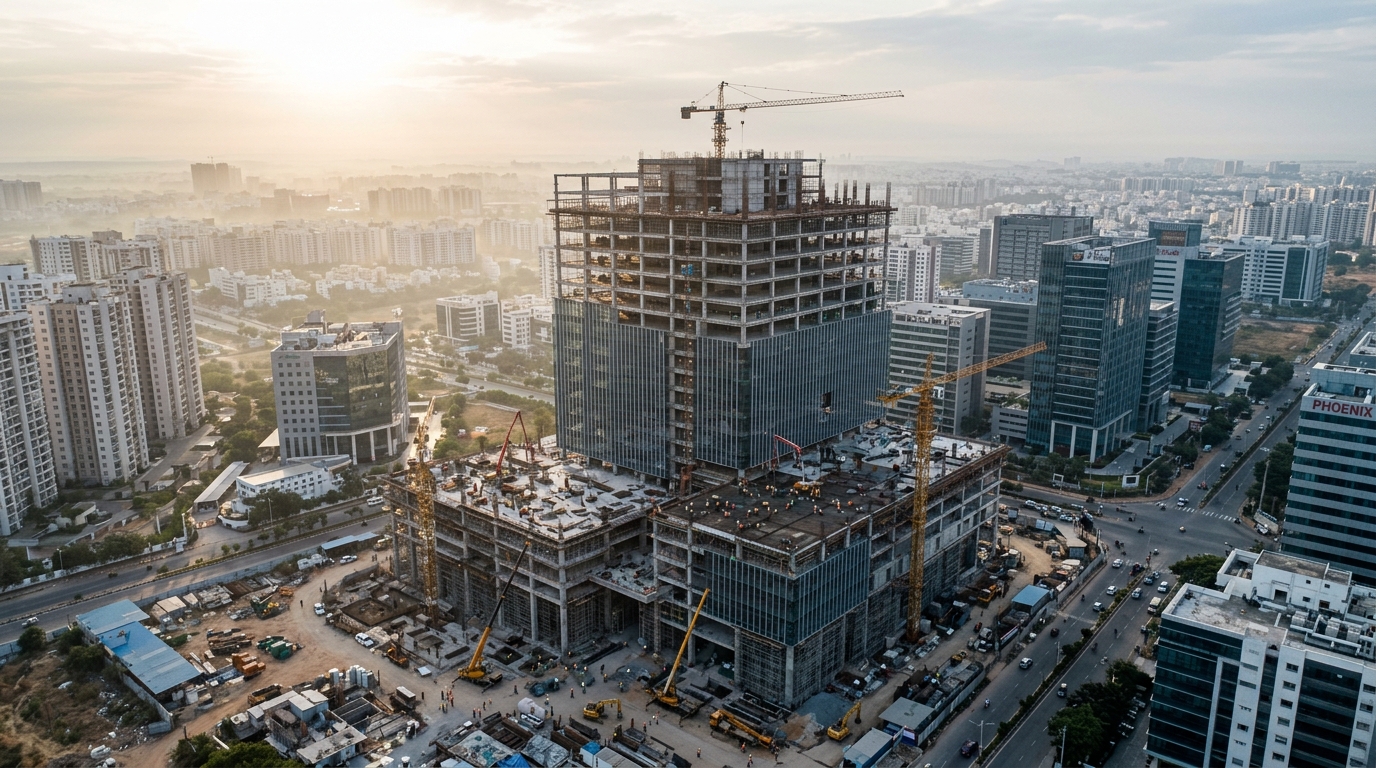
The growing demand necessitates an agile and responsive construction sector. Developers must anticipate a need for faster project cycles, potentially leading to increased adoption of pre-fabricated construction methods and advanced building technologies to expedite delivery. The approval process, while sometimes a bottleneck, will likely see greater scrutiny to ensure compliance with evolving building codes and sustainability standards. For the supply pipeline, this lease reinforces the need for a continuous flow of modern office inventory. However, developers need to be mindful of the existing vacancy rates and the pace at which new supply is being absorbed. A potential supply-demand mismatch could emerge if new projects are not strategically planned and executed in line with actual market absorption rates. The focus will be on quality, efficiency, and offering a superior tenant experience to stand out in a competitive market.
The ArcelorMittal lease acts as a catalyst, encouraging developers to accelerate their planning and execution phases. This might also put pressure on the supply chain for construction materials and skilled labor. Proactive engagement with suppliers and workforce development programs will be essential to mitigate potential delays and cost overruns. The emphasis will likely shift towards energy-efficient designs and smart building technologies, aligning with corporate ESG (Environmental, Social, and Governance) goals. Developers who can offer these features will have a distinct competitive advantage.
Accelerated project timelines with advanced construction methods.
Emphasis on quality, efficiency, and tenant experience.
Potential for increased demand on construction materials and skilled labor.
Focus on ESG-compliant and smart building technologies.
Location Spotlight: Hyderabad's IT Corridor - Gachibowli, Kokapet, and Financial District
While the specific location of ArcelorMittal's new office isn't detailed, it's highly probable that it's within Hyderabad's established IT and financial hubs. Areas like Gachibowli, the Financial District, and the burgeoning Kokapet are prime candidates. These locales offer established infrastructure, connectivity, a skilled talent pool, and a concentration of multinational corporations, making them attractive for businesses looking to expand or set up operations. Developers with landholdings or development projects in these zones are in an advantageous position. The continued influx of companies like ArcelorMittal validates ongoing investments and future potential in these micro-markets. Proximity to residential areas, retail, and F&B outlets will also become increasingly important in attracting and retaining talent, influencing future development strategies within these micro-markets.
The sustained leasing activity in these specific areas suggests a mature market with established ecosystems. Developers should focus on creating integrated developments that offer not just office space but also amenities that enhance the employee experience. The proximity of such developments to transportation networks and other business services is a critical factor that will continue to drive leasing decisions for large corporate tenants. For landowners, these areas represent the highest potential for capital appreciation and development opportunities.
Gachibowli, Financial District, and Kokapet as prime development zones.
Importance of integrated developments with amenities.
Proximity to talent pools and business ecosystems.
Focus on employee experience and connectivity.
Executing for Success: Risks and Challenges for Developers
Despite the positive outlook, developers must remain cognizant of potential risks. Market saturation in certain micro-pockets could lead to increased competition and pressure on rental yields. Rapidly escalating construction costs, driven by material prices and labor shortages, pose a significant execution challenge. Navigating complex regulatory landscapes and obtaining timely approvals can also impact project timelines and profitability. Furthermore, economic downturns or shifts in global business strategies could impact demand for office space. Developers need robust financial planning, agile project management, and a deep understanding of market dynamics to mitigate these risks and ensure successful project delivery.
The inherent cyclical nature of the real estate market means that developers must maintain a long-term perspective and build resilience into their business models. Diversifying project portfolios to include different asset classes, such as warehousing or residential, can offer a buffer against market fluctuations. Continuous market research and tenant feedback loops are vital for adapting to evolving demand and ensuring that projects remain relevant and attractive. A proactive approach to risk management, including securing long-term leases or pre-commitments where possible, can significantly de-risk development projects and enhance investor confidence.
Risk of market saturation and rental yield pressure.
Rising construction costs and labor shortages.
Navigating regulatory complexities and approval delays.
Economic downturns and shifts in global business strategies.
Importance of robust financial planning and agile project management.
Source: Business Standard