Uber's Massive Hyderabad Lease: A Catalyst for Commercial Real Estate Development
Published: May 2026
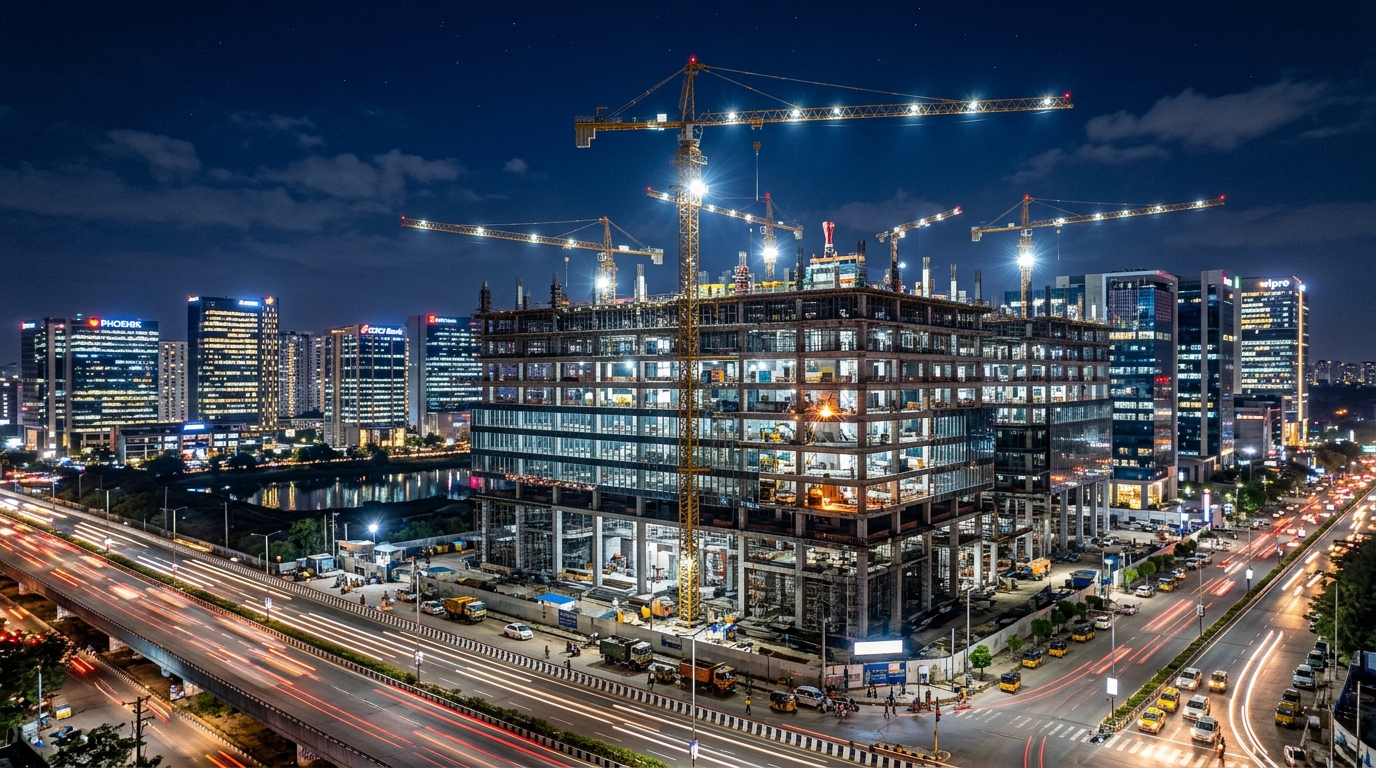
Opportunity Knocks for Builders and Landowners
Uber's substantial 10-year lease for over 9 lakh sq ft in Hyderabad is a clear indicator of sustained, large-scale corporate demand. This magnifies the need for high-quality, modern office spaces that can accommodate growth. For builders and landowners, this translates to increased opportunities for developing new commercial projects or repurposing existing assets to meet this demand. The sheer scale of this lease suggests that other major corporations are likely to follow suit, intensifying competition for prime locations and accelerating development cycles.
Developers with a strong pipeline of ready-to-occupy or under-construction Grade-A office spaces will be best positioned to capitalize on this trend. Landowners in strategic growth corridors of Hyderabad should explore partnerships with developers to unlock the potential of their properties. The long-term nature of Uber's lease also provides a degree of certainty that can de-risk larger development investments.
- Identify prime land parcels in high-growth corridors.
- Formulate development strategies for Grade-A office spaces.
- Explore joint ventures with experienced developers.
- Consider a mix of built-to-suit and speculative development.
Construction Trends, Approvals, and Supply Pipeline
The demand generated by Uber's lease will inevitably put pressure on the existing supply pipeline. Developers need to anticipate a potential supply-demand mismatch, particularly for spaces that meet ESG (Environmental, Social, and Governance) standards and offer advanced technological infrastructure. This means a focus on sustainable building practices, smart building technology, and robust connectivity will be paramount.
The approval process for large commercial projects will become a critical bottleneck. Developers must engage proactively with local authorities to streamline approvals and ensure timely project completion. A robust supply chain for construction materials and skilled labor will also be essential to meet the accelerated timelines that such demand might necessitate. Builders who can efficiently navigate these challenges will gain a significant competitive advantage.
- Prioritize sustainable and technologically advanced designs.
- Engage early with municipal bodies for faster approvals.
- Secure reliable supply chains for materials and labor.
- Develop strategies for efficient project management and execution.
Location-Specific Opportunities in Hyderabad
While the exact location of Uber's new office hasn't been explicitly stated beyond 'Hyderabad', the typical locations for such large leases are within established or rapidly developing business districts. Areas like the Financial District, Gachibowli, and Kokapet are prime candidates due to their existing infrastructure, talent pool, and concentration of IT and ITES companies. These micro-markets are already experiencing significant development and rental growth.
Developers should focus on acquiring land or exploring development opportunities within these established hubs or their immediate peripheries. The demand for contiguous large floor plates will drive up land values and rental rates in these premium locations. Proximity to social infrastructure such as residential areas, retail, and transportation networks will also be a key factor for attracting and retaining tenants.
- Target land parcels in Hyderabad's Financial District, Gachibowli, and Kokapet.
- Develop projects with large, contiguous floor plates.
- Ensure excellent connectivity and proximity to amenities.
- Understand the specific requirements of tech-centric tenants.
Risks and Execution Challenges
Despite the immense opportunity, developers must be aware of the inherent risks. These include potential delays in project execution due to regulatory hurdles, supply chain disruptions, or labor shortages. Economic downturns or shifts in corporate leasing strategies could also impact long-term demand.
Furthermore, the cost of land acquisition and construction in prime locations is high, requiring substantial upfront capital. Developers need to conduct thorough feasibility studies and risk assessments. The ability to deliver projects on time and to the exact specifications required by large corporate tenants is crucial. Failure to execute efficiently can lead to cost overruns and missed revenue opportunities. Building strong relationships with tenants and understanding their evolving needs will be key to mitigating long-term risks.
- Mitigate execution risks through robust project management.
- Secure adequate funding and manage financial exposure.
- Stay abreast of economic indicators and market shifts.
- Foster strong tenant relationships and adaptability.
Source: The Economic Times