Hyderabad's Land Integrity: Protecting Key Water Bodies as a Signal for Real Estate Stability
Published: May 2026
Market Implications: Demand, Supply, and Pricing Dynamics
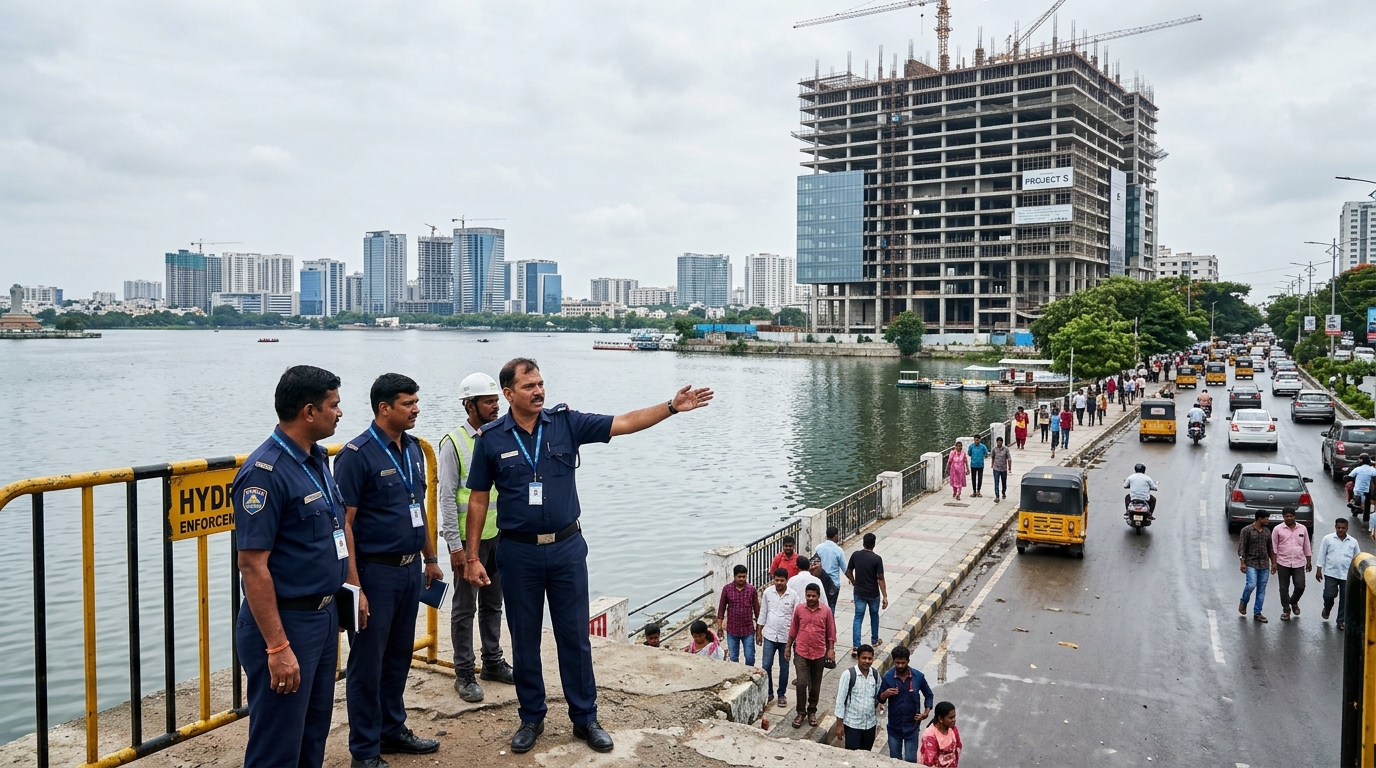
The proactive stance against land encroachment, especially around vital water bodies like Mushkin Cheruvu, is a positive signal for the Hyderabad real estate market. Such actions are crucial for maintaining the environmental balance that underpins the desirability and livability of residential and commercial areas. The preservation of such natural resources directly impacts property values by ensuring a healthier environment, reducing flood risks, and contributing to the aesthetic appeal of surrounding locales. Conversely, unchecked encroachment can lead to environmental degradation, increased infrastructure strain, and a long-term decline in property values. This news suggests a commitment to safeguarding the existing ecological framework, which is a prerequisite for sustained demand in well-planned urban expansions.
From a supply perspective, protecting water bodies ensures that designated green and open spaces remain available, preventing haphazard and often illegal construction that can consume valuable land. This, in turn, can lead to a more orderly and sustainable supply of developable land, supporting planned infrastructure development and discouraging speculative land hoarding. While the immediate impact on pricing might be indirect, the long-term effect of enhanced livability and reduced environmental risk will likely support stable to appreciating property values in areas adjacent to, or benefiting from, such environmental protections.
Enhanced livability and reduced environmental risk bolster long-term property value appreciation.
Prevents haphazard construction, leading to more orderly land supply and planned development.
Reduces potential future costs associated with environmental remediation and disaster management.
Institutional Investor Perspective: Risk Mitigation and Sustainable Capital Flows
Institutional investors, with their long-term investment horizons, view land integrity and regulatory enforcement as critical factors in their due diligence. The HYDRAA's actions signal a stable and predictable regulatory environment, reducing the risk of unforeseen legal challenges or project disruptions stemming from land disputes. For major institutional players focusing on integrated townships, commercial hubs, or large-scale residential projects in and around Hyderabad, this assurance is invaluable. It reinforces confidence in the sanctity of land titles and the commitment of local authorities to uphold development norms.
Capital flows are likely to be positively influenced. A market where land ownership is secure and environmental regulations are enforced attracts more significant investment. This crackdown on 'land sharks' can be interpreted as a move towards formalizing land acquisition and development processes, which is a prerequisite for attracting foreign direct investment (FDI) and large-scale domestic capital. This reduces the perceived risk profile of the Hyderabad market, making it more attractive compared to regions with less robust land governance.
Reduces risk of legal disputes and project delays, enhancing investment security.
Signals a stable and predictable regulatory environment, crucial for long-term capital commitment.
Encourages formal land acquisition and development, attracting FDI and institutional capital.
Policy and Regulatory Impact: Strengthening Governance for Real Estate
The news indicates a strengthening of regulatory oversight concerning land use and environmental protection. This proactive approach by HYDRAA, acting on encroachment, suggests a robust enforcement mechanism is being prioritized. Such policies are not merely about protecting water bodies; they are foundational to effective urban planning and sustainable development. This could lead to stricter scrutiny of land titles and development approvals in the future, pushing developers towards more compliant and environmentally conscious practices.
The implied policy impact is the reinforcement of the rule of law in land management. This is vital for a healthy real estate ecosystem. By actively addressing encroachment, authorities are sending a clear message that illegal land acquisition and development will not be tolerated. This fosters a more competitive and fair market environment, benefiting legitimate developers and end-users alike. It also sets a precedent for how other critical urban infrastructure and natural assets will be managed, contributing to the overall 'investability' of the city.
Reinforces the rule of law in land management, promoting fair competition.
Sets a precedent for stricter enforcement of development norms and environmental regulations.
Contributes to the overall 'investability' and long-term stability of the real estate market.
Micro-Market Relevance: Hyderabad's Growth Corridors
While Mushkin Cheruvu's specific location within Hyderabad is not detailed, its protection has implications for surrounding and potentially well-known micro-markets. Areas like Gachibowli, the Financial District, and emerging corridors like Kokapet are characterized by significant ongoing development, often with ambitious integrated projects. The preservation of water bodies in or near these rapidly urbanizing zones is paramount. These areas already experience high demand driven by IT/ITES and financial services growth, and their desirability is intrinsically linked to their environmental quality and planned infrastructure.
Ensuring the ecological integrity of areas around these prime micro-markets safeguards them from potential environmental hazards and maintains their appeal to a discerning buyer and tenant base, including expatriates and high-net-worth individuals. This proactive measure by HYDRAA can be seen as an investment in the long-term sustainability and premium positioning of these high-growth real estate hubs within Hyderabad.
Safeguards environmental quality in high-growth IT and Financial hubs (Gachibowli, Financial District, Kokapet).
Maintains the desirability and premium positioning of these key micro-markets.
Supports sustainable development and mitigates environmental risks in rapidly urbanizing zones.
Source: The Hans India