TGRERA's Ban on BhuvanTeza Infra: A Wake-Up Call for Hyderabad Real Estate Developers
Published: April 2026
Navigating the Regulatory Tightrope: Implications for Developers and Landowners
The recent ban imposed by the Telangana Real Estate Regulatory Authority (TGRERA) on BhuvanTeza Infra for alleged non-compliance and failure to refund buyer deposits sends a clear signal: regulatory adherence is paramount. For developers, this underscores the absolute necessity of transparent dealings, timely project execution, and strict adherence to RERA guidelines. This not only builds buyer trust but also ensures a smoother project lifecycle, avoiding costly legal battles and reputational damage. Landowners entering into joint development agreements must also conduct thorough due diligence on their developer partners, ensuring they have a clean regulatory track record and robust financial standing. The incident highlights the potential for significant financial and legal repercussions for all parties involved when projects falter due to non-compliance.
This enforcement action could lead to increased scrutiny from TGRERA across the board, potentially impacting the speed of approvals for new projects. Developers will need to be exceptionally diligent in their project planning, documentation, and compliance processes to anticipate and address any potential regulatory roadblocks proactively. Building a reputation for integrity and timely delivery will be more crucial than ever in securing future projects and buyer confidence.
- Prioritize complete RERA compliance in all project phases.
- Conduct rigorous due diligence on potential development partners.
- Maintain transparent communication and financial reporting with buyers.
- Understand the impact of regulatory actions on future approval timelines.
Construction Trends, Approvals, and the Supply Pipeline in Hyderabad
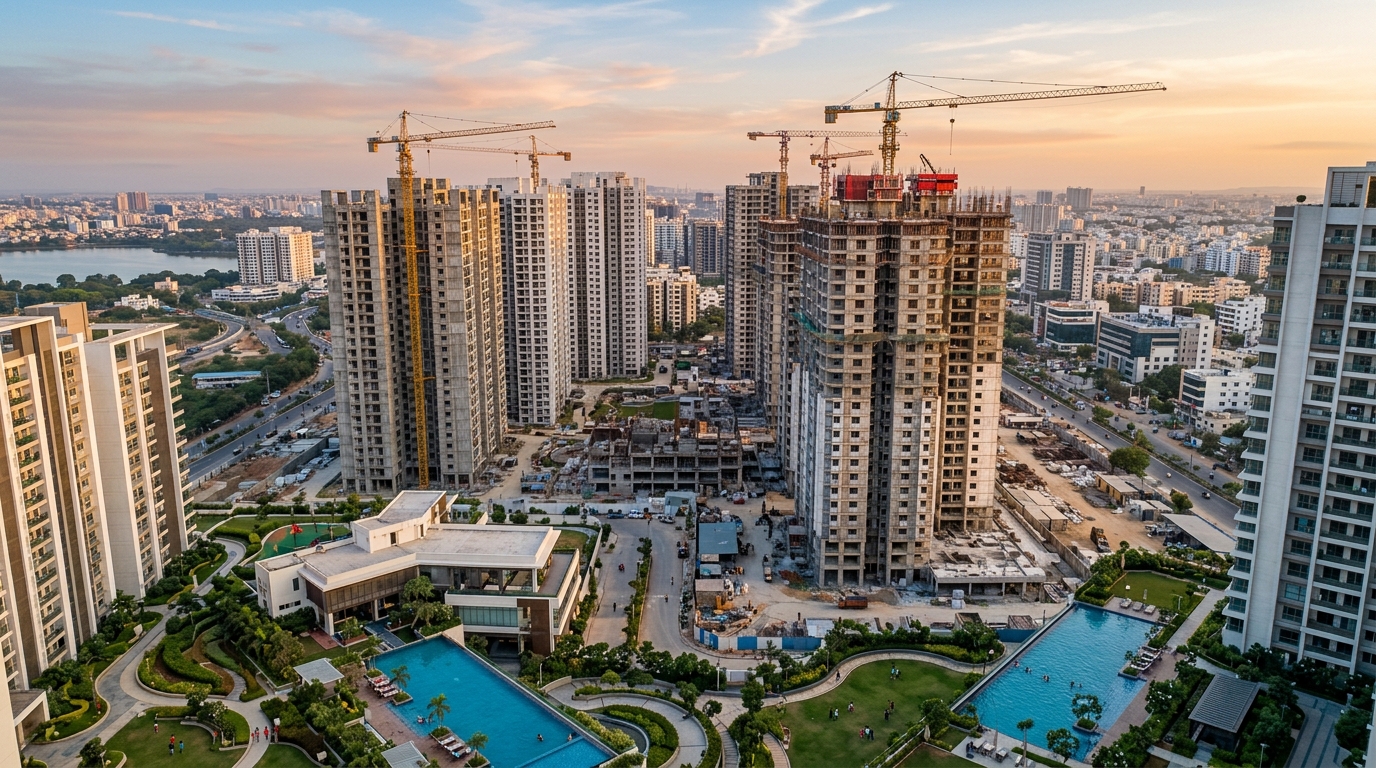
The Hyderabad real estate market, particularly in established and emerging hubs like Gachibowli, the Financial District, and Kokapet, has witnessed robust growth. However, such high-profile regulatory actions can create a ripple effect, potentially slowing down the approval process for new constructions. Developers need to factor in extended timelines for obtaining various permits and clearances. Furthermore, this situation emphasizes the importance of a well-managed supply chain and a realistic construction schedule. Projects that are over-leveraged or have ambitious, unachievable timelines are at higher risk of encountering issues that could lead to regulatory intervention.
The underlying demand for quality housing and commercial spaces in these growth corridors remains strong. However, a tightening regulatory environment, coupled with potential delays in approvals, could lead to a temporary mismatch between supply and demand if new project launches are significantly impacted. Developers who can maintain a consistent, compliant, and well-executed construction pipeline will be best positioned to capitalize on this sustained demand. Innovation in construction methods and a focus on sustainable practices can also differentiate projects and enhance their appeal.
- Anticipate extended approval timelines post-regulatory actions.
- Develop realistic construction schedules and robust supply chain management.
- Focus on projects with strong fundamentals and clear demand drivers.
- Explore efficient and compliant construction technologies.
Location-Specific Opportunities and Execution Challenges
Hyderabad's Golden Triangle – Gachibowli, Kokapet, and the Financial District – continues to be a magnet for investment due to its burgeoning IT sector, excellent infrastructure, and planned urban development. The demand for residential, commercial, and retail spaces in these micro-markets is expected to remain resilient. However, the TGRERA action serves as a stark reminder of the execution challenges inherent in these high-growth areas. Developers must be acutely aware of the land acquisition complexities, stringent master plan adherence, and the need for sophisticated project management to navigate the competitive landscape.
The key challenge for developers in these premium locations is not just about acquiring land and securing approvals, but about flawless execution from groundbreaking to handover. This includes ensuring the quality of construction, adhering to environmental norms, and providing amenities that meet the expectations of a discerning buyer base. The risk of non-compliance, as demonstrated by the BhuvanTeza Infra case, can significantly erode investor confidence and lead to project stagnation, impacting not only the developer but also the landowner and future buyers. Strategic partnerships and a commitment to ethical business practices are crucial for sustainable success in these prime Hyderabad micro-markets.
- Leverage the sustained demand in Gachibowli, Kokapet, and Financial District.
- Focus on high-quality construction and project amenities.
- Master complex land acquisition and urban planning regulations.
- Mitigate risks through strong project management and ethical practices.
Source: NewsMeter