Hyderabad's Managed Office Boom: Table Space's 5 Lakh Sq Ft Expansion Signals New Opportunities for Developers
Published: May 2026
Implications for Builders and Landowners: A Demand-Driven Opportunity
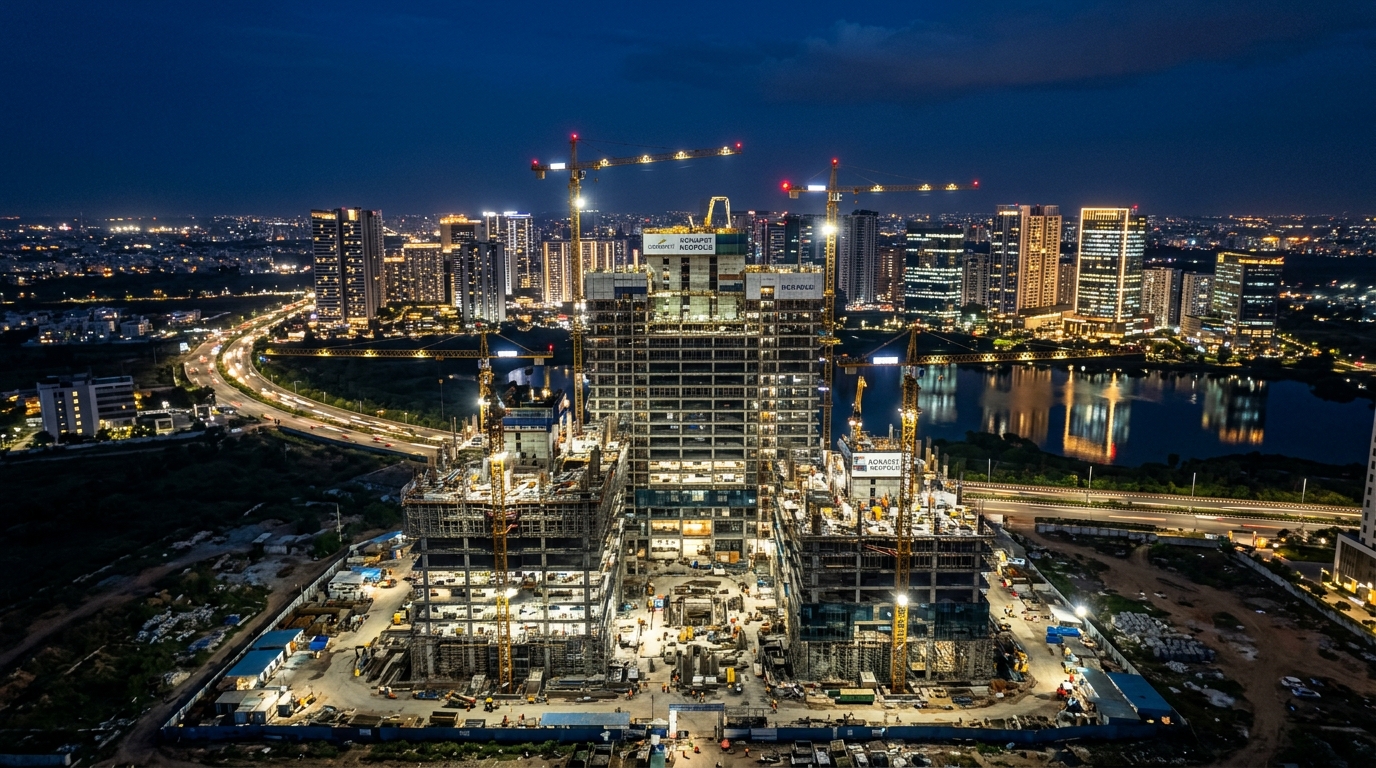
Table Space's acquisition of 5 lakh sq ft of managed office space in Kokapet is a powerful indicator of sustained demand for flexible workspaces in Hyderabad. For developers and landowners, this translates to a tangible opportunity to tap into this growing market. The expansion suggests a broader trend where companies are increasingly opting for managed or flexible office solutions, moving away from traditional long-term leases. This creates a strong pipeline of potential tenants for newly constructed or repurposed commercial spaces. Developers with existing land parcels or those looking to acquire land in prime Hyderabad corridors should view this as a strategic signal to align their offerings with this demand. Landowners in areas experiencing similar corporate interest can now leverage this demand to negotiate more favorable terms for their properties.
The scale of the expansion implies that established players like Table Space are confident in the long-term growth trajectory of Hyderabad's corporate ecosystem. This confidence often translates into a willingness to commit to larger spaces, which in turn necessitates new construction or significant upgrades. Developers who can offer modern, well-equipped, and strategically located spaces will find themselves in a strong position. The focus should be on understanding the specific requirements of managed office providers, typically plug-and-play configurations, robust infrastructure, and desirable amenities, to ensure projects are attractive and meet market needs.
Identify and acquire land in or near established and emerging corporate hubs.
Prioritize flexible space designs that cater to managed office providers' needs.
Explore partnerships or pre-lease agreements with established managed office operators.
Focus on delivering high-quality amenities and infrastructure to attract premium tenants.
Construction Trends, Approvals, and Supply Pipeline
The expansion in managed office spaces will inevitably drive construction activity. Developers should anticipate an increased demand for Grade A commercial office buildings, with a particular emphasis on speed of delivery and operational readiness. This means a need for efficient project management and streamlined construction processes. Approvals, especially in well-regulated zones like Hyderabad's Financial District and its surrounding areas, will remain a critical factor. Developers must engage proactively with local authorities to navigate the approval process swiftly, as lead times can significantly impact project viability. The current supply pipeline may need to be assessed against this new, projected demand. If the current pipeline is heavily skewed towards traditional office spaces, there could be a latent supply-demand mismatch that this managed office expansion will help to address, but also potentially exacerbate if not planned carefully.
Trends in construction will likely lean towards sustainable building practices, smart building technologies, and a focus on employee well-being (e.g., ample natural light, green spaces, advanced HVAC systems). Managed office providers often prioritize these aspects as they directly impact their ability to attract and retain clients. Developers who integrate these features into their designs will have a competitive edge. The speed at which Table Space has secured this space also suggests that companies are looking for turnkey solutions, reducing the burden of construction and fit-out on their end. This reinforces the need for developers to offer spaces that are either fully ready or can be quickly adapted.
Streamline construction timelines to meet the rapid deployment needs of managed office providers.
Incorporate sustainable and smart building technologies into new projects.
Understand and expedite the building approval process for commercial real estate.
Assess existing supply pipeline for potential gaps in flexible and managed office configurations.
Location-Specific Opportunity: Hyderabad's Prime Corridors
The specific mention of Kokapet is significant. This area, along with the adjacent Financial District and Gachibowli, forms Hyderabad's IT and business nerve center. These locations are characterized by a high concentration of IT parks, corporate offices, and a skilled workforce. Table Space's strategic move into Kokapet suggests a recognition of its burgeoning potential as a prime location for managed offices, offering proximity to existing corporate clients and a talent pool. Developers and landowners in these specific corridors are presented with the most immediate and potent opportunities.
Beyond Kokapet, the broader Financial District and Gachibowli remain high-demand areas. However, with increasing development, land availability and pricing in these core zones may become challenging. This makes surrounding or emerging micro-markets, like Kokapet, increasingly attractive. Developers should consider the entire ecosystem around these prime locations, accessibility, infrastructure, residential developments, and amenities, as these factors contribute to the overall attractiveness of a commercial space for corporate tenants and their employees.
Prioritize development in or near Kokapet, Financial District, and Gachibowli.
Investigate emerging sub-markets within Hyderabad that show similar growth potential.
Analyze the existing infrastructure and amenity landscape of target locations.
Evaluate accessibility and connectivity to talent pools for corporate clients.
Risks and Execution Challenges for Developers
While the managed office sector offers significant opportunities, developers must be cognizant of potential risks. A primary challenge is the cyclical nature of the office market. Over-supply in certain micro-markets, coupled with potential economic downturns, could lead to increased vacancy rates and pressure on rental yields. Developers must conduct thorough market analysis to avoid overbuilding and to ensure their projects are competitive even during market fluctuations. The dependence on a few large managed office providers for lease agreements also presents a risk; diversification of tenant profiles, where possible, can mitigate this.
Execution challenges include the ability to deliver projects on time and within budget, especially given rising construction material costs and labor shortages. Navigating complex regulatory environments and securing necessary permits can also cause significant delays. Furthermore, understanding the evolving needs of managed office providers, which can change rapidly with market trends, requires continuous market intelligence and adaptability in design and construction. The rapid pace of expansion by players like Table Space also means that opportunities might be time-sensitive, requiring agile decision-making and execution from developers.
Conduct rigorous market analysis to avoid over-supply and ensure long-term rental stability.
Mitigate tenant concentration risk by diversifying potential client segments.
Manage rising construction costs and labor availability challenges effectively.
Maintain flexibility in project design to adapt to evolving market demands.
Ensure swift project execution to capitalize on time-sensitive opportunities.
Source: MSN