Telangana Rural Property Sees Modest Growth: What It Means for Real Estate Investors
Published: June 2026
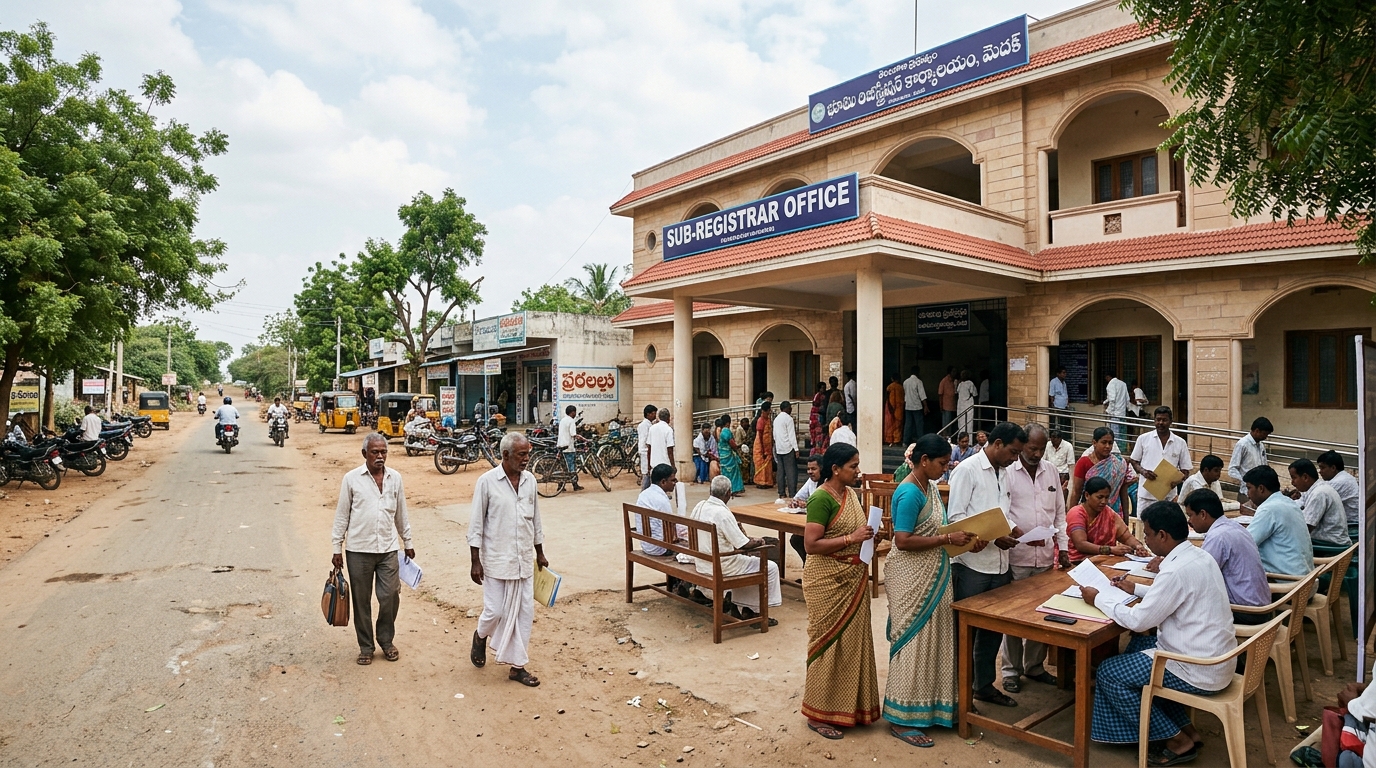
Understanding the Rural Registration Uptick
The Times of India reports a 'modest hike' in rural property registrations across Telangana. While specific figures are not detailed, this suggests a gradual but consistent interest in rural land and properties. This trend could be driven by a combination of factors: affordability compared to rapidly appreciating urban areas, a desire for larger plots, and potentially, increased investment in agricultural or allied activities.
From an investor's perspective, this moderate increase in registrations points to a stable, rather than speculative, market. It implies that local demand is present and sustained, potentially supported by agricultural income or a growing secondary housing market for individuals seeking a quieter lifestyle.
- Potential for affordable land acquisition compared to urban counterparts.
- Growing interest in rural living or secondary property ownership.
- Indication of stable, organic demand.
Implications for Real Estate Markets and Investor Strategy
While the focus often remains on the booming Hyderabad micro-markets like Gachibowli, Kokapet, and the Financial District, this rural uptick signals a need for a broader market lens. For institutional investors, this trend, though nascent, could represent a diversification opportunity. While large-scale, immediate returns might not be expected, a steady appreciation in land value in strategic rural locations could be a long-term play. This could involve acquiring land parcels that may be ripe for future development or infrastructure expansion, anticipating eventual urban sprawl or the establishment of new economic hubs.
The pricing impact is likely to be localized and gradual. Unlike the exponential growth seen in prime urban areas, rural property prices are expected to see more measured increases. This stability can be attractive to investors seeking to mitigate risk. However, it also means that the capital appreciation might be slower. The key for investors will be identifying rural areas with potential catalysts for growth, such as proximity to developing towns, improved connectivity, or government initiatives promoting rural development.
- Diversification strategy beyond hyper-growth urban centers.
- Long-term land acquisition opportunities with steady appreciation.
- Risk mitigation through stable market conditions.
- Importance of identifying rural growth catalysts.
Policy and Regulatory Environment
The news does not explicitly detail policy changes, but a sustained increase in rural registrations, even modest, can sometimes be influenced by government policies aimed at promoting rural development, agricultural reforms, or land titling initiatives. If the Telangana government has introduced or plans to introduce policies that facilitate easier land transactions, improve infrastructure in rural areas, or incentivize rural entrepreneurship, this could be a significant driver. Investors should monitor government announcements for any regulatory shifts that could further boost rural property markets.
For institutional investors, understanding these policy underpinnings is crucial. Favorable land use regulations, tax incentives for rural investments, or streamlined approval processes can significantly de-risk and enhance the attractiveness of these markets.
- Monitor government initiatives for rural development.
- Assess impact of land titling and transfer policies.
- Evaluate tax incentives and regulatory support for rural investments.
Micro-Market Considerations: Beyond Hyderabad's Core
The sustained growth in Hyderabad's core IT and Financial districts (Gachibowli, Kokapet, Financial District) has driven up land prices and rental yields significantly. This rural registration hike suggests that investors might be looking at peripheral rural areas that could benefit from future expansion or development. Identifying these 'emerging rural micro-markets' that are within commuting distance or possess unique development potential is key.
While these rural areas are unlikely to replicate the rapid pace of development seen in Hyderabad's prime zones, they offer a different risk-reward profile. The demand here is likely more localized, driven by agricultural needs, lifestyle changes, or smaller-scale commercial ventures. Investors should conduct thorough due diligence on local infrastructure, connectivity, and potential future development plans before committing capital.
- Identify rural areas near Hyderabad with potential for future development.
- Assess local infrastructure and connectivity.
- Understand the drivers of local demand (agricultural, lifestyle, small business).
- Compare risk-reward profile with established urban micro-markets.
Source: The Times of India