Raviryal Cheruvu Encroachment: A Wake-Up Call for Hyderabad's Real Estate Sector
Published: October 2026
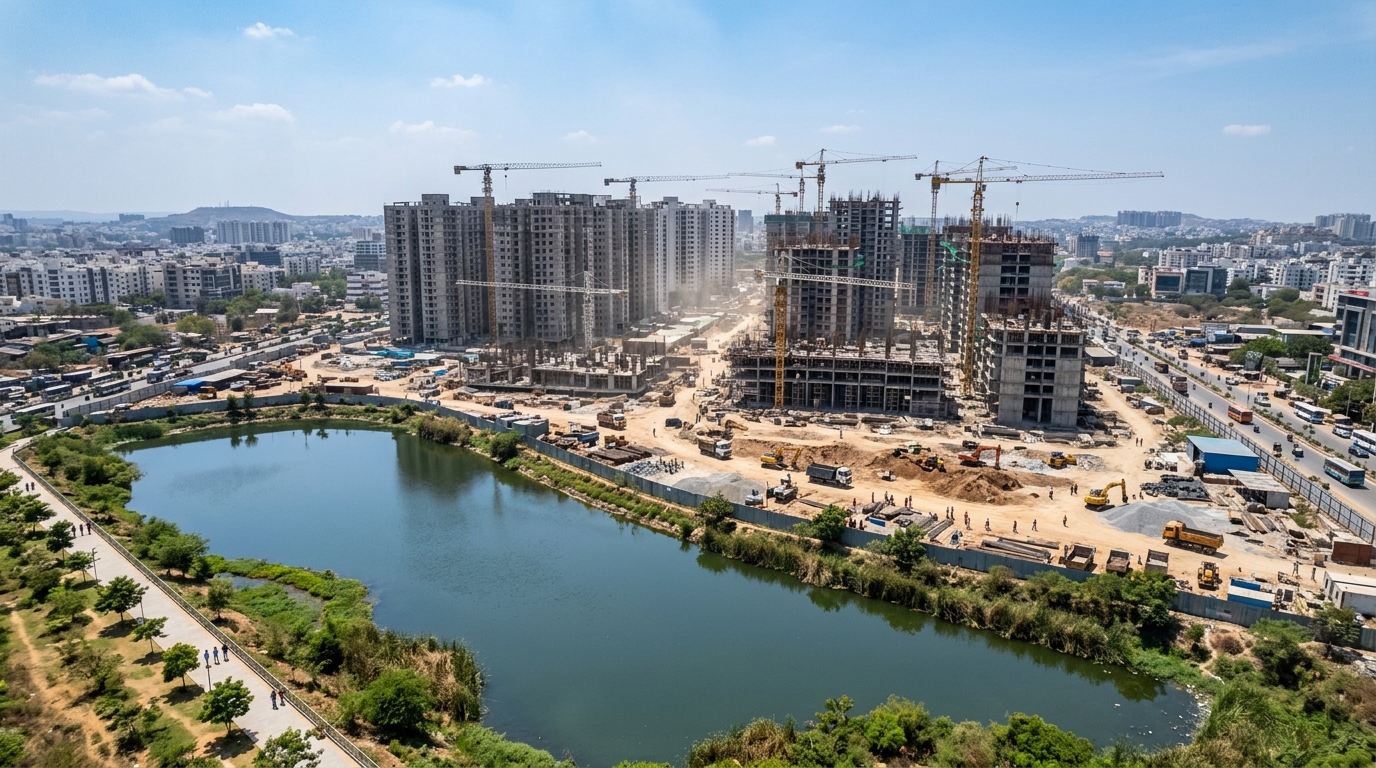
Implications for Builders and Landowners
The encroachment on Raviryal Pedda Cheruvu highlights a critical challenge: the availability of legitimate, legally sound land for development. For builders, this means increased scrutiny on land acquisition processes and the need for robust due diligence to avoid reputational damage and legal entanglements. The pressure to acquire land quickly can sometimes lead to shortcuts, a practice that this incident underscores as dangerous.
Landowners in proximity to such areas may find themselves in a precarious position. While the allure of development can be strong, the potential for environmental liabilities and the risk of being associated with illegal activities are substantial. Conversely, developers who can navigate the regulatory landscape and secure ethically sourced land in well-planned zones will likely command a premium.
- Enhanced due diligence for land acquisition is paramount.
- Reputational risk associated with illegally acquired land is high.
- Ethically sourced land in compliant zones offers a competitive advantage.
Construction Trends, Approvals, and Supply Pipeline
This incident casts a shadow on the overall construction supply pipeline. Projects reliant on land acquired through dubious means will face significant delays and potential cancellation, impacting the availability of new housing and commercial spaces. Regulatory bodies are likely to tighten approval processes for projects in environmentally sensitive areas, leading to longer lead times for new constructions.
The focus will undoubtedly shift towards sustainable development practices and adherence to environmental regulations. Developers who proactively integrate eco-friendly designs and secure all necessary clearances, including environmental impact assessments, will be better positioned to navigate the evolving regulatory landscape. This could lead to a temporary slowdown in new project launches but a more sustainable and resilient long-term supply.
- Expect stricter scrutiny of environmental clearances.
- Lead times for project approvals may increase.
- Sustainable development practices are becoming a non-negotiable requirement.
Location-Specific Opportunities and Risks in Hyderabad
While the Raviryal Cheruvu incident is specific, its implications ripple across Hyderabad's burgeoning real estate market. Areas like Gachibowli, Kokapet, and the Financial District, already prime targets for development, will likely see increased regulatory attention. Developers must ensure that their projects in these sought-after locations are fully compliant, especially concerning water bodies and green spaces.
The demand-supply mismatch in Hyderabad's premium locations continues to be a significant driver. However, the risk of illegal encroachments or developments on ecologically sensitive zones could further exacerbate this mismatch by limiting the viable land available. This creates a niche for developers who can deliver projects on legally unencumbered, well-zoned land, even if at a higher initial cost.
- Increased regulatory focus expected in Gachibowli, Kokapet, and Financial District.
- Demand for compliant land in prime areas will rise.
- Risk of supply chain disruption due to land disputes.
Navigating Risks and Execution Challenges
The primary risk highlighted by the Raviryal Cheruvu case is the legal and environmental jeopardy associated with illegally acquired land. This can lead to substantial financial penalties, project demolition, and irreparable damage to a developer's reputation. Execution challenges will include navigating complex land ownership records, obtaining multiple clearances from various government agencies, and managing community relations.
To mitigate these risks, developers should invest in thorough legal vetting of land titles, engage with local communities, and maintain transparency throughout the acquisition and development process. A proactive approach to environmental compliance, rather than a reactive one, will be key to long-term success in Hyderabad's dynamic real estate market. Building strong relationships with regulatory bodies and ensuring ethical business practices are no longer optional but essential for survival and growth.
- Prioritize legal and environmental due diligence over speed.
- Invest in community engagement and transparency.
- Build robust internal compliance frameworks.
Source: NewsMeter