Rajiv Rahadari Expansion & Bollarum Protests: Navigating Hyderabad's Real Estate Landscape
Published: August 2026
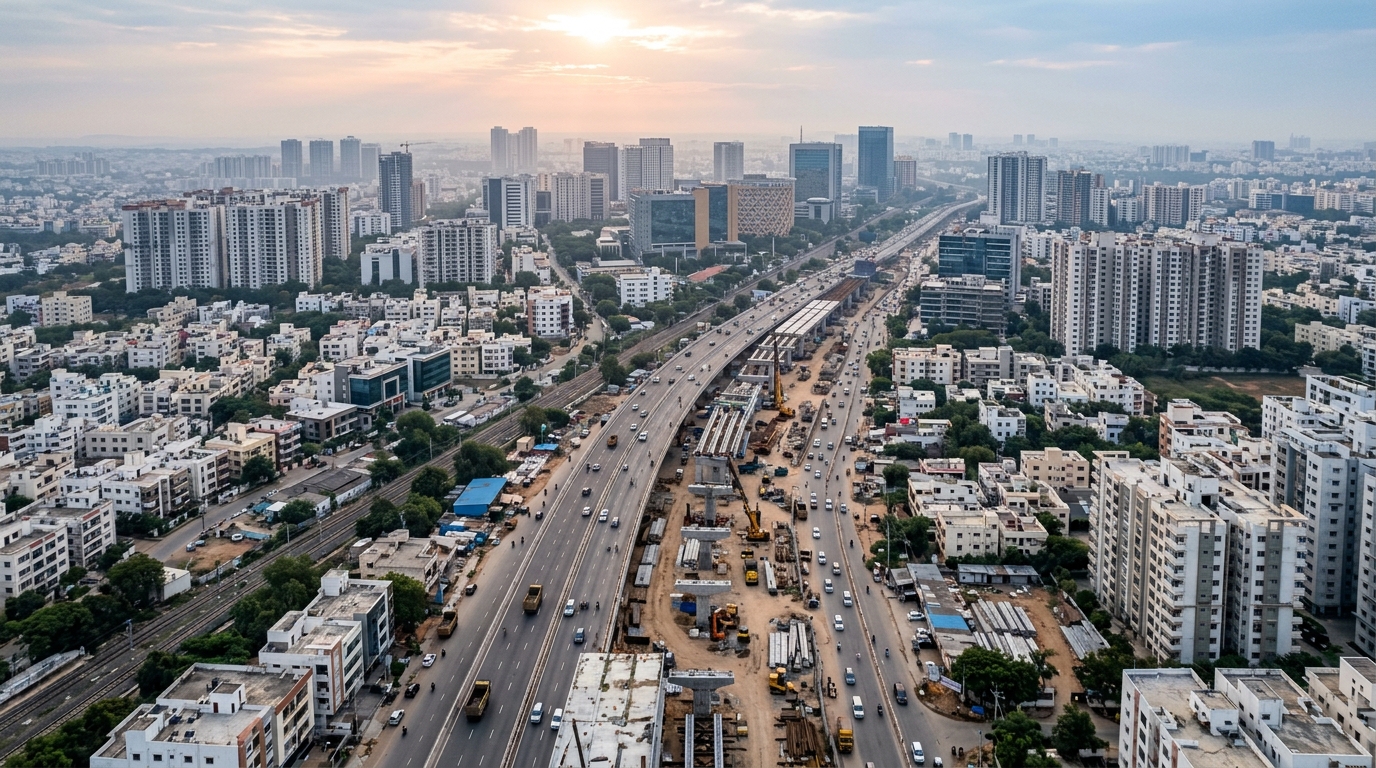
Understanding the Impact of Infrastructure Development
Infrastructure development, such as the Rajiv Rahadari expansion, is a significant catalyst for real estate growth. Improved connectivity invariably leads to increased accessibility, reduced commute times, and often, spurs economic activity in surrounding areas. While the long-term benefits of enhanced infrastructure are clear, the short-term disruptions, as evidenced by the Bollarum protests concerning compensation, need careful consideration.
The protests highlight a crucial aspect of real estate investment: the human element and local community impact. While the expansion promises future growth, immediate concerns around displacement and fair compensation can create temporary friction. For investors and buyers, this means understanding that infrastructure projects are rarely linear in their progression and can involve localized challenges.
Improved connectivity fuels property value appreciation.
Local community concerns can cause temporary project delays or adjustments.
Long-term infrastructure benefits often outweigh short-term disruptions.
Investment Strategy: Invest Now or Wait?
For investors and homebuyers looking at Hyderabad, the question of investing now or waiting is critical. The Rajiv Rahadari expansion is a long-term play. Areas benefiting from enhanced connectivity are likely to see sustained appreciation. The Bollarum protests, while concerning for those directly affected, are unlikely to derail the overall development trajectory of the region. Therefore, for investors with a medium to long-term horizon, identifying properties in well-connected zones before the full impact of the expansion is felt could be advantageous. Waiting might mean missing out on the early growth phase.
However, for homebuyers with immediate needs, it's prudent to assess the specific impact on their desired location. If Bollarum or adjacent areas are the target, understanding the resolution of the compensation issue and its timeline is crucial to avoid potential disruptions in accessing properties or neighborhood amenities during the construction phase. For established micro-markets like Gachibowli, Kokapet, and the Financial District, the impact of such peripheral infrastructure improvements is generally positive, reinforcing their status as prime real estate destinations.
Long-term investors should focus on areas benefiting from improved connectivity.
Early entry before full infrastructure realization can yield higher returns.
Homebuyers need to assess immediate neighborhood impact and project timelines.
Established micro-markets benefit indirectly from broader infrastructure enhancements.
Price Movement and Rental Yield Expectations
The expansion of Rajiv Rahadari is poised to positively impact property prices in its vicinity. Areas that were previously less accessible will likely see a surge in demand as they become more connected. We can expect moderate to significant price appreciation in these transitional zones over the next 3-5 years. Established hubs like Gachibowli, Kokapet, and the Financial District, already experiencing high demand due to IT growth and employment opportunities, will likely see continued steady appreciation, potentially accelerated by improved peripheral connectivity.
Rental yields in areas surrounding major infrastructure projects tend to remain robust. As connectivity improves and more people can access these locations for work and living, rental demand increases. While capital appreciation is the primary driver for long-term investors, consistent rental income can provide a stable return. Micro-markets with a strong tenant base (like those with a high concentration of IT professionals) are expected to maintain healthy rental yields, possibly seeing a slight upward revision as accessibility improves.
Expect price appreciation in areas directly impacted by the Rahadari expansion.
Established IT hubs will see continued steady price growth.
Rental demand is expected to remain strong with improved connectivity.
Rental yields in employment-centric micro-markets are likely to be stable to growing.
Key Micro-Markets: Hyderabad, Gachibowli, Kokapet, Financial District
While the news specifically mentions Bollarum, the impact ripples across Hyderabad's real estate ecosystem. The Rajiv Rahadari expansion aims to decongest existing routes and facilitate smoother travel, which indirectly benefits the entire metropolitan region. For Hyderabad, this translates to better overall mobility. For micro-markets like Gachibowli, Kokapet, and the Financial District, the effect is largely positive. These areas are already premium destinations driven by robust IT employment and world-class infrastructure. Improved connectivity from projects like the Rajiv Rahadari expansion further enhances their desirability, making them more attractive for both residential and commercial development.
The potential for further development and infrastructure upgrades in and around these premium micro-markets increases with such large-scale projects. While Bollarum's situation highlights localized issues, the overarching infrastructure push by the government is a net positive for Hyderabad's real estate sector. Investors should view such projects as part of a broader growth strategy for the city, looking for opportunities that leverage these connectivity improvements.
Rajiv Rahadari expansion benefits Hyderabad's overall connectivity.
Gachibowli, Kokapet, and Financial District are indirectly strengthened.
These premium micro-markets will continue to attract investment and talent.
Broader infrastructure development supports the long-term growth of these areas.
Source: Hyderabad Mail