Navigating the Surge: Property Registration Value Hike and Its Impact on Developers
Published: April 2026
Implications for Builders and Landowners
The imminent rise in property registration values signifies a tangible increase in the 'cost of doing business' for developers. For builders, this translates to higher upfront capital requirements as stamp duty and registration fees are calculated on these values. This could impact project feasibility, particularly for mid-to-high-end segments where margins are tighter. Landowners looking to sell or enter joint ventures will see their effective sale consideration potentially increase, as registration costs become a larger component of the overall transaction. However, this also means buyers will face higher acquisition costs, potentially influencing demand dynamics.
Developers must proactively assess the impact on their existing and upcoming project pipelines. This may involve recalibrating pricing strategies to absorb or partially pass on increased costs. For landowners, understanding the buyer's increased outlays will be key in negotiation. Exploring deferred payment structures or phased land acquisition could become more attractive to buyers facing higher upfront registration expenses.
- Recalibrate project feasibility studies to account for increased registration costs.
- Adjust pricing models to reflect higher buyer acquisition costs.
- Explore innovative deal structures with landowners to mitigate upfront registration expenses for buyers.
- For landowners, factor increased registration burdens into net sale proceeds.
Construction Trends, Approvals, and Supply Pipeline
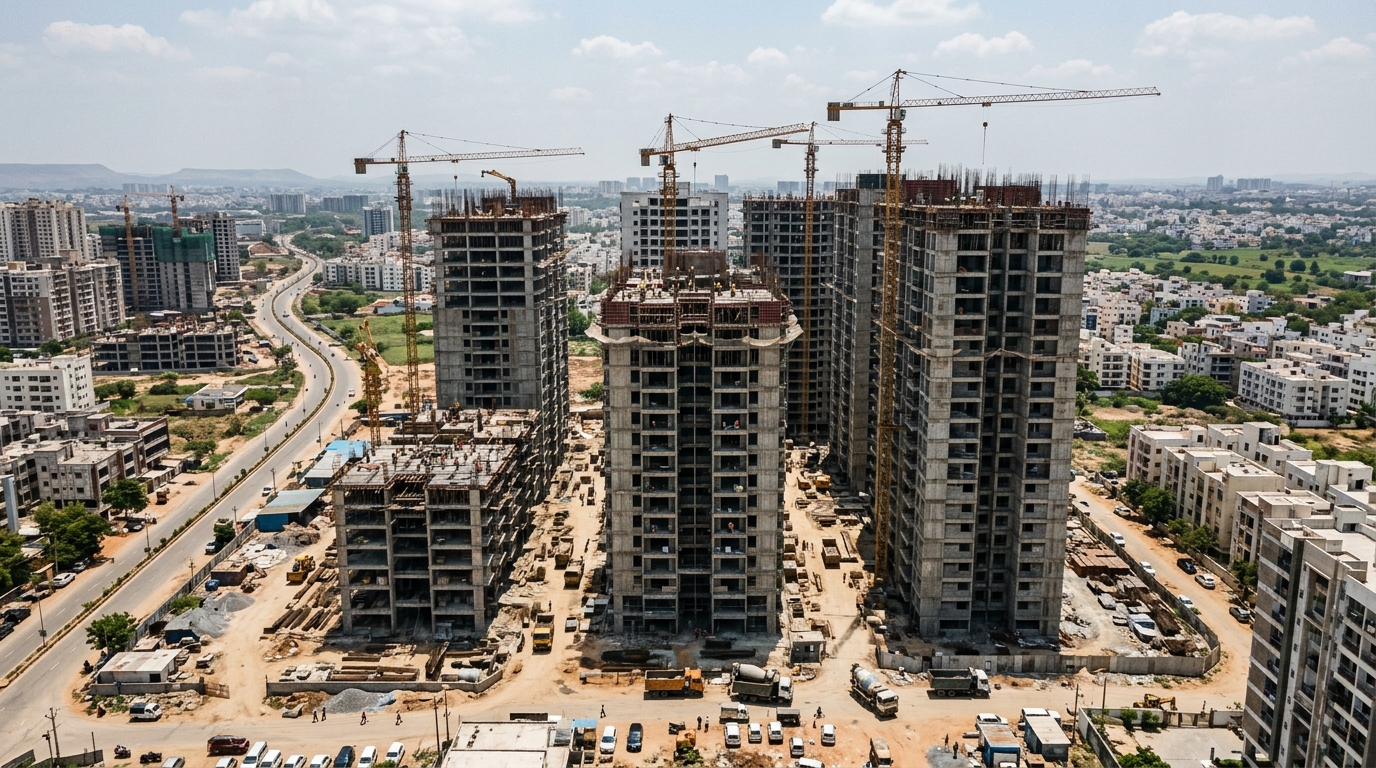
This policy shift could indirectly influence the construction supply pipeline. If the increased registration costs dampen buyer sentiment or slow down sales velocity, developers might adopt a more cautious approach to launching new projects. This could lead to a temporary slowdown in new construction starts, exacerbating existing supply-demand mismatches in certain micro-markets. Furthermore, projects that are in the advanced stages of planning and seeking approvals might face revised financial projections, potentially impacting their timeline and execution strategy. Developers need to maintain a close watch on material costs and labor availability, as any slowdown in project launches could affect the demand for these resources, but the overall trend of infrastructure development and urbanization remains a strong driver for construction activity.
The approval process, while not directly tied to registration values, can be influenced by the overall economic sentiment. A cautious market might lead to more rigorous scrutiny of project viability by regulatory bodies. Ensuring a robust supply chain for construction materials and labor, even with potential project launch slowdowns, remains critical for timely project completion and maintaining quality standards.
- Monitor market response to increased buyer costs and potential impact on sales velocity.
- Anticipate potential delays in new project launches, impacting the construction supply pipeline.
- Maintain strong relationships with material suppliers and labor contractors to ensure consistent availability.
- Ensure all project documentation and financial projections are updated to reflect revised market realities.
Location-Specific Opportunities: Hyderabad's Growth Corridors
Markets like Hyderabad, particularly prime areas such as Gachibowli, Kokapet, and the Financial District, are characterized by robust demand driven by IT and financial sector growth. While the registration value hike will affect all transactions, the underlying fundamentals of strong employment generation and infrastructure development in these locations are likely to cushion the impact. Developers with ongoing projects or those planning new launches in these micro-markets will need to assess how the increased buyer cost aligns with the perceived value and aspirational nature of these premium residential and commercial hubs.
The demand-supply dynamics in these areas are often tight. An increase in registration costs could lead to a slight recalibration of buyer behavior, potentially favoring projects offering superior amenities, strategic location advantages, and credible developer track records. For landowners in these growth corridors, the higher registration values could present an opportunity to negotiate better terms, provided the developer can demonstrate a clear path to marketability and profitability post-cost adjustment.
- Analyze the elasticity of demand in Hyderabad's growth corridors (Gachibowli, Kokapet, Financial District) against the increased registration costs.
- Focus on differentiated product offerings and value propositions to justify higher buyer outlays.
- Leverage the inherent demand in these locations to absorb incremental costs for buyers.
- For landowners, capitalize on the sustained demand by negotiating terms that account for the new registration value regime.
Risks and Execution Challenges
The primary risk associated with an increase in property registration values is a potential slowdown in buyer sentiment. If the market perceives the overall cost of acquisition to be too high, it could lead to reduced sales velocity, longer sales cycles, and pressure on project sales targets. This, in turn, can impact cash flow for developers, potentially leading to delays in construction or even project stalls if not managed effectively. Another challenge lies in accurately forecasting the market's absorption capacity for the increased costs. Overestimating this capacity can lead to unsold inventory and financial strain.
Execution challenges will also arise from potential renegotiations with stakeholders, including lenders, suppliers, and contractors, if project timelines or financial models are significantly altered. Developers must maintain transparent communication and agile execution strategies to navigate these uncertainties. The risk of increased operational costs for buyers can also lead to a preference for ready-to-move-in properties, impacting the sales of under-construction projects. Ensuring robust project management and timely delivery becomes paramount.
- Mitigate risk of reduced sales velocity by offering attractive early-bird discounts or bundled value-adds.
- Maintain healthy cash reserves to manage potential extensions in sales cycles.
- Proactively manage stakeholder relationships to address any required adjustments in project plans.
- Focus on efficient project execution and timely delivery to cater to demand for ready properties.
Source: The Times of India