Navigating the Surge: Bengaluru & Hyderabad's Office Space Boom and What it Means for Developers
Published: November 2026
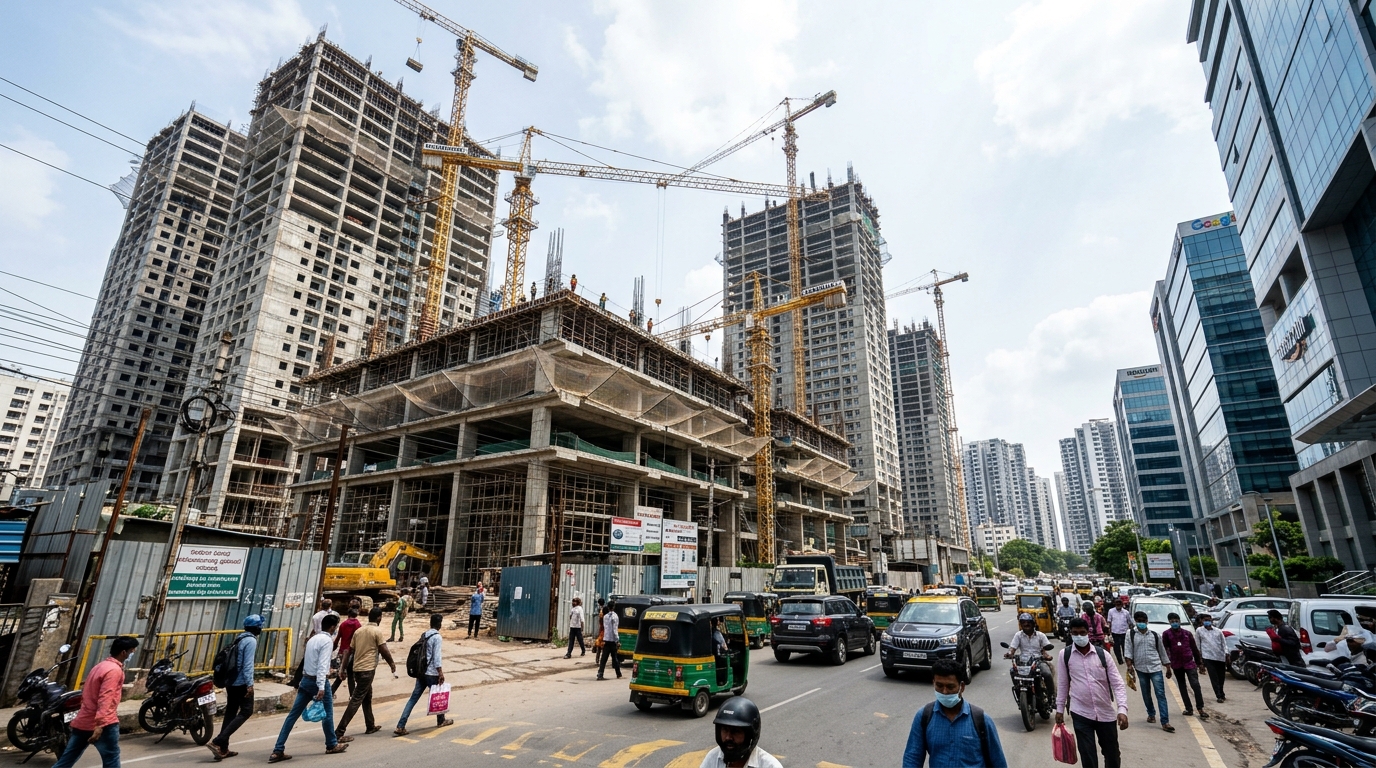
The Supply Avalanche: Opportunity Knocks for Builders and Landowners
The news of a projected 30.45 million square feet of new office space supply hitting Bengaluru and Hyderabad by 2026 is a seismic shift. For developers, this signifies a fertile ground for expansion, albeit one requiring careful strategic planning. Landowners in key growth corridors stand to benefit immensely from increased demand for strategically located parcels suitable for large-scale commercial developments. The sheer volume of upcoming supply suggests a potential for attractive pre-leasing opportunities and bulk deals, allowing developers to de-risk projects upfront. However, this also intensifies competition, making differentiation and timely project delivery paramount.
The key takeaway for builders is to move beyond speculative development and focus on creating differentiated products that cater to evolving tenant needs. This could include flexible office spaces, amenity-rich environments, and sustainable building certifications. For landowners, understanding the development pipeline and engaging with reputable developers early can secure favorable terms and ensure their assets are part of high-quality projects.
Identify underutilized land parcels in high-demand corridors.
Engage with developers for joint ventures or outright sales.
Explore opportunities for specialized office formats (e.g., flex spaces, tech parks).
Focus on creating projects with strong ESG credentials.
Construction Trends, Approvals, and the Supply Pipeline
This surge in supply necessitates a robust and efficient construction pipeline. Developers will need to leverage advanced construction technologies, modular building techniques, and pre-fabrication to accelerate project timelines and manage costs. A streamlined approval process, while outside direct developer control, will be crucial. Developers must proactively engage with regulatory bodies and stay abreast of policy changes. The current supply pipeline indicates a significant build-out phase is underway, suggesting that projects announced today will likely be completed within the projected timeframe, barring unforeseen delays.
Given the scale, expect increased demand for skilled labor and construction materials. Developers who can secure these resources and manage their supply chains effectively will have a distinct advantage. Long-term contracts with reliable suppliers and a focus on worker safety and training will be critical to maintaining project momentum and quality.
Invest in pre-fabrication and modular construction methods.
Develop strong relationships with key material suppliers.
Proactively engage with urban planning and development authorities.
Implement robust project management systems to track progress and mitigate delays.
Location, Location, Location: Hyderabad's Hotspots
While the report broadly covers Bengaluru and Hyderabad, specific micro-markets within Hyderabad are poised to be major beneficiaries. Areas like Gachibowli, the Financial District, and emerging hubs like Kokapet are already established IT and business districts. The projected supply increase will likely concentrate in these and surrounding areas, further solidifying their positions as prime commercial real estate destinations. Developers with land holdings or acquisition capabilities in these locales are in an enviable position.
The concentration of supply in these established hubs could lead to increased competition for tenants. Therefore, differentiation through superior amenities, smart building technology, and sustainable design will be key. Understanding the specific demand drivers within each of these locations, be it for large IT campuses, smaller flex spaces, or specialized co-working facilities, will allow developers to tailor their offerings for maximum market appeal.
Acquire land or partner with landowners in established IT corridors (Gachibowli, Financial District).
Explore development opportunities in rapidly developing areas like Kokapet.
Analyze tenant demand patterns within specific micro-markets.
Focus on creating integrated developments with supporting retail and residential components.
Navigating the Risks: Execution and Market Challenges
The rapid expansion of office space supply is not without its risks. The most significant is the potential for a supply-demand mismatch if economic growth falters or if the projected absorption rates do not materialize. Developers must conduct thorough market research and stress-test their financial models against various economic scenarios. Securing pre-leasing commitments remains a crucial risk mitigation strategy, especially for larger projects. Furthermore, the increasing complexity of construction projects, coupled with potential labor shortages and rising material costs, presents execution challenges that require meticulous planning and efficient management.
Another risk lies in the evolving nature of office space demand. With the rise of hybrid work models, tenants are increasingly prioritizing flexibility, employee well-being, and technology integration. Developers who fail to adapt their offerings to these changing preferences risk creating obsolete inventory. Continuous market monitoring and agility in project design and execution will be vital to navigating these challenges and capitalizing on the opportunities presented by this significant market expansion.
Secure a significant portion of pre-leasing commitments before commencement.
Diversify tenant mix to mitigate reliance on a single industry sector.
Monitor macroeconomic indicators and their potential impact on office demand.
Incorporate flexible space design and technology-enabled amenities into all new developments.
Source: Prop News Time