Dubai's Real Estate Titan Emaar's Bold Move: What it Means for Global Property Markets
Published: November 2026
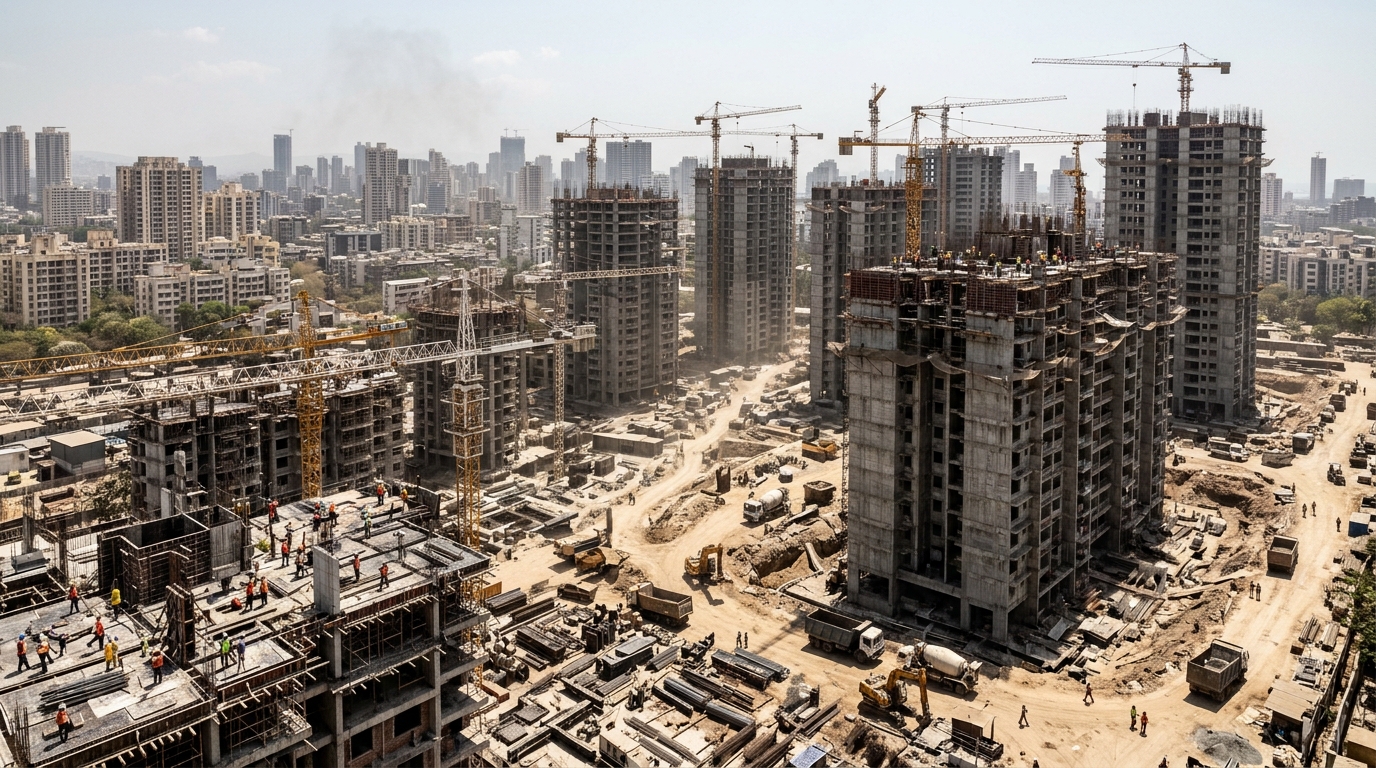
A Colossus Consolidates: The Emaar Emaar Construction Deal
The skyline of Dubai is synonymous with Emaar Properties, the developer behind the Burj Khalifa and countless other iconic structures. Now, Emaar is making a move that could redefine its operational prowess. The company has proposed an offer to buy out its construction arm, Emaar Construction, for a staggering $3.4 billion. This isn't just a financial transaction; it's a strategic consolidation aimed at streamlining operations, enhancing control, and potentially unlocking greater efficiencies. For years, Emaar Construction has been the engine room, building the dreams envisioned by its parent company. This proposed integration suggests a desire for tighter synergy, a move that often signals a drive for greater speed, cost-effectiveness, and quality control in project delivery.
Imagine a painter deciding to merge with their brush manufacturer. The analogy might be simplistic, but it captures the essence of Emaar's move. By bringing its primary construction entity fully in-house, Emaar aims to wield more direct influence over the entire development lifecycle, from the initial blueprint to the final nail. This could lead to faster project timelines, reduced overheads from external contracting, and a more cohesive approach to innovation and sustainability in its construction methodologies. It's a bold statement of intent, projecting confidence in its in-house capabilities and a commitment to future growth.
Ground-Level Impact: Buyers, Investors, and the Developer's Dilemma
For the average homebuyer, this consolidation could translate to more tangible benefits. A streamlined Emaar might be able to deliver projects faster and potentially at a more competitive price point, owing to reduced intermediate costs. For investors, the move signals a robust, forward-thinking developer, which can boost confidence in Emaar's future projects and their potential returns. The acquisition could also lead to a more predictable construction quality and adherence to timelines, factors that are paramount for both end-users and investors alike. Developers, both large and small, will be watching closely. The efficiency gains Emaar might achieve could set new benchmarks in the industry, prompting others to re-evaluate their own operational structures and supply chain management. It's a competitive landscape, and Emaar's move is a significant play to maintain its market leadership.
The broader implication for the real estate sector is a trend towards vertical integration and greater control over the value chain. As markets become more dynamic and demanding, developers are seeking ways to de-risk projects and ensure seamless execution. This could influence how other large-scale developers approach their construction needs, potentially leading to more in-house capabilities or strategic partnerships that mirror this integrated model. It's a fascinating shift that underscores the evolving complexities of bringing large-scale developments to fruition.
Future Outlook: Beyond Dubai's Sands
While this news originates from Dubai, its reverberations can be felt globally, influencing how developers approach their construction arms and, by extension, how they approach new markets. Consider the burgeoning real estate landscape of Hyderabad, India. Cities like Hyderabad, with its rapid economic growth and burgeoning IT sector, are becoming magnets for both domestic and international investment. Areas like Gachibowli, the Financial District, and the emerging enclave of Kokapet are already witnessing significant development. The efficiency and control that Emaar seeks through this acquisition could be a model for developers looking to tap into these high-growth Indian markets.
For Hyderabad, in particular, the Emaar story serves as a case study in operational excellence. As developers in Gachibowli and Kokapet scale up their operations to meet demand, the ability to manage construction efficiently, control costs, and ensure timely delivery becomes paramount. This Emaar-led consolidation hints at a future where integrated development and construction capabilities are key differentiators. It suggests a potential pathway for developers aiming for rapid expansion in dynamic Indian markets, where speed and reliability are often as crucial as the product itself. The success of this integration in Dubai could well inspire similar strategic thinking in the fast-paced Indian real estate arena.
Source: ET Realty