Navigating China's Real Estate Slowdown: Implications for Indian Developers
Published: November 2026
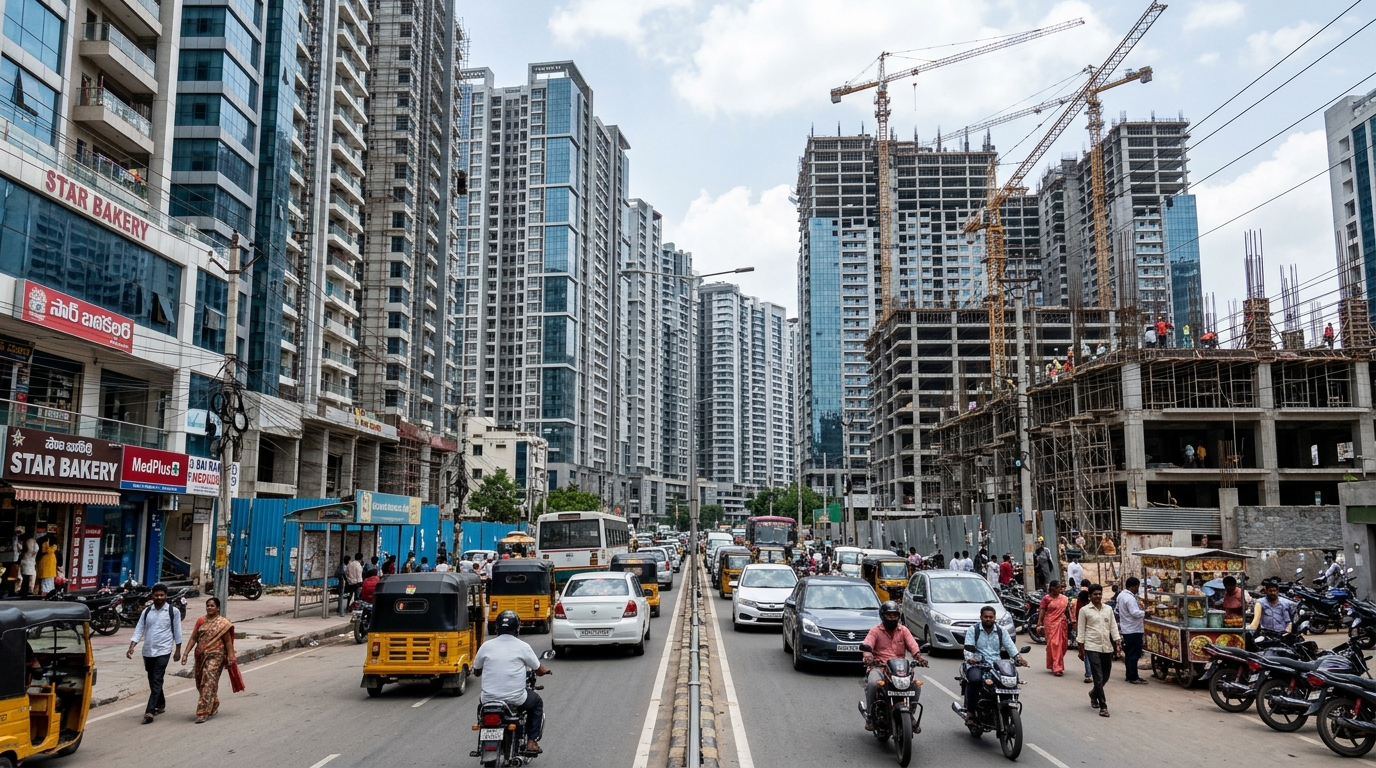
Understanding the Global Shift and its Impact on India
China's property market, a significant global player, is showing signs of a managed slowdown rather than a collapse. The reported 2.4% fall in October represents a deceleration of price declines, suggesting a potential bottoming out. While not a direct indicator of immediate Indian market growth, it signals a global recalibration. For Indian developers and landowners, this translates to a more cautious but potentially more stable international investment landscape. It underscores the importance of focusing on domestic fundamentals and identifying pockets of robust demand, rather than being overly influenced by external market volatility.
The implication for builders is a heightened need for strategic market analysis. It suggests that while global headwinds exist, strong domestic economic drivers can insulate local markets. Landowners can leverage this by understanding that while speculative land price appreciation might moderate, demand for well-located, development-ready parcels in growth corridors will likely remain robust. The key is to align land acquisition and development strategies with genuine end-user demand rather than purely speculative market trends.
- Focus on domestic demand drivers.
- Analyze global market sentiment for risk assessment.
- Emphasize long-term value proposition for projects.
- Strategic land banking in growth corridors.
Construction Trends, Approvals, and Supply Pipeline
The global slowdown in construction, to some extent, can influence material costs and labor availability. Developers should monitor international supply chains for potential impacts on project timelines and budgets. However, India's own economic growth trajectory is a more dominant factor. The approval process remains a critical bottleneck. Streamlining these processes is essential for maintaining a healthy supply pipeline that can meet demand. Developers who have pre-approved projects or established relationships with regulatory bodies will have a distinct advantage in launching and executing projects efficiently.
The supply pipeline in India, particularly in tier-1 cities, needs to be responsive to evolving buyer preferences. There's a growing demand for sustainable, smart, and community-centric developments. Builders focusing on innovation and quality construction will differentiate themselves. For landowners, the opportunity lies in partnering with developers who possess the expertise and financial backing to navigate the complexities of the approval process and deliver modern, desirable living spaces.
- Monitor global material cost fluctuations.
- Prioritize efficient project approvals.
- Invest in innovative construction technologies.
- Align supply with evolving buyer preferences (sustainability, smart homes).
Location-Specific Opportunities: Hyderabad's Growth Corridors
Hyderabad, with its booming IT sector and robust economic growth, presents a compelling case for real estate development. Areas like Gachibowli, Kokapet, and the Financial District are experiencing sustained demand for both residential and commercial spaces. This is driven by job creation, infrastructure development, and a young, aspirational demographic. The relative affordability and quality of life compared to other metros further bolster Hyderabad's attractiveness.
For developers, this translates into a strong opportunity to tap into a supply-demand mismatch. The rapid influx of talent into these corridors outpaces the current housing supply. Landowners in or around these micro-markets can command premium prices for well-zoned and accessible parcels. The focus should be on developing projects that cater to the needs of the IT workforce, offering modern amenities, convenient access to workplaces, and a high quality of living. Diversification into mixed-use developments can also capture both residential and commercial demand.
- Gachibowli: High demand for affordable to mid-range housing.
- Kokapet: Premium residential and villa projects.
- Financial District: Commercial spaces and upscale residential options.
- Focus on integrated townships and mixed-use developments.
Risks and Execution Challenges
Despite the positive outlook in certain Indian markets, developers must remain cognizant of potential risks. These include fluctuating interest rates, evolving regulatory landscapes, and geopolitical uncertainties that could impact global economic stability. For builders, execution challenges often stem from labor availability, timely material procurement, and managing project costs effectively. Delays in regulatory approvals can significantly impact project timelines and profitability.
Landowners face risks related to market downturns, although less pronounced in growth corridors. Ensuring clear titles, understanding zoning regulations, and partnering with reputable developers are crucial. The key to successful execution lies in robust financial planning, agile project management, and a deep understanding of local market dynamics. A proactive approach to risk mitigation, including contingency planning for material price volatility and construction delays, is essential for navigating these challenges and delivering successful projects.
- Interest rate sensitivity.
- Regulatory changes and approval delays.
- Labor and material cost volatility.
- Geopolitical and economic uncertainties.
- Effective risk mitigation strategies.
- Transparent land titles and due diligence.
Source: ET Realty