Hyderabad's Water Woes: Illegal Borewells Raise Red Flags for Real Estate Investors
Published: November 2026
Market Implications: The Unseen Cost of Unregulated Water Extraction
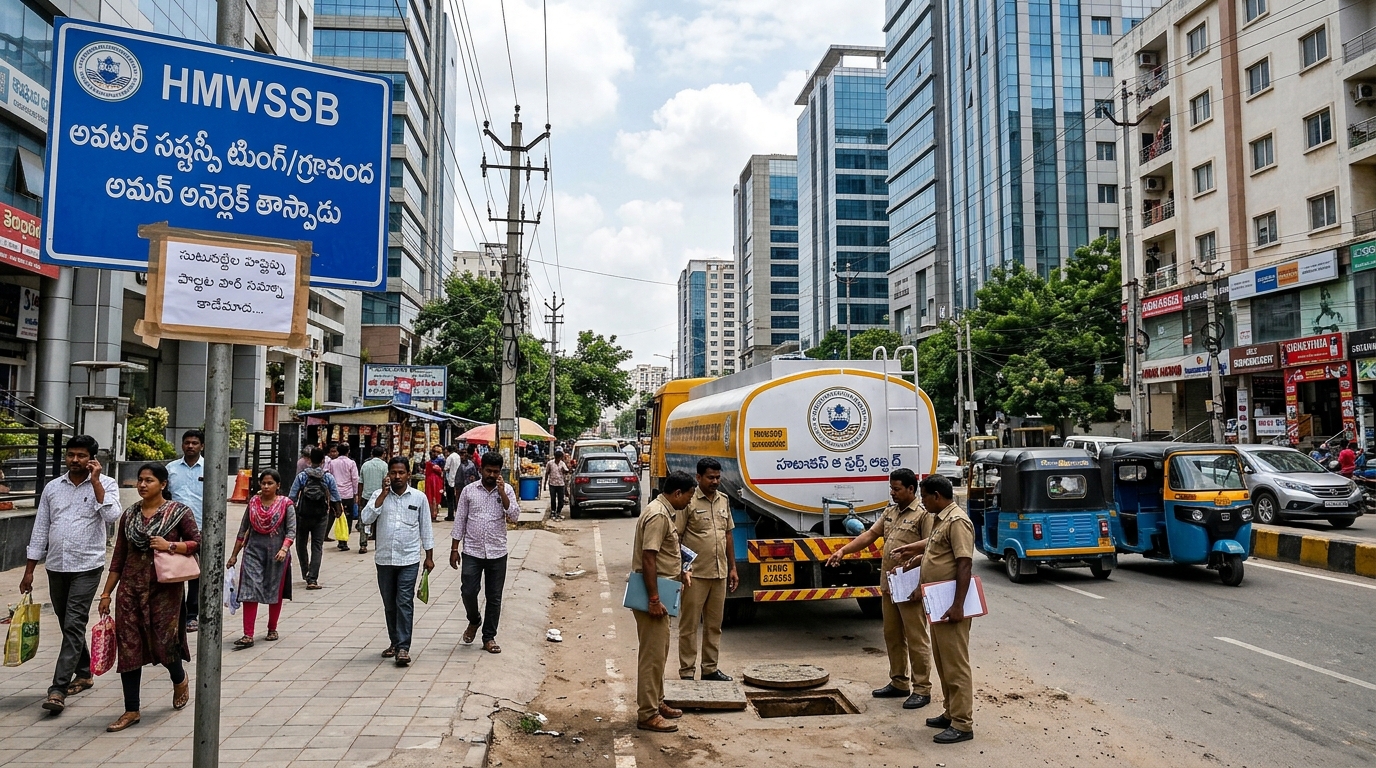
The 36 complaints lodged with the Hyderabad Metropolitan Water Supply and Sewerage Board (HMWSSB) concerning illegal borewells highlight a critical, yet often overlooked, factor in real estate development: sustainable water supply. While the immediate impact might seem localized, a sustained trend of unregulated groundwater extraction can lead to a decline in the water table. This not only poses an environmental risk but also has direct implications for the long-term viability of housing projects, particularly those reliant on groundwater. Developers may face increased costs associated with deeper borewells, water treatment, or reliance on external water tankers, which will eventually be passed on to homebuyers, potentially impacting demand and affordability. The scarcity of reliable water sources could also slow down the pace of new project approvals and completions, affecting overall supply in key growth corridors.
From a pricing perspective, properties in areas heavily reliant on borewells could see a discount compared to those with assured municipal water connections. This divergence in value could create opportunities for astute investors who can assess the water security of different micro-markets. Conversely, areas with robust water infrastructure might command a premium, attracting institutional investors seeking stability and reduced operational risk.
- Increased development costs due to water scarcity and treatment.
- Potential impact on housing affordability and buyer demand.
- Slower project delivery timelines affecting supply.
- Price differentiation based on water security.
Institutional Investor Perspective: Risk Mitigation and Due Diligence
For institutional investors, the issue of illegal borewells underscores the importance of rigorous due diligence. Beyond typical financial and legal checks, water security is emerging as a crucial ESG (Environmental, Social, and Governance) factor. Investors will need to scrutinize development plans for their reliance on groundwater and assess the long-term sustainability of water sources. Projects located in areas with high groundwater extraction rates or those that have faced regulatory scrutiny may be perceived as higher risk. This could lead to a redirection of capital towards developments with secure, non-groundwater-dependent water supply solutions. Furthermore, investors may start to favor developers with a proven track record of sustainable water management practices and compliance with environmental regulations. The HMWSSB's enforcement actions, though reactive, signal a growing regulatory focus that could impact project viability and, consequently, investment returns.
- Heightened importance of ESG factors, particularly water security.
- Increased scrutiny of development plans and water source sustainability.
- Potential redirection of capital towards water-secure projects.
- Preference for developers with strong environmental compliance and water management.
Policy and Regulatory Impact: A Call for Proactive Water Management
The 36 complaints are indicative of a broader regulatory challenge. While the HMWSSB is taking action, the underlying issue points to a need for more proactive water resource management policies. This could involve stricter regulations on borewell drilling, incentivizing rainwater harvesting, and accelerating the expansion of the municipal water supply network, especially in burgeoning areas. For the real estate sector, clearer guidelines and enforcement mechanisms regarding water sourcing will be crucial. Uncertainty around future water availability could deter investment and development. Policymakers need to balance the rapid urban expansion of Hyderabad with the imperative of sustainable water management to ensure long-term livability and economic growth. The current situation may prompt the government to expedite infrastructure projects related to water supply and treatment, creating opportunities for construction and infrastructure-focused investors.
- Need for proactive water resource management policies.
- Stricter regulations on borewell drilling and promotion of alternatives.
- Potential for increased investment in water infrastructure development.
- Importance of clear regulatory frameworks for developers.
Micro-Market Relevance: Gachibowli, Kokapet, and the Financial District
The fast-paced development in Hyderabad's IT and financial hubs, such as Gachibowli, Kokapet, and the Financial District, has seen an exponential increase in population and, consequently, demand for water. While these areas often boast modern infrastructure, the rapid influx of residential and commercial projects can strain existing water resources. The reported complaints, even if not explicitly localized to these prime micro-markets in the news, serve as a warning. Developers and investors in these high-growth corridors must conduct thorough assessments of water availability and future supply projections. Areas within or adjacent to these hubs that are heavily reliant on borewells, or where groundwater levels are known to be depleting, could face significant long-term challenges, impacting property values and the attractiveness of new developments. Conversely, projects in these micro-markets with integrated water recycling systems or secured municipal supply agreements will likely stand out and command a premium.
- High demand for water in IT and financial hubs strains resources.
- Need for comprehensive water availability assessments in these micro-markets.
- Potential for price depreciation in borewell-dependent areas.
- Premium pricing for projects with secure and sustainable water solutions.
Source: Hyderabad Mail