Hyderabad's Real Estate Resilience: Navigating Value Growth Amidst Registration Shifts
Published: November 2026
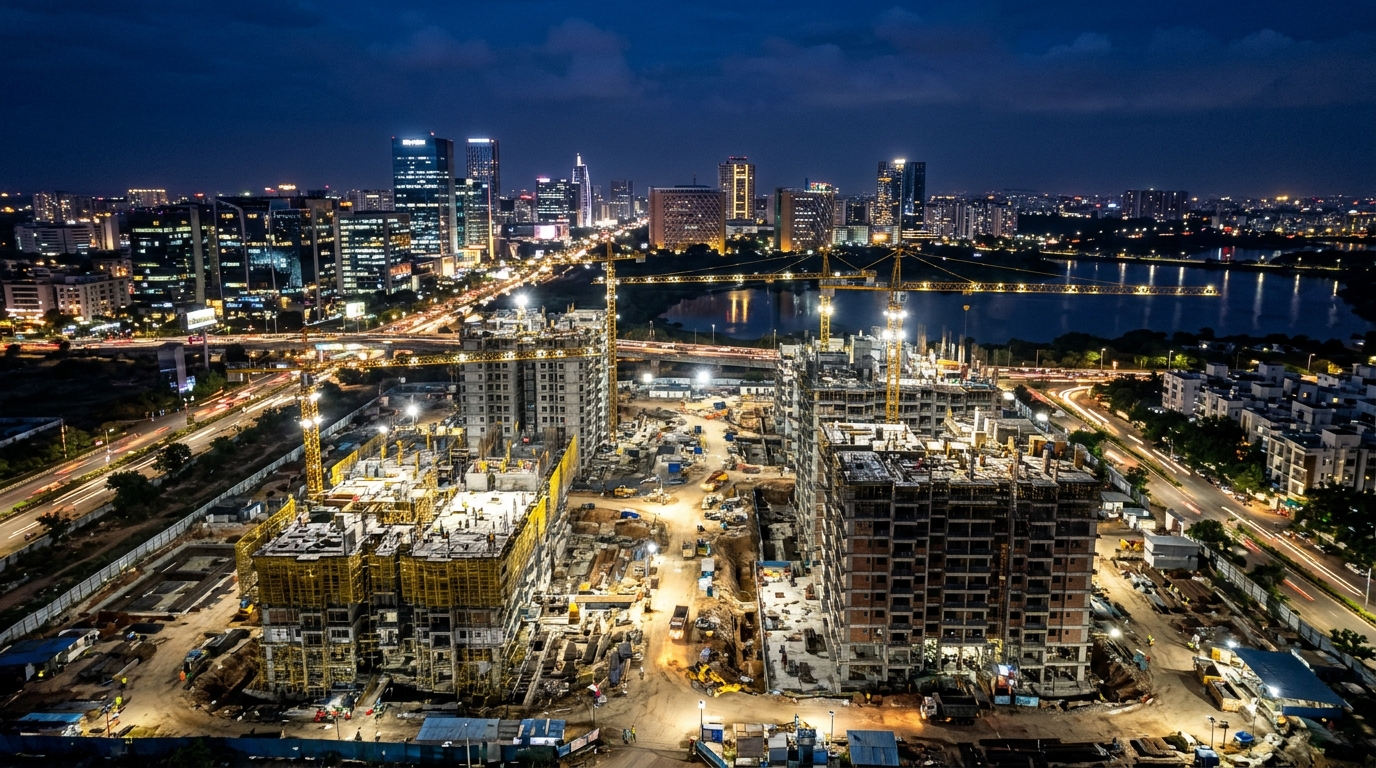
Understanding the Hyderabad Market Dynamics
Hyderabad's real estate sector is demonstrating remarkable resilience, with transaction values climbing by 3% despite a marginal dip in property registrations. This divergence signals a strong underlying demand and an increasing willingness from buyers to invest in the city's burgeoning property market. For builders and landowners, this translates to a more favorable market for premium offerings and a need to align development strategies with evolving buyer preferences. The higher transaction value suggests that while the sheer volume of deals might see minor fluctuations, the overall economic activity and perceived value within the market remain robust.
This trend is particularly encouraging for developers who have been focusing on quality construction, enhanced amenities, and strategic locations. It indicates that buyers are prioritizing these factors, potentially leading to higher profit margins for projects that meet these expectations. Landowners can also leverage this to negotiate better terms, as the underlying value of their land is being supported by sustained market activity.
- Builders should focus on value-added propositions beyond basic housing.
- Landowners can capitalize on increased land value assessments.
- The market favors well-executed and premium developments.
Construction Trends, Approvals, and the Supply Pipeline
While the news doesn't explicitly detail construction trends, the rising transaction value suggests a healthy demand that would necessitate a corresponding increase in the supply pipeline. Developers are likely to see continued interest in obtaining approvals for new projects, particularly in established and upcoming micro-markets. The focus will be on delivering projects that align with the 'premium' perception indicated by the transaction value increase. This could mean an emphasis on larger unit sizes, higher-quality materials, advanced technology integration, and sustainable building practices.
The ease and speed of obtaining construction approvals can significantly impact the supply pipeline. Developers must remain vigilant about regulatory changes and proactively engage with authorities. A robust supply pipeline, characterized by efficient project execution and timely delivery, will be critical to meeting sustained demand and capitalizing on the current market sentiment. Monitoring the construction materials supply chain and labor availability remains paramount to avoid project delays and cost overruns.
- Streamlined approval processes are key to meeting demand.
- Emphasis on sustainable and technologically advanced construction.
- Monitor material costs and labor availability to manage supply chain risks.
Location-Specific Opportunities: Gachibowli, Kokapet, and the Financial District
Hyderabad's growth corridors, including Gachibowli, Kokapet, and the Financial District, are prime beneficiaries of this market buoyancy. These areas, known for their IT and business hubs, attract a demographic with significant purchasing power, driving demand for residential and commercial properties. The rising transaction value in Hyderabad likely reflects sustained activity in these premium zones.
Developers should continue to explore opportunities in these and adjacent areas, focusing on projects that cater to the professional workforce. This includes high-rise apartments, gated communities with modern amenities, and flexible commercial spaces. The proximity to employment centers, educational institutions, and healthcare facilities makes these locations highly desirable, supporting higher property values and faster absorption rates. However, increased competition in these prime locations necessitates innovative designs and competitive pricing strategies.
- Focus on premium residential and commercial offerings in IT corridors.
- Leverage proximity to employment hubs for demand generation.
- Differentiate projects through unique design and amenity offerings to stand out in competitive locales.
Risks and Execution Challenges for Developers
Despite the positive outlook, developers must be aware of inherent risks and execution challenges. The marginal decline in registrations, while not alarming, could signal a tightening in the broader economic environment or specific buyer sentiment shifts that need close monitoring. Potential challenges include rising construction costs, particularly for specialized materials and skilled labor, and the ongoing need to navigate complex regulatory frameworks.
Furthermore, an increase in transaction value could attract more developers, intensifying competition and potentially leading to a supply-demand mismatch if development outpaces absorption. Effective project management, robust financial planning, and a keen understanding of market fluctuations are crucial. Developers must also focus on building strong relationships with all stakeholders, including buyers, contractors, and regulatory bodies, to ensure smooth project execution and mitigate potential delays or disputes.
- Monitor economic indicators that might affect buyer sentiment.
- Proactive cost management for construction materials and labor.
- Mitigate competition by focusing on differentiated project offerings and timely execution.
Source: AP7AM