Hyderabad's Unauthorised Construction Crackdown: A Wake-Up Call for Real Estate Investors
Published: October 2026
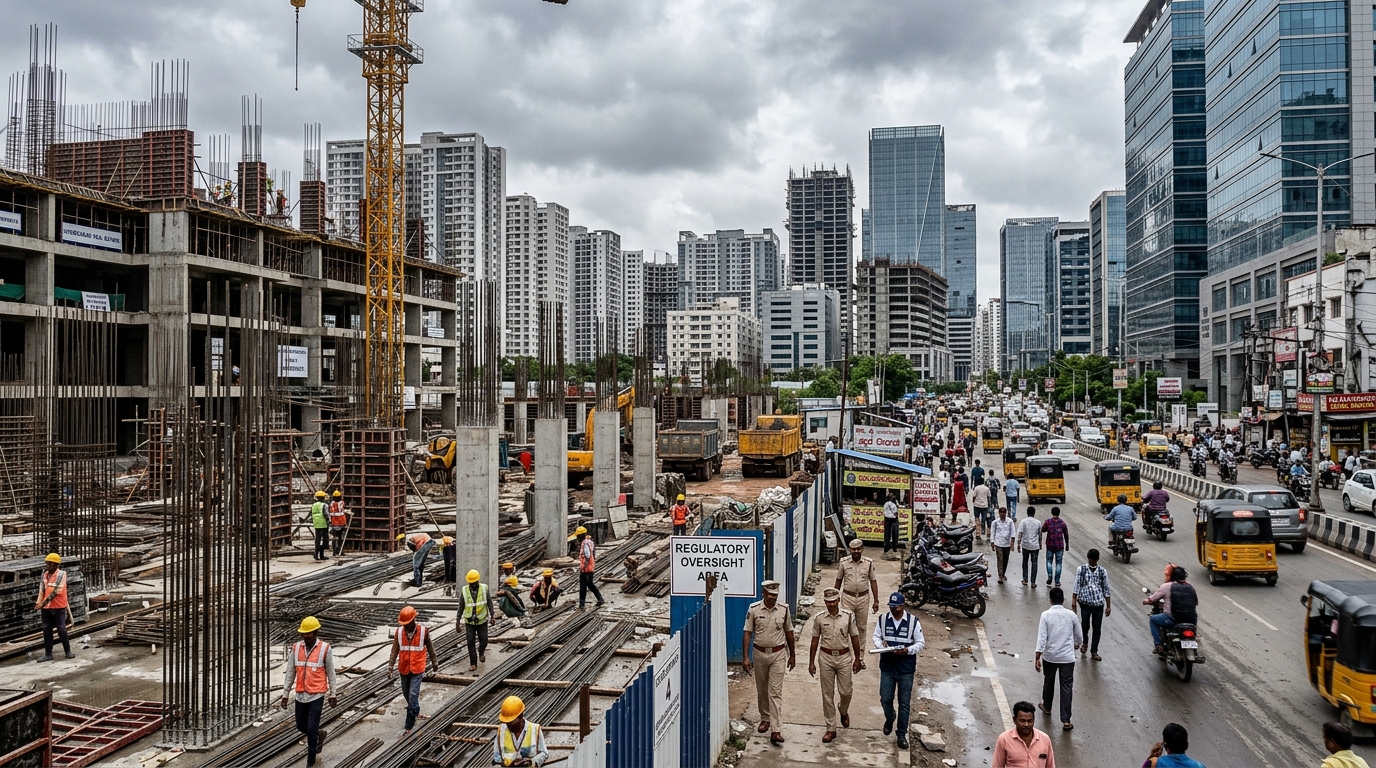
Market Implications: Demand, Supply, and Pricing Pressures
The identification of over 1,500 illegal buildings signifies a substantial, albeit hidden, volume of supply that is now under scrutiny. This crackdown, driven by stricter enforcement, is likely to lead to increased demolition or regularization costs, impacting the immediate availability of units and potentially pushing up prices for compliant, officially sanctioned properties. For buyers, this heightens the importance of due diligence, as the risk of purchasing a property with legal ambiguities increases. Developers operating in Hyderabad will need to re-evaluate their construction practices to ensure adherence to building codes and zoning laws, as non-compliance can lead to significant financial penalties and project delays. This shift could favor developers with a strong track record of legal compliance, potentially influencing capital allocation towards them.
The increased regulatory pressure could also indirectly boost demand for officially approved projects. As the risk associated with illegal constructions becomes more apparent, genuine homebuyers and investors might gravitate towards projects with clear titles and all necessary permissions. This scenario could lead to a bifurcated market, where compliant projects see enhanced demand and price appreciation, while unapproved developments face stagnation or decline in value. The long-term effect on pricing will depend on the scale of demolitions versus successful regularization efforts, but a short-term tightening of the 'legal' supply is almost a certainty.
- Potential price increase for compliant properties due to reduced 'illegal' supply.
- Heightened importance of buyer due diligence and legal verification.
- Shift in developer focus towards strict regulatory adherence.
Institutional Investor Perspective: Risk Mitigation and Capital Allocation
Institutional investors, with their larger capital outlays and longer-term investment horizons, will view this development with a heightened sense of risk assessment. The prevalence of illegal constructions poses a direct threat to the stability of their investments, especially if they have exposure to or are considering projects in affected areas. For these investors, the focus will invariably shift towards projects that demonstrate unwavering commitment to legal compliance, transparency, and robust governance. Expect a more stringent vetting process for any real estate acquisitions or joint ventures, with a premium placed on developers who can provide clear title deeds, all requisite permits, and a history of adherence to local building regulations.
The crackdown also presents an opportunity for astute investors. It signals a market undergoing a correction towards greater formality and legality. Institutional capital may be directed towards acquiring distressed assets from developers facing regulatory challenges, provided they can be legally salvaged, or towards funding new developments by reputable builders who can capitalize on the cleaner competitive landscape. Furthermore, investments in PropTech solutions that aid in property due diligence, compliance verification, and transparent land registry management could see increased interest. The direction of capital flow is likely to be towards stability, compliance, and projects with demonstrably lower regulatory risk.
- Increased scrutiny of developers' legal compliance and project documentation.
- Preference for projects with clear titles and regulatory approvals.
- Potential for distressed asset acquisition or funding for compliant developers.
- Growing interest in PropTech for risk mitigation.
Policy and Regulatory Impact: Strengthening Governance and Enforcement
This extensive flagging of illegal constructions underscores a significant gap in planning, approval, and enforcement mechanisms. The Hyderabad Municipal Corporation's action is a clear indication of a policy shift towards stricter governance and a determination to curb unauthorized development. The long-term impact will depend on the consistent application of these regulations. We anticipate more rigorous scrutiny of building plans, potentially leading to slower approval times initially but a healthier market in the long run. The authorities may also introduce or strengthen measures for regularizing existing illegal structures, but with increased penalties and a focus on public safety. This could involve enhanced penalties, stricter development control regulations, and potentially more frequent inspections during the construction phase.
From a policy perspective, this event calls for a review of the entire development approval lifecycle. This could include digitizing and streamlining the approval process to reduce opportunities for corruption and expedite legitimate constructions, while simultaneously enhancing public access to information regarding property development and compliance. The potential for a more robust and transparent regulatory environment will be a key factor in attracting and retaining both domestic and international investment in Hyderabad's real estate sector. The government's commitment to enforcing these regulations will be a critical determinant of future market sentiment and investor confidence.
- Enhanced scrutiny of building plans and potentially slower approval times.
- Increased penalties for non-compliance and potential regularization schemes.
- Calls for streamlining and digitizing the development approval process.
- Strengthening of enforcement mechanisms and public oversight.
Micro-Market Relevance: Hyderabad's Prime Zones Under the Lens
While the news doesn't specify exact locations, the sheer number of flagged buildings suggests a widespread issue that could impact all micro-markets within Hyderabad. However, prime growth corridors such as Gachibowli, Kokapet, and the Financial District, which have seen rapid development and significant investor interest, are likely to be closely monitored. These areas often attract large-scale residential and commercial projects, where deviations from building codes, even if minor, could have cascading effects on infrastructure and long-term sustainability.
Developers and investors in these sought-after micro-markets must exercise extreme caution. The allure of rapid development and high demand in these zones can sometimes lead to corner-cutting. The current enforcement action serves as a stark reminder that even in high-growth areas, adherence to regulations is paramount. For institutional investors, due diligence in these prime locations will be more critical than ever, focusing on the legality of land parcels, building approvals, and the developer's compliance history. A clean slate in terms of legal compliance will become a significant differentiator and a key factor in driving capital into these premium micro-markets.
- Potential impact on all Hyderabad micro-markets, with particular focus on growth corridors.
- Increased due diligence requirements for Gachibowli, Kokapet, and Financial District.
- Emphasis on developer compliance history in premium locations.
- Legal compliance as a key differentiator for investment attractiveness.
Source: The Times of India