Hyderabad's Land Rush Intensifies: Navigating the 'Golden Triangle' Boom for Developers
Published: October 2026
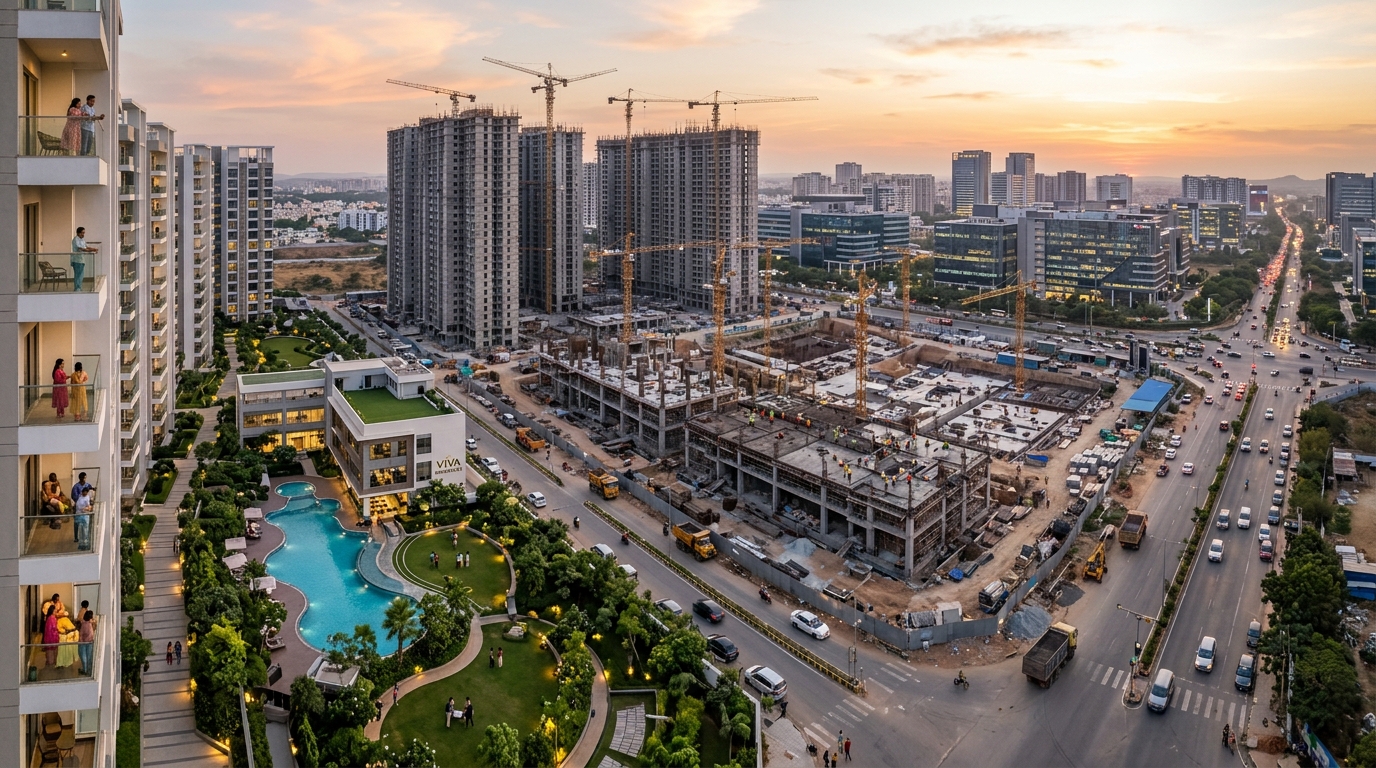
The 'Golden Triangle' Phenomenon: What It Means for Builders and Landowners
The news highlights an unprecedented demand for land in Hyderabad's western corridor, specifically the Gachibowli, Kokapet, and Financial District area. This 'Golden Triangle' is experiencing a rapid escalation in land values, driven by continued IT sector growth and a significant influx of talent. For landowners, this translates to lucrative exit opportunities or the potential for premium joint development agreements. For builders, it signals a need for agile strategies to acquire land at competitive prices and capitalize on the insatiable demand for residential and commercial spaces.
The current market dynamic indicates a supply-demand mismatch, especially for premium residential and Grade A commercial office spaces. Developers who can secure prime locations within or adjacent to this growth corridor are poised for substantial returns. However, the high entry cost demands meticulous project planning and execution to ensure profitability.
- Landowners: Explore joint development opportunities for higher returns or outright sale at peak valuation.
- Builders: Focus on acquiring land parcels that offer a unique proposition or cater to specific niche demands within the luxury or mid-range residential segment.
Construction Trends, Approvals, and Supply Pipeline
The accelerated land acquisition in this region suggests an anticipation of continued demand, leading to a potential ramp-up in construction activities. Developers will need to navigate a tightening labor market and rising material costs. Securing timely approvals from authorities will be critical to maintaining project timelines and mitigating risks. The current supply pipeline, while growing, may not be sufficient to meet the projected long-term demand, especially for integrated developments that offer a blend of residential, retail, and entertainment.
Developers should consider incorporating sustainable construction practices and smart building technologies to enhance project appeal and operational efficiency. Pre-launch sales and phased development strategies can help manage cash flow effectively amidst escalating construction expenses. Leveraging advanced construction techniques to expedite project completion will be a key differentiator.
- Expedite approval processes through proactive engagement with regulatory bodies.
- Explore prefabrication and modular construction to accelerate project timelines.
- Diversify supply chain partners to mitigate risks of material shortages and price fluctuations.
Location-Specific Opportunities and Challenges
Gachibowli, Kokapet, and the Financial District are no longer just IT hubs; they are emerging as integrated townships. Gachibowli offers a mature ecosystem with established social infrastructure, making it ideal for residential projects targeting professionals and families. Kokapet, known for its large land parcels, presents opportunities for master-planned communities and large-scale commercial developments. The Financial District, with its concentration of corporate giants, demands premium office spaces and high-end residential options.
The primary challenge in these prime locations is the escalating land acquisition cost, which can significantly impact project viability. Intense competition among developers for limited land parcels further inflates prices. Executing projects within tight deadlines while adhering to quality standards will be paramount to capturing market share and investor confidence.
- Gachibowli: Focus on mid-to-high-end residential, co-living spaces, and hybrid office solutions.
- Kokapet: Target large-scale integrated townships, luxury villas, and mixed-use developments.
- Financial District: Prioritize Grade A commercial spaces and premium residential apartments for C-suite executives.
Risks and Execution Challenges
While the growth trajectory is promising, developers must be wary of potential risks. A sudden economic downturn or a slowdown in the IT sector could impact rental yields and property appreciation. Regulatory changes or infrastructure bottlenecks could also pose challenges. Over-reliance on a single asset class or buyer segment can be a significant risk. Developers need robust market research and financial modeling to assess demand elasticity and absorption rates.
Execution challenges include managing construction quality amidst rapid development, ensuring timely delivery to avoid penalties, and maintaining competitive pricing. The high cost of land necessitates a higher sales velocity and potentially reduced profit margins if market conditions shift unfavorably. A comprehensive risk mitigation strategy, including phased launches, flexible payment plans, and strong sales networks, is crucial for success.
- Conduct thorough due diligence on land titles and zoning regulations.
- Develop contingency plans for potential delays in project approvals or infrastructure development.
- Monitor market sentiment and adapt sales and marketing strategies accordingly.
- Ensure strong project management capabilities to maintain quality and timelines.
Source: regnews.in