Hyderabad's Ultra-Luxury Boom: A Goldmine for Developers and Landowners
Published: October 2026
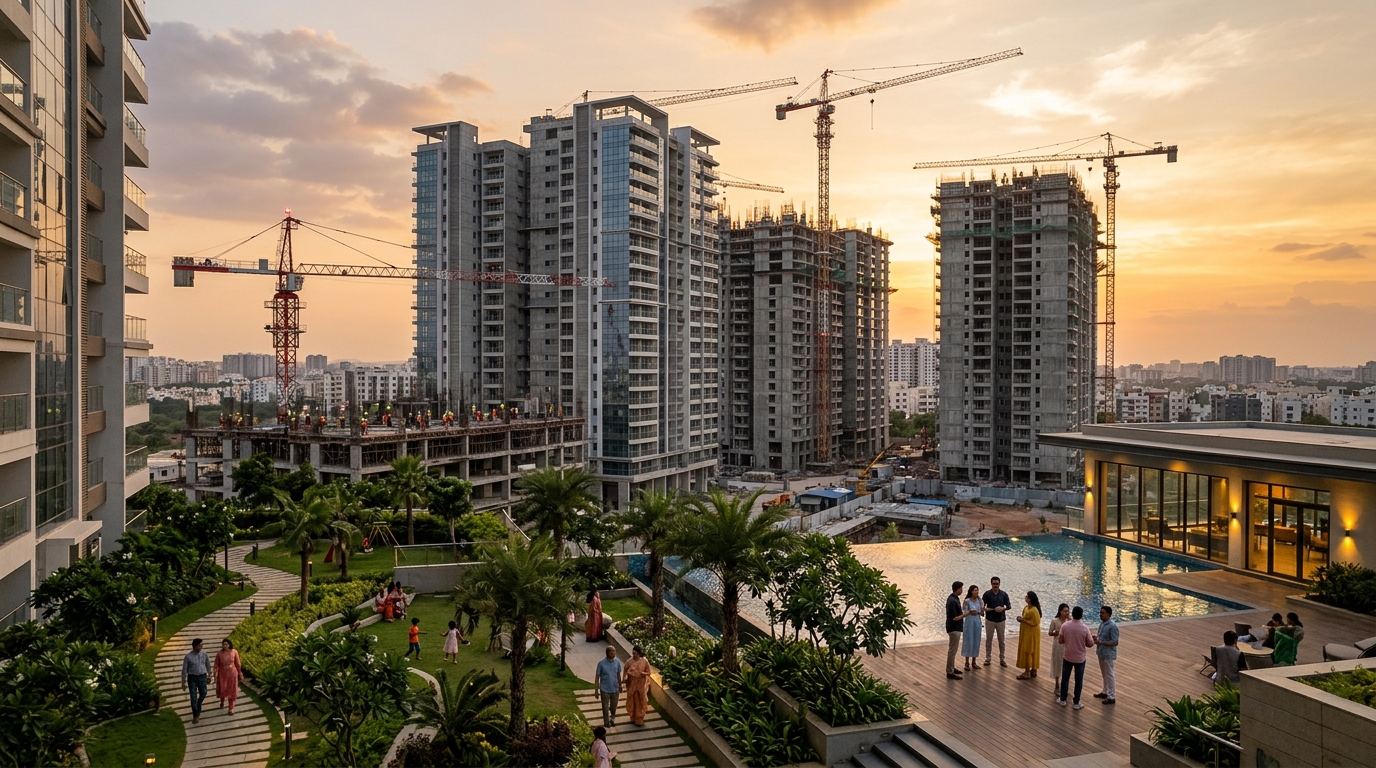
The Billionaire Effect: Unlocking Developer and Landowner Potential
Hyderabad's ultra-high-net-worth individuals (UHNWIs) are demonstrating a clear and persistent appetite for luxury real estate, with over 2,000 units valued at Rs 10 crore and above sold in just four years. This isn't a fleeting trend; it signifies a mature market segment actively seeking premium living experiences. For builders, this translates to a robust demand for high-value, quality construction. Developers should focus on niche projects catering to this discerning clientele, prioritizing superior craftsmanship, exclusive amenities, and bespoke design. The profitability potential in this segment, while requiring higher initial investment, offers substantial returns. Landowners in prime locations are now in a position to command premium prices for their plots, especially those suitable for large-scale luxury developments. Strategic partnerships with established developers who understand the luxury market are crucial to maximizing land value and ensuring successful project execution.
The key takeaway is the shift from mass-market to niche luxury. Developers need to adapt their business models to focus on fewer, but more impactful, high-end projects. This means investing in premium materials, sophisticated architectural designs, and world-class lifestyle facilities. For landowners, a well-located parcel of land that can accommodate such developments is a significant asset, and negotiations should reflect the high demand and potential profitability of luxury projects.
Identify and acquire land in prime luxury micro-markets.
Partner with developers experienced in high-end construction and marketing.
Explore joint ventures to leverage expertise and capital.
Negotiate land sale agreements that reflect the premium nature of luxury developments.
Construction Trends, Approvals, and the Supply Pipeline
The Rs 10 Cr+ segment demands more than just brick and mortar; it requires a commitment to cutting-edge construction technologies, sustainable practices, and impeccable finishing. Builders must invest in advanced construction techniques to ensure structural integrity and aesthetic perfection. The approval process for such large-scale, high-value projects can be complex and time-consuming. Developers need to proactively engage with regulatory bodies, ensuring all environmental, safety, and zoning clearances are obtained efficiently. The current supply pipeline for genuinely luxury offerings, particularly those exceeding Rs 10 crore, may not be fully aligned with the demand. This gap presents a significant opportunity for developers to enter or expand their presence in this segment, provided they can navigate the construction and approval timelines effectively.
Developers must also consider the integration of smart home technologies, energy-efficient systems, and advanced security features. The supply of skilled labor for intricate finishing work and specialized construction techniques will be a critical factor. Furthermore, understanding the typical project lifecycle for luxury homes, from conceptualization to handover, is essential for accurate planning and execution. The ability to streamline the approval process without compromising on quality will be a key differentiator.
Prioritize quality materials and advanced construction methodologies.
Adopt sustainable building practices for long-term value and market appeal.
Develop a robust strategy for navigating the regulatory and approval landscape.
Forecast and secure the supply of specialized labor and premium materials.
Location Spotlight: Hyderabad's Luxury Hubs
The news explicitly highlights the demand in Hyderabad, and within the city, specific micro-markets are the epicenters of this luxury real estate boom. Areas like Gachibowli, the Financial District, and emerging premium zones like Kokapet are prime targets. These locations benefit from proximity to IT hubs, corporate offices, and a growing concentration of high-earning professionals, creating a natural customer base for luxury residences. Developers should conduct granular market research within these areas to identify specific pockets with the highest potential. The availability of large land parcels suitable for integrated luxury townships or standalone premium villas will be a critical factor.
Beyond these well-established hubs, developers should also explore peripheral areas that are undergoing rapid development and infrastructure upgrades, potentially offering more competitive land acquisition costs while still tapping into the broader luxury demand. Understanding the local infrastructure development plans and the future growth trajectory of these areas is vital for long-term investment decisions. The presence of international schools, high-end retail, and fine dining further enhances the desirability of these locations for the UHNWI segment.
Focus development efforts on established luxury corridors like Gachibowli and the Financial District.
Analyze emerging premium zones such as Kokapet for untapped potential.
Assess the availability of suitable land parcels for luxury projects in target micro-markets.
Evaluate the existing and planned infrastructure that supports a luxury lifestyle.
Navigating Risks and Execution Challenges
While the luxury market offers immense rewards, it is not without its risks and execution challenges. The high price point of these properties means that sales cycles can be longer, requiring substantial marketing budgets and sophisticated sales strategies. Economic downturns or shifts in investor sentiment can disproportionately impact the luxury segment. Developers must maintain robust financial planning to weather any market volatility. Execution challenges include ensuring flawless construction quality, meeting ambitious timelines without compromising on standards, and managing the expectations of ultra-wealthy buyers who demand perfection. The competition, though niche, is also evolving, with established players and new entrants vying for market share.
Furthermore, the cost of land acquisition in prime luxury locations can be exceptionally high, demanding meticulous cost management throughout the development process. The ability to create a unique selling proposition (USP) that truly differentiates a project in a competitive landscape is paramount. Reputational risk is also a significant factor; any lapse in quality or delivery can have a lasting negative impact. Therefore, a strong focus on project management, stakeholder communication, and quality control at every stage is essential for success.
Develop comprehensive risk mitigation strategies for market volatility.
Implement stringent quality control measures throughout the construction lifecycle.
Invest in targeted marketing and sales strategies for the UHNWI demographic.
Maintain meticulous financial planning and cost control measures.
Source: The Times of India