Hyderabad's Real Estate Market: Navigating Emerging Risks and Opportunities Amidst a Law Enforcement Scare
Published: October 2026
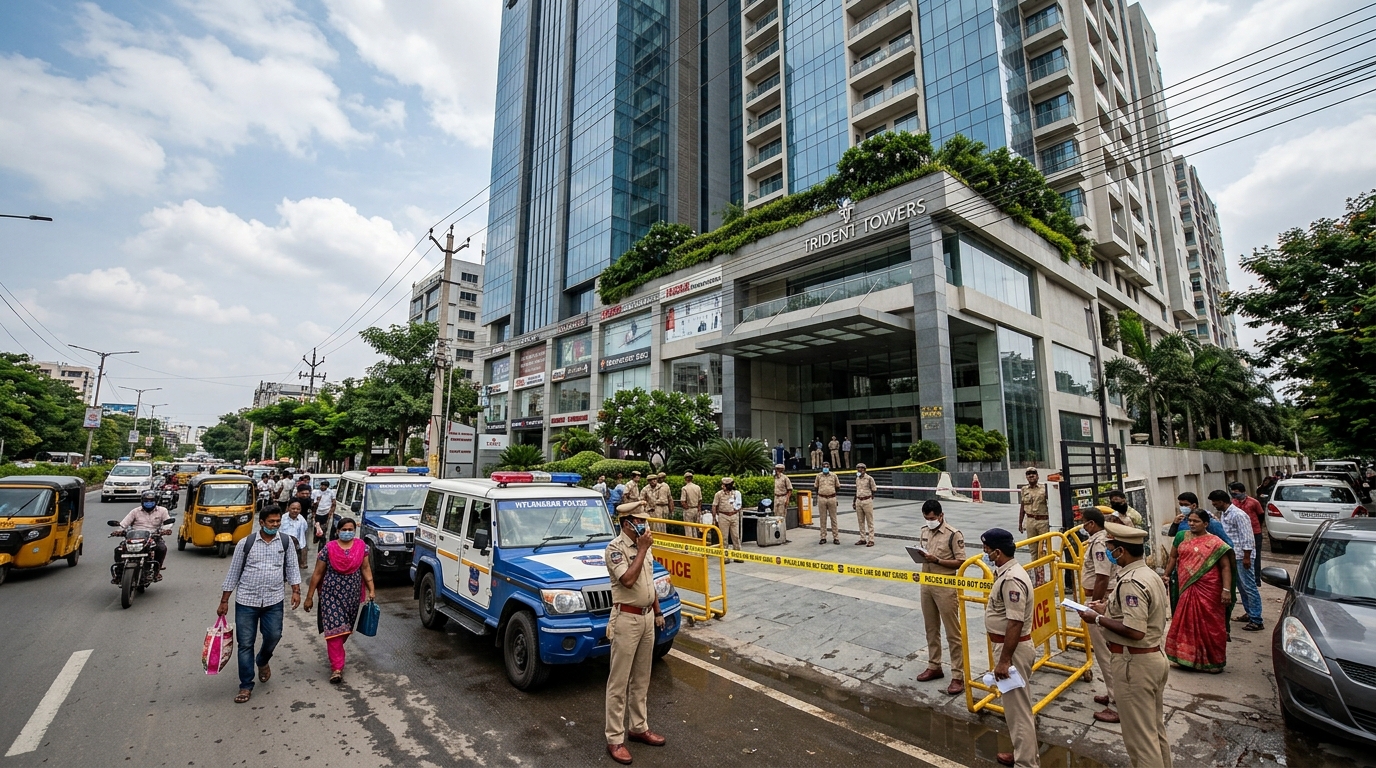
Market Implications: A Blip on the Radar, Not a Halt
Hyderabad's real estate market, particularly in its IT and financial hubs, has been experiencing sustained demand driven by job creation, infrastructure development, and a burgeoning population. The recent news of a fake police plot, while concerning from a law and order perspective, is unlikely to have a significant, long-term impact on the fundamental drivers of demand in prime micro-markets. The incident primarily points to a localized criminal activity rather than systemic issues affecting property transactions. However, it underscores the necessity for increased vigilance and robust background checks within the transaction process, potentially leading to slightly longer due diligence periods for high-value deals.
The incident may, however, trigger a heightened focus on security and regulatory compliance. This could translate into increased scrutiny of developers and intermediaries involved in large-scale projects. While overall pricing trends in areas like Gachibowli, Kokapet, and the Financial District are expected to remain strong due to continued absorption, marginal increases in transaction costs related to enhanced security and verification measures might be observed.
Sustained demand drivers: IT sector growth, infrastructure, population influx.
Localized risk, not systemic market threat.
Potential for increased due diligence and security measures.
Institutional Investor Perspective: Prudence and Enhanced Due Diligence
For institutional investors, who typically employ stringent risk assessment frameworks, this incident serves as a reminder to fortify their due diligence processes. While the overarching investment thesis for Hyderabad's real estate remains compelling, particularly for Grade A commercial spaces and well-located residential projects, investors will likely place greater emphasis on the credibility and track record of developers, legal counsel, and escrow services. The flow of capital into Hyderabad's real estate market is driven by its economic fundamentals, and this event, though unsettling, is unlikely to deter institutional capital from seeking opportunities. However, it might influence the allocation of capital towards projects with demonstrably robust governance and security protocols.
The incident might also prompt institutional investors to advocate for clearer regulatory guidelines around property transactions and the prevention of fraudulent activities. While not directly impacting the supply-demand balance, a perceived increase in transaction risk could, in the short term, lead to a slight deceleration in the pace of new deal closures as investors conduct more thorough investigations.
Emphasis on developer credibility and track record.
Fortification of due diligence on intermediaries.
Advocacy for clearer regulatory guidelines.
Potential for marginal deceleration in deal closures due to enhanced scrutiny.
Policy and Regulatory Impact: Strengthening the Framework
While the news report does not directly indicate any immediate policy changes, such incidents often act as catalysts for regulatory review and enhancement. The Hyderabad police's swift action in apprehending the perpetrators demonstrates a functional law enforcement mechanism. However, the long-term impact could be a push for stronger regulations around property verification, anti-fraud measures in real estate transactions, and enhanced consumer protection frameworks. This could involve digitizing more aspects of property registration and titling, implementing stricter licensing for real estate agents and developers, and establishing more robust grievance redressal mechanisms.
The current regulatory environment in Hyderabad, characterized by initiatives like the Dharani portal for land records, already aims to bring transparency. This incident, however, might accelerate the integration of advanced security features and verification layers within these platforms to prevent fraudulent activities. For investors, this would ultimately lead to a more secure and predictable investment environment.
Potential for review of anti-fraud measures in real estate transactions.
Push for enhanced consumer protection and stricter licensing.
Acceleration of digitization and integration of security features in land record systems.
Long-term benefit of a more secure investment environment.
Micro-Market Relevance: Gachibowli, Kokapet, and the Financial District
The micro-markets of Gachibowli, Kokapet, and the Financial District in Hyderabad are at the forefront of the city's economic expansion, attracting significant domestic and international investment. These areas are characterized by a high concentration of IT parks, corporate offices, and premium residential developments. The demand for real estate in these locales is driven by a robust employment ecosystem, which remains largely unaffected by the localized criminal activity.
However, the perceived safety and security of these prime investment destinations are paramount. The incident, while not directly targeting real estate assets, could instill a sense of caution. Developers and property management firms in these areas might consider investing in advanced security infrastructure and community safety initiatives to reassure residents and investors. For investors, the focus will remain on the underlying fundamentals of these micro-markets, but an enhanced appreciation for security and due diligence within the transaction process will be crucial.
High demand driven by economic activity in these micro-markets.
Perceived safety and security remain critical for investor confidence.
Potential for increased investment in security infrastructure by developers.
Continued focus on underlying economic fundamentals.
Source: Urban Acres