Hyderabad's Real Estate Boom: A Goldmine for Developers and Builders
Published: April 2026
Unlocking Opportunities: What Hyderabad's Robust Market Means for You
The consistent affirmation of Hyderabad's real estate market strength by industry leaders like the NAREDCO Telangana Chapter President is not just good news, it's a direct signal for proactive development. For builders and developers, this means a sustained and potentially growing demand for residential, commercial, and mixed-use properties. This environment is ripe for project launches and expansions, offering a higher probability of sales velocity and investor confidence. Landowners in and around Hyderabad should view this as an opportune moment to explore development partnerships or outright sales, as land values are likely to remain strong or appreciate further.
The robust nature of the market suggests a healthy absorption rate, making it an attractive proposition for securing funding and achieving timely project completion. Developers can leverage this positive sentiment to negotiate better terms with suppliers and contractors, while also attracting end-buyers and investors who are confident in the city's economic trajectory and property value appreciation.
The Construction Pipeline: Trends, Approvals, and Supply Dynamics
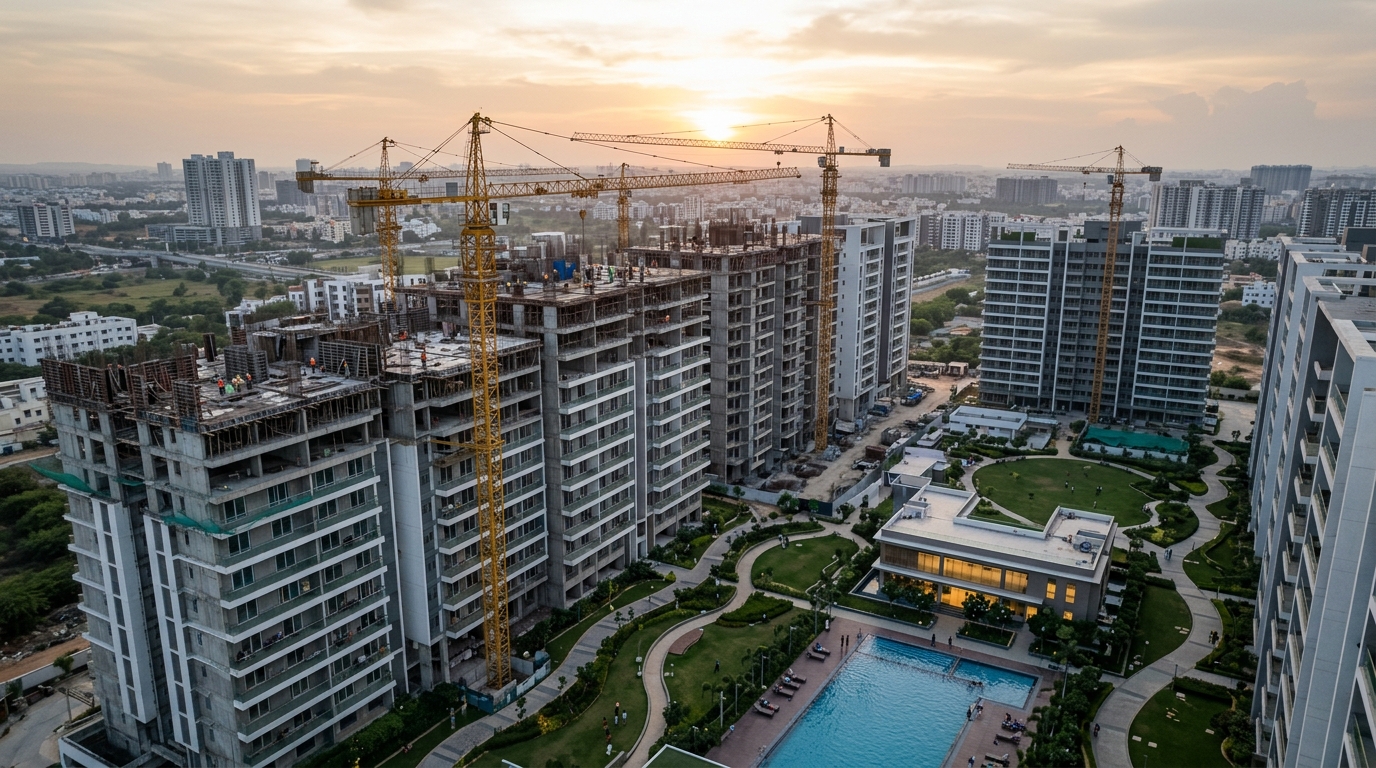
A robust market inherently fuels a strong construction pipeline. We are observing a trend towards more integrated townships and mixed-use developments, catering to the evolving lifestyle needs of Hyderabad's populace. The demand for quality construction, sustainable practices, and modern amenities is paramount. Developers should anticipate a streamlined approval process if their projects align with the city's master plans and offer genuine value. However, it's crucial to remain aware of potential supply chain constraints for key building materials, especially with increased construction activity. Proactive procurement and building strong relationships with suppliers will be critical to avoid delays and cost overruns.
The supply pipeline needs to be carefully managed. While demand is high, a sudden influx of similar project types could lead to oversupply in specific micro-markets. Developers must conduct thorough demand-supply analysis for their chosen segments and locations to ensure a competitive edge. The focus should be on differentiated offerings that meet specific buyer aspirations, rather than simply replicating existing projects.
- Focus on integrated townships and mixed-use developments.
- Prioritize quality construction, sustainable practices, and modern amenities.
- Anticipate and manage potential supply chain constraints for materials.
- Conduct thorough demand-supply analysis for chosen segments and locations.
Strategic Locations: Capitalizing on Hyderabad's Growth Corridors
Hyderabad's growth is not uniform, and specific micro-markets are experiencing accelerated development. Areas like Gachibowli, Kokapet, and the Financial District are prime examples. These hubs are magnets for IT companies, startups, and multinational corporations, driving a consistent demand for premium residential spaces, commercial offices, and retail outlets. Developers with projects in these established or emerging growth corridors are well-positioned to capture a significant share of the market.
Beyond these hotspots, the city's peripheral areas that offer good connectivity and developing infrastructure also present opportunities for affordable and mid-segment housing. Identifying these emerging pockets before they become saturated is a key strategic advantage. Developers should study the specific employment hubs, educational institutions, and lifestyle amenities that are driving demand in these areas to tailor their offerings effectively.
Navigating the Landscape: Risks and Execution Challenges
While the market is robust, developers must remain vigilant about execution challenges. These include, but are not limited to, land acquisition complexities, navigating regulatory frameworks, and managing construction timelines and budgets. Fierce competition can also drive up input costs and lead to a race to market, potentially impacting project quality if not managed meticulously. Maintaining a strong focus on project management, quality control, and financial prudence is paramount.
Another significant challenge is keeping pace with evolving buyer expectations. Modern buyers are more informed and demand transparency, timely delivery, and after-sales service. Developers need to invest in robust CRM systems and customer engagement strategies. Furthermore, economic fluctuations, interest rate hikes, or unforeseen global events can impact buyer sentiment and purchasing power, requiring developers to maintain financial flexibility and contingency plans.
- Land acquisition complexities and regulatory hurdles.
- Managing construction timelines and budget overruns.
- Intense competition and rising input costs.
- Meeting evolving buyer expectations for transparency and service.
- Mitigating risks from economic fluctuations and unforeseen events.
Source: ETV Bharat