Hyderabad's Rapid Construction: Navigating the Supply Surge for Developers
Published: October 2026
Implications for Builders and Landowners
The news from Hyderabad signals a significant shift in the market dynamics. For builders, it means a potential oversupply in certain micro-markets, necessitating a more refined approach to project planning and marketing. Understanding buyer sentiment and affordability will be paramount. Landowners, particularly those with prime parcels in developing corridors, may find increased interest from developers eager to acquire land for future projects, but they also need to be mindful of the potential for price stabilization or even slight corrections if the oversupply trend persists.
This scenario demands a proactive strategy. Builders must focus on differentiating their projects through quality, amenities, and innovative designs rather than simply increasing volume. Landowners should explore joint ventures or phased development to mitigate risks. Furthermore, understanding the nuances of buyer segments, first-time homebuyers, investors, and end-users, will be critical for targeted development.
Prioritize project differentiation and value proposition.
Conduct granular market research on buyer segments and affordability.
Explore flexible land acquisition and development models.
Strengthen pre-launch marketing and sales strategies to gauge demand.
Construction Trends, Approvals, and Supply Pipeline
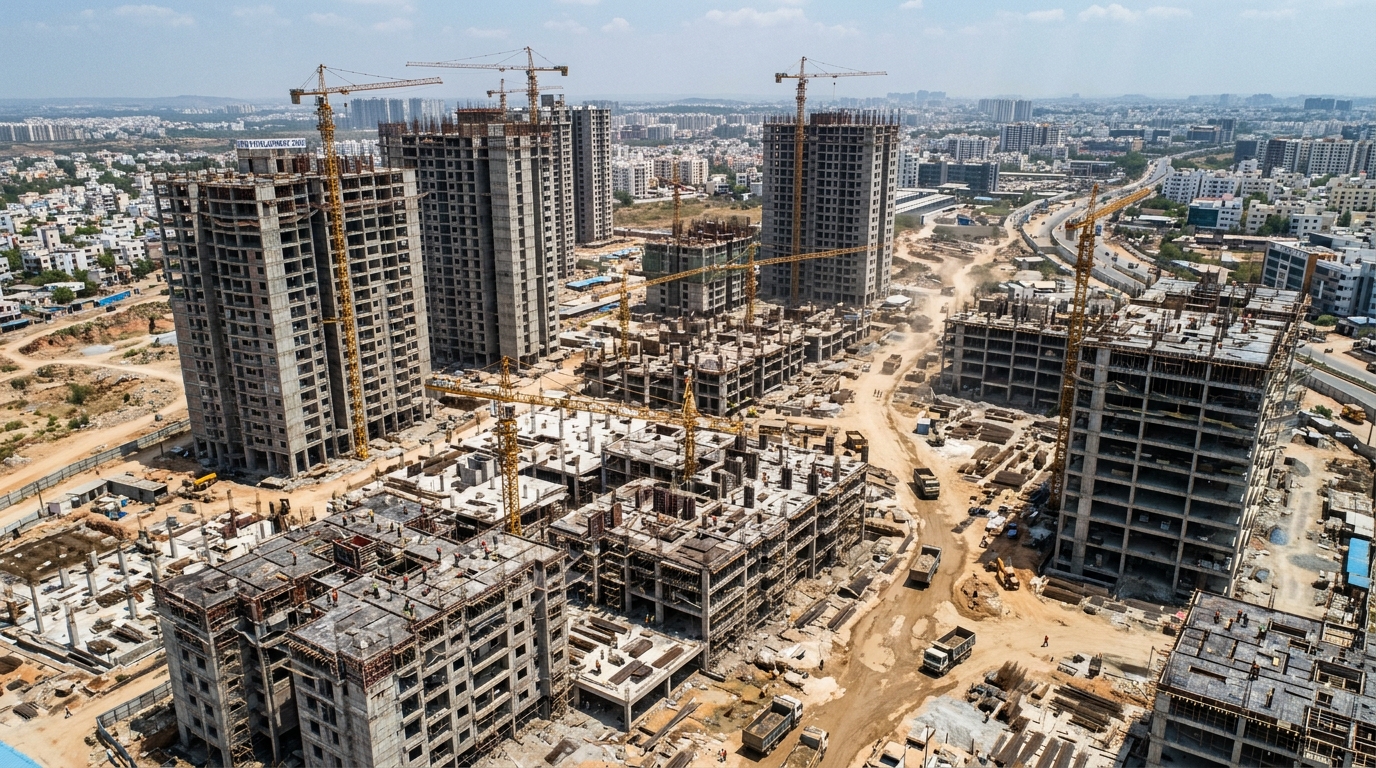
The rapid pace of construction implies efficient approval processes and a robust supply chain of materials and labor. This is a positive indicator of Hyderabad's growth trajectory. However, the speed of building also raises questions about the sustainability of this pace and potential quality control concerns if corners are cut. Developers need to ensure that their construction methodologies are not compromised by the pressure to deliver quickly.
The supply pipeline is clearly robust, fueled by developer confidence and potentially favorable regulatory environments. However, the 'faster than buyers can purchase' aspect suggests a potential disconnect between the rate of new unit launches and absorption. This highlights the need for builders to closely monitor inventory levels and sales velocity. It might also indicate an opportune time for developers who can offer attractive payment plans or faster possession cycles to gain a competitive edge.
Maintain stringent quality control throughout the construction process.
Optimize construction timelines without compromising on structural integrity.
Monitor inventory turnover rates and adjust launch pipelines accordingly.
Invest in technologies that enhance construction efficiency and reduce lead times.
Location-Specific Opportunities in Hyderabad
While the news is broad, specific areas like Gachibowli, Kokapet, and the Financial District are known hubs for IT and business, attracting a consistent influx of professionals and thus, housing demand. However, even these prime locations might experience increased competition and slower absorption if the overall market trend of oversupply holds. Developers in these areas must focus on projects that cater to the specific needs of the high-earning demographic – premium amenities, proximity to workplaces, and a lifestyle-oriented approach.
Developers with projects in emerging corridors or those offering a wider range of price points might find their offerings more accessible to a broader buyer base, even amidst the rapid construction. The key is to identify micro-market pockets where demand-supply equilibrium is more favorable or where unique selling propositions can command a premium. Understanding the infrastructure development and future growth plans of these specific locales is crucial for long-term success.
Tailor project offerings to the demographics of Gachibowli, Kokapet, and Financial District.
Identify and target emerging corridors with strong infrastructure potential.
Develop a diverse portfolio catering to different buyer segments and price points.
Leverage proximity to commercial hubs and employment centers as a key selling point.
Risks and Execution Challenges
The primary risk is an inventory overhang leading to price stagnation or decline, impacting project profitability and investor returns. Delays in sales can strain cash flows, especially for projects with high upfront costs. Execution challenges include maintaining construction quality at an accelerated pace, managing labor and material costs in a competitive environment, and navigating potential regulatory shifts or changes in buyer sentiment.
Furthermore, the risk of over-saturation in popular segments like premium apartments needs careful assessment. Developers who fail to adapt their strategies to this evolving landscape could face significant financial headwinds. Building a strong sales and marketing machinery capable of generating consistent leads and converting them efficiently will be a critical success factor. A robust financial management system to handle potential cash flow mismatches is also imperative.
Mitigate financial risks through prudent cash flow management and diversified funding.
Focus on building strong pre-sales pipelines to ensure demand before substantial construction.
Develop robust contingency plans for potential market downturns or regulatory changes.
Invest in experienced sales and marketing teams capable of navigating competitive landscapes.
Source: Telugu360