Hyderabad's Property Tax Transparency Call: Implications for Developers and the Construction Pipeline
Published: October 2026
Impact on Builders and Landowners
The U-FERWAS's advocacy for property tax transparency signals a potential shift towards a more predictable and equitable taxation system in Hyderabad. For builders, this could mean more accurate cost projections and fewer unexpected financial burdens, fostering greater confidence in long-term project planning. Landowners might see a clearer understanding of their property's tax liabilities, potentially influencing their decisions on land development or sale. However, the immediate pressure on the CMC (likely City Municipal Corporation) to address civic issues and infrastructure gaps directly impacts the attractiveness and viability of development projects in affected areas. Delays in crucial infrastructure like flyovers can significantly hamper connectivity and accessibility, directly affecting property values and buyer sentiment.
The call also highlights an underlying expectation for improved governance and service delivery. Developers who can align their projects with improved civic amenities and demonstrate a commitment to sustainable development practices will likely gain a competitive edge. Proactive engagement with civic bodies to understand and address these concerns can mitigate risks and foster stronger relationships.
- Increased predictability in property tax assessments.
- Potential for improved land valuation and transaction clarity.
- Need for developers to factor in infrastructure development timelines.
- Opportunity to build stronger relationships with civic authorities through proactive engagement.
Construction Trends, Approvals, and Supply Pipeline
The ongoing demands for action on civic issues, including waste management and infrastructure, suggest a potential bottleneck in the project approval process. If the CMC is overwhelmed by these demands, it could lead to extended timelines for obtaining necessary permits and clearances. This, in turn, would impact the construction pipeline, potentially leading to delays in project launches and completions. Developers need to anticipate these delays and build buffer periods into their project schedules.
The call for transparency in property tax can also indirectly influence construction trends. A clearer tax regime might encourage developers to focus on projects that offer a clear return on investment and have a robust demand. This could lead to a more data-driven approach to development, prioritizing projects in areas with demonstrated supply-demand mismatches. The current situation, however, suggests that while demand might be present, the execution challenges due to civic and infrastructural deficits could strain the existing supply pipeline. Developers should focus on locations where infrastructure development is either planned or already robust to mitigate these risks.
- Potential for extended project approval timelines.
- Risk of delays in the overall construction and delivery pipeline.
- Need for robust contingency planning in project timelines.
- Focus on data-driven project selection based on market demand and infrastructure readiness.
Location-Specific Opportunity: Hyderabad, Gachibowli, Kokapet, Financial District
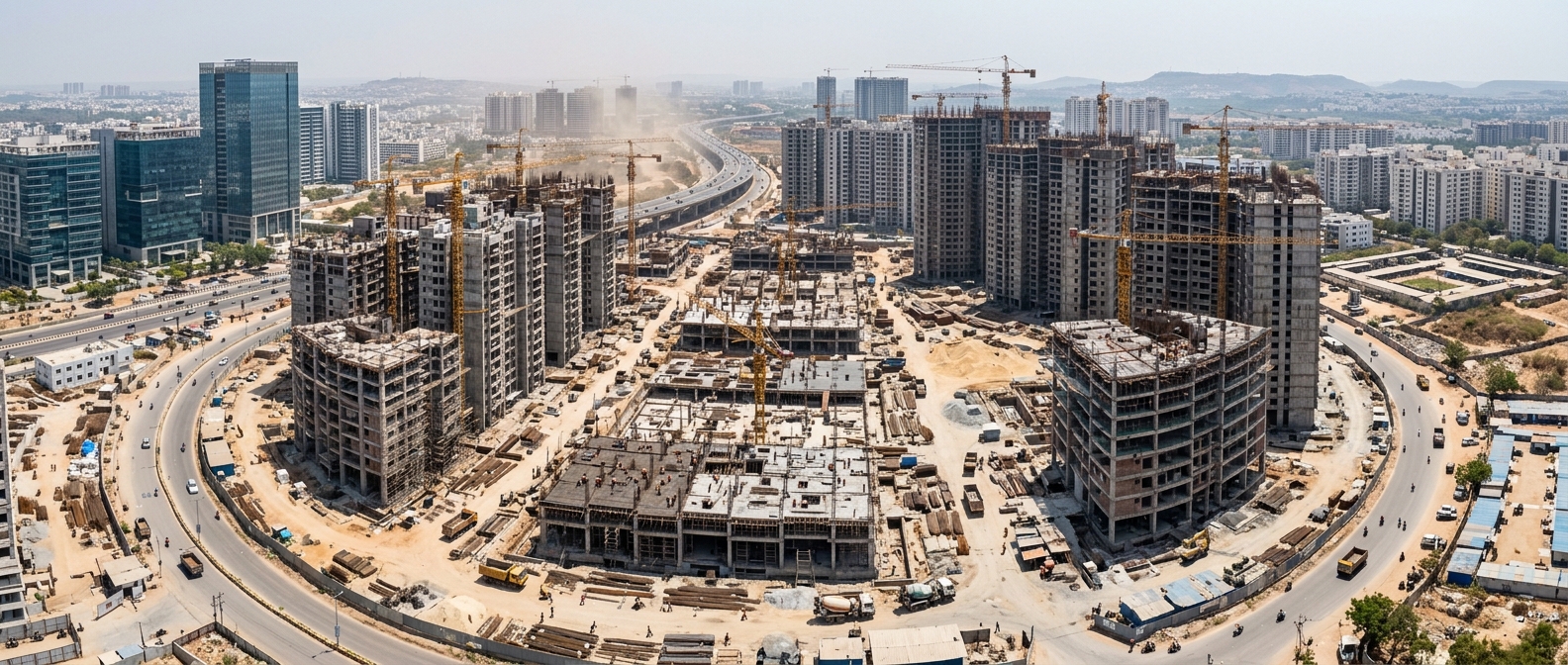
The news specifically impacts Hyderabad's prime development corridors like Gachibowli, Kokapet, and the Financial District. These areas are magnets for commercial and residential development, driven by IT hubs and a growing population. However, rapid development often outpaces civic infrastructure. The U-FERWAS's concerns about flyover delays and waste management are particularly relevant here. Delays in the proposed flyovers connecting these zones can cripple commute times and impact the desirability of residential projects.
For developers operating in these high-growth areas, a strategic approach is crucial. While the demand for housing and commercial spaces remains strong, the ability to execute projects efficiently will be paramount. Developers who can anticipate and navigate the potential delays in approvals and infrastructure upgrades, perhaps by collaborating with authorities on infrastructure solutions or by focusing on projects with self-sufficient amenities, will be best positioned. Identifying pockets within these areas that have relatively better civic infrastructure or where development is more aligned with planned upgrades will be a key differentiator. There's an opportunity to develop premium projects that offer superior living and working experiences, compensating for any infrastructure lags.
- High demand in Gachibowli, Kokapet, and Financial District creates opportunities.
- Significant risk posed by flyover delays to connectivity and property values.
- Need for strategic planning to navigate infrastructure deficits.
- Opportunity for developers to offer premium projects with enhanced amenities.
Risks and Execution Challenges
The primary risks for developers stem from the potential for increased project delays and cost overruns due to unaddressed civic issues and infrastructure gaps. The lack of transparency in property tax, while being called for, implies a current state of uncertainty that can impact financial planning. Moreover, the emphasis on waste management and civic issues points to a potential strain on municipal resources, which could translate into slower response times for permits and inspections.
Execution challenges include navigating a complex approval ecosystem that might be further bogged down by civic demands. Land acquisition in these prime locations remains competitive and expensive. Developers must also contend with potential community resistance if projects are perceived to exacerbate existing civic problems like traffic congestion or waste generation. The key to mitigating these risks lies in thorough due diligence, robust project management, proactive stakeholder engagement, and a clear understanding of regulatory landscapes and their potential shifts.
- Risk of project delays and cost escalation due to infrastructure and civic issues.
- Uncertainty in financial planning due to potential tax transparency gaps.
- Challenges in obtaining timely permits and approvals from a potentially strained municipal body.
- Potential for community opposition if projects are not perceived as contributing positively to civic infrastructure.
Source: Hyderabad Mail