Hyderabad's Property Boom: A Goldmine for Developers - What the November Surge Means for You
Published: April 2026
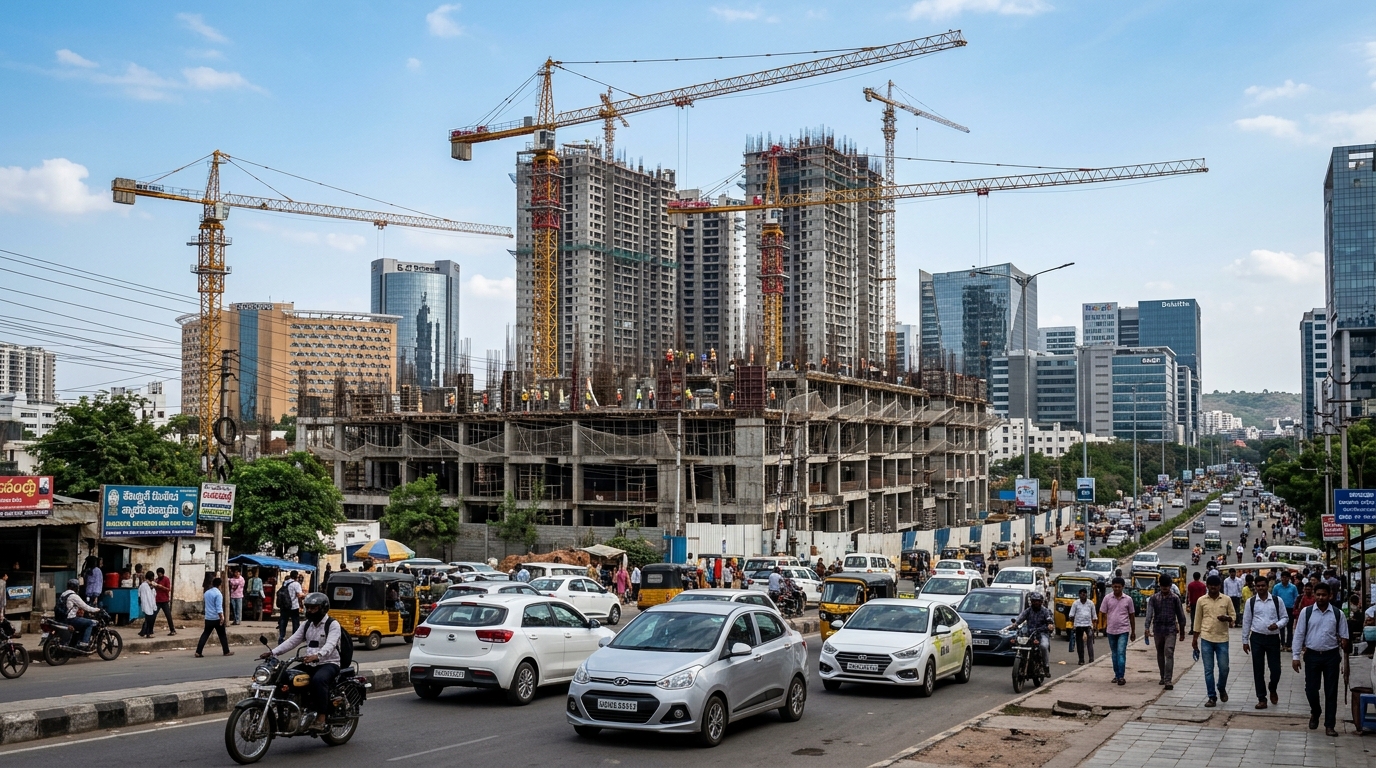
The November Surge: A Clear Signal of Demand
The impressive 25% spike in property registrations in Hyderabad during November, reaching 6,923 units, isn't just a statistic; it's a potent indicator of robust buyer confidence and sustained demand. For developers and builders, this translates directly into a greener pipeline and a reduced risk profile for new projects. Landowners can anticipate increased interest and potentially higher valuations for their plots, especially in well-connected and developing micro-markets.
This surge suggests a healthy absorption rate, meaning that the market is not only seeing new launches but also successfully moving inventory. This is a crucial factor for financial planning and project feasibility, allowing for more predictable revenue streams and improved investor returns.
Increased buyer confidence signals sustained demand.
Higher property valuations for landowners.
Predictable revenue streams and improved investor returns for developers.
Navigating the Construction Landscape: Trends and Opportunities
The continued demand necessitates an acceleration in the construction and supply pipeline. Developers need to be agile, ensuring they have streamlined approval processes and efficient construction methodologies to meet the market's appetite. We are likely to see a rise in pre-launches and new project announcements in response to this positive sentiment. The focus will be on delivering quality homes that cater to the evolving needs of the Hyderabad buyer, including sustainable building practices and smart home technologies.
While the demand is high, it's essential to maintain a keen eye on supply chain dynamics and labor availability. Proactive procurement and workforce management will be critical to avoid project delays and cost overruns. The approval process, while often a bottleneck, needs to be navigated strategically, potentially through early engagement with authorities and by ensuring projects align with urban development plans.
Streamline approval processes for faster project initiation.
Embrace sustainable building practices and smart home technologies.
Proactive supply chain and labor force management.
Strategic engagement with urban development authorities.
Location Spotlight: Gachibowli, Kokapet, and the Financial District
The surge in registrations is particularly concentrated in high-growth corridors. Areas like Gachibowli, Kokapet, and the Financial District, already established as IT and business hubs, are experiencing a spillover effect. The demand here is driven by a young, aspirational workforce seeking proximity to their workplaces, excellent social infrastructure, and modern living spaces. Developers with projects in or around these zones are best positioned to capitalize on this concentrated demand.
While these prime locations offer immense potential, they also come with higher land acquisition costs and increased competition. Differentiated offerings, such as niche residential products or integrated mixed-use developments, will be key to standing out. Furthermore, exploring adjacent or emerging micro-markets that offer better affordability while maintaining good connectivity to these hubs could unlock new opportunities.
Focus on high-growth IT and business hubs.
Cater to the demand for modern living spaces near workplaces.
Consider differentiated product offerings in prime locations.
Explore emerging micro-markets with good connectivity.
Execution Challenges and Risk Mitigation
Despite the optimistic market sentiment, developers must remain vigilant about potential risks. A rapid increase in project launches without commensurate infrastructure development can lead to supply-demand imbalances in specific micro-markets. Furthermore, rising input costs for construction materials and labor can impact project profitability. Thorough market research, phased launches, and robust financial planning are crucial for mitigating these risks.
The key to successful execution lies in a deep understanding of local market dynamics, adherence to regulatory frameworks, and efficient project management. Maintaining strong relationships with stakeholders, including suppliers, contractors, and potential buyers, will foster a resilient business model. For landowners, understanding the developer's track record and the project's feasibility is paramount before entering into any agreements.
Monitor for potential supply-demand imbalances.
Mitigate rising input costs through strategic procurement.
Conduct thorough market research and financial planning.
Prioritize regulatory compliance and efficient project management.
Source: Hindustan Times