Beyond Metros: Tier-II Cities Emerge as India's Next Real Estate Hotspots
Published: June 2026
Unlocking the Potential: Market Dynamics in Emerging Cities
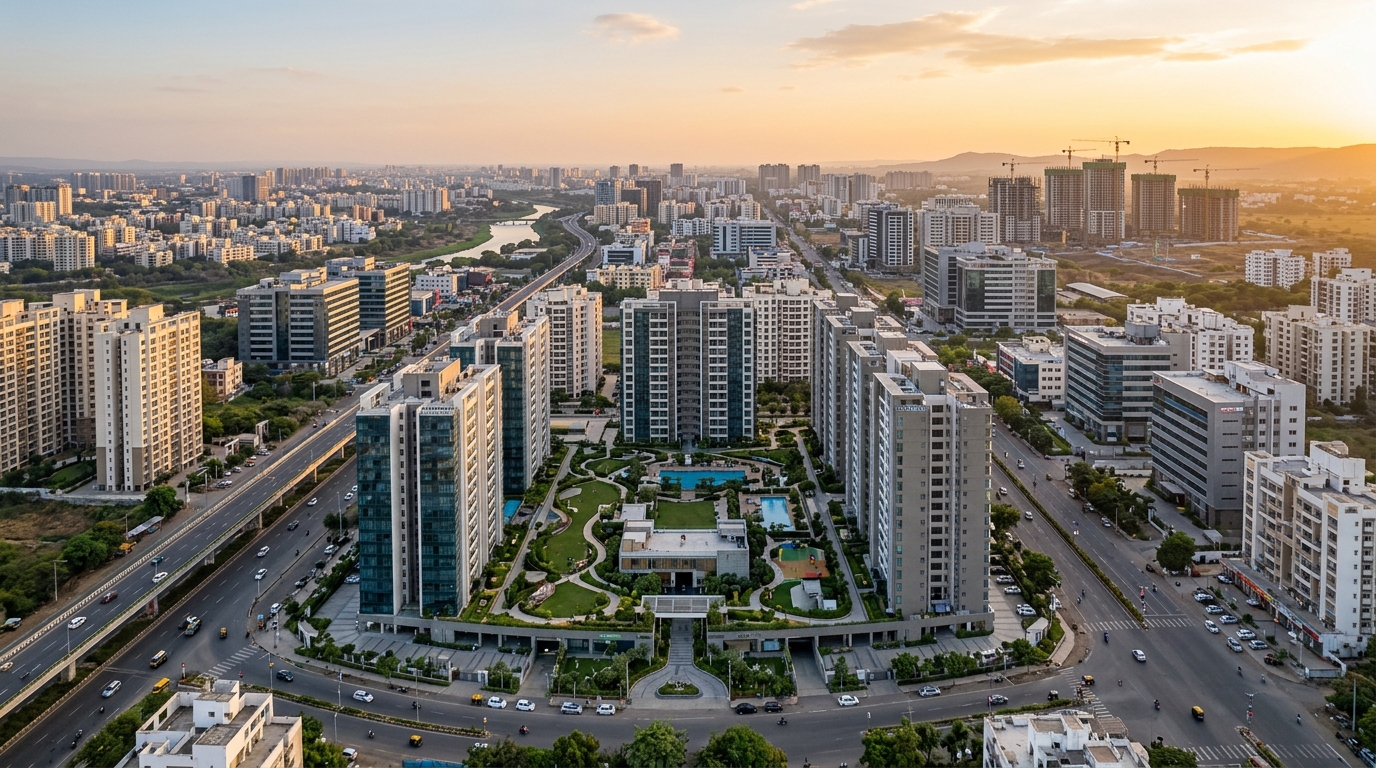
Traditionally, metropolitan cities have dominated real estate investment narratives. However, a new wave of growth is evident in Tier-II cities, which are attracting substantial investments due to their expanding economies and improved infrastructure. This surge in interest is translating into increased demand for residential, commercial, and even retail spaces. As supply chains reconfigure and businesses decentralize, these cities are becoming magnets for talent, further fueling rental and capital appreciation prospects.
The influx of businesses and the subsequent job creation are recalibrating the demand-supply equilibrium. While developers are responding with new project launches, the pace of absorption in these growth corridors often outstrips new supply, leading to upward pressure on property values. This dynamic suggests a potential for higher rental yields and significant capital gains for early movers.
Increased demand for housing due to job creation and migration.
Emergence of new commercial hubs driving office space absorption.
Upward trajectory in property values and rental incomes.
Diversification of investment portfolios beyond Tier-I cities.
The Institutional Investor's Gambit: Capitalizing on Growth
Institutional investors, with their long-term vision and substantial capital, are increasingly recognizing the value proposition of Tier-II cities. The promise of higher returns, coupled with a de-risked investment profile compared to saturated Tier-I markets, makes these emerging urban centers attractive. Funds are being channeled into developing Grade-A commercial spaces, modern residential enclaves, and well-planned integrated townships.
The Times of India report highlights that several Tier-II cities are now outperforming their larger counterparts in terms of growth. This performance is a direct result of strategic investments in infrastructure, government initiatives promoting industrial development, and a growing disposable income among the local populace. For institutional players, this translates into opportunities for large-scale acquisitions, joint ventures, and significant stakes in developing these burgeoning real estate markets. The direction of capital flow is clearly shifting towards these nodes of future economic expansion.
Increased allocation of capital to Tier-II real estate projects.
Focus on developing modern commercial and residential infrastructure.
Seeking higher rental yields and capital appreciation potential.
Opportunities for large-scale acquisitions and joint ventures.
Policy Tailwinds and Micro-Market Marvels: The Hyderabad Example
Government policies promoting ease of doing business, infrastructure development, and urban renewal are significant catalysts for the growth of Tier-II cities. Initiatives like the Smart Cities Mission and the Atal Mission for Rejuvenation and Urban Transformation (AMRUT) are creating a conducive environment for real estate development and investment. These policies often translate into improved connectivity, enhanced civic amenities, and streamlined regulatory processes, making these cities more appealing for both residents and businesses.
While the article broadly points to eight emerging powerhouses, specific micro-markets within these cities are showing exceptional promise. For instance, cities like Hyderabad, with its robust IT and knowledge-based economy, are seeing remarkable growth in peripheral areas. Neighborhoods such as Gachibowli, Kokapet, and the Financial District, while historically associated with Hyderabad's Tier-I status, represent the evolution of Tier-II growth within a major metro. These areas are characterized by a high concentration of IT parks, a skilled workforce, and a demand for premium residential and commercial spaces, mirroring the growth trajectory of emerging Tier-II cities and offering a glimpse into the future of real estate development.
Supportive government policies driving urban development and investment.
Focus on infrastructure upgrades and improved connectivity.
Streamlined regulatory frameworks encouraging real estate growth.
Emerging micro-markets within large metros exhibiting Tier-II growth characteristics (e.g., Hyderabad's IT corridors).
Source: The Times of India