Hyderabad's Residential Boom: Navigating Opportunities and Challenges in Gachibowli & Kokapet
Published: July 2026
The Shifting Sands of Hyderabad Real Estate: What Developers Need to Know
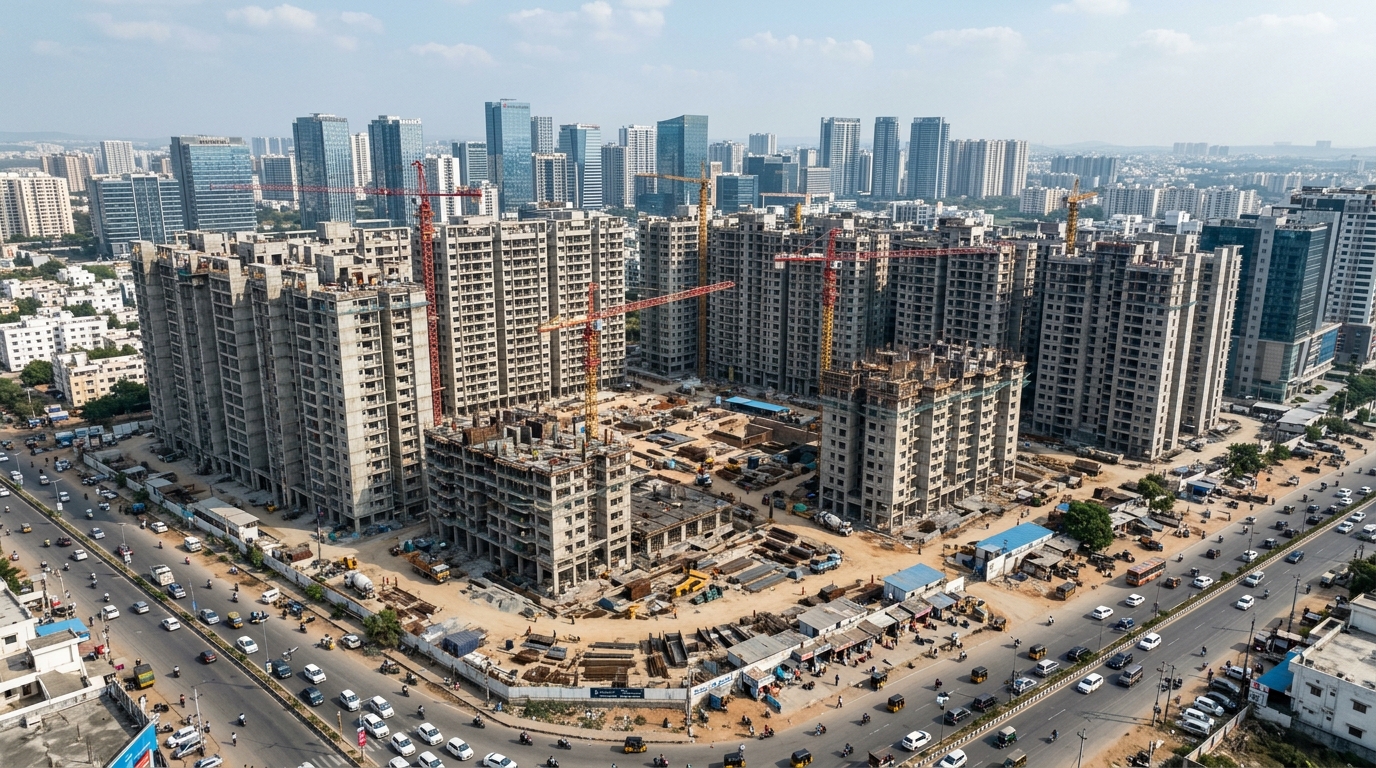
Hyderabad's real estate market is experiencing a robust upswing, fueled by economic growth, a burgeoning IT sector, and a growing population. This has translated into a significant uptick in demand for residential spaces, especially in prime micro-markets like Gachibowli, Kokapet, and the Financial District. For developers, this translates to a fertile ground for new projects. Landowners in these strategically important areas are also well-positioned to benefit from increased land values and development potential. The current market dynamics suggest a sustained demand, particularly for well-conceived residential projects that cater to the lifestyle and professional needs of the city's upwardly mobile populace.
The 'RegNews' article implicitly points to a strong demand that is likely outstripping the immediate supply of completed units, creating a favorable environment for new launches and ongoing construction. Developers should view this not just as an opportunity to build, but to strategically plan and execute projects that address this demand efficiently and effectively. Understanding the nuances of buyer preferences, such as apartment sizes, amenities, and proximity to workplaces and social infrastructure, will be key to capturing market share.
- Identify key growth corridors with sustained demand.
- Evaluate landowner partnerships for strategic land acquisition.
- Conduct thorough market research on buyer preferences and price sensitivity.
Construction Trends, Approvals, and the Supply Pipeline
The construction landscape in Hyderabad is evolving. While traditional building methods persist, there's a growing adoption of faster and more sustainable construction technologies, driven by the need to meet delivery timelines and manage costs. Developers must stay abreast of these trends, as efficiency in construction can directly impact profitability. The approval process remains a critical factor. Streamlined and transparent regulatory frameworks, which seem to be a focus in the current discourse around real estate, are vital for maintaining project momentum. Delays in approvals can disrupt the supply pipeline, leading to cost overruns and missed market opportunities.
The supply pipeline in areas like Gachibowli and Kokapet needs careful monitoring. While new projects are in various stages of planning and construction, the pace of completion and delivery must align with the rate of demand absorption. A significant mismatch between the projected supply and actual demand could lead to price corrections. Developers who can deliver quality projects on time, leveraging efficient construction practices and navigating the approval process smoothly, will be best positioned to capitalize on the current market buoyancy. The ability to secure necessary approvals swiftly will be a competitive advantage.
- Explore innovative and sustainable construction technologies.
- Proactively engage with regulatory bodies to expedite approvals.
- Monitor the existing and planned supply pipeline to avoid market saturation.
Location-Specific Opportunities: Gachibowli, Kokapet, and the Financial District
The proximity of Gachibowli and Kokapet to the Financial District and the thriving IT hubs is a primary driver of their residential appeal. These areas offer a compelling value proposition for professionals working in the technology and finance sectors, who seek convenient access to their workplaces, coupled with modern amenities and a desirable lifestyle. Developers focusing on this demographic should prioritize projects offering features like smart home technology, co-working spaces within communities, and robust connectivity. The demand for premium residential offerings in these locales remains strong, indicating potential for higher-than-average returns on investment.
Kokapet, in particular, has emerged as a significant growth corridor with considerable potential for integrated developments. The availability of land and its strategic location make it an attractive destination for both large-scale residential and commercial projects. Developers can leverage this by creating master-planned communities that offer a holistic living experience. The Financial District itself, while primarily commercial, is also seeing spillover demand for residential options in its immediate vicinity, presenting niche opportunities for luxury apartments and serviced residences. Understanding the specific needs of the target audience in each of these micro-markets is paramount for tailored project development.
- Target professionals in IT and finance with relevant amenities.
- Develop integrated communities in emerging areas like Kokapet.
- Explore niche luxury offerings near the Financial District.
Risks and Execution Challenges for Builders
Despite the optimistic outlook, developers must remain cognizant of the inherent risks and execution challenges. One of the primary concerns is the fluctuating cost of construction materials, which can significantly impact project budgets and profitability. Skilled labor availability and management are also crucial for maintaining construction quality and timelines. Furthermore, changes in government policies, such as revised building codes or taxation laws, can introduce unforeseen hurdles. Developers need to build in contingencies for such eventualities and maintain robust financial planning.
Market dynamics can also shift. While the current demand is robust, oversupply in certain segments or a slowdown in economic growth could lead to slower sales velocity or price stagnation. Therefore, a prudent approach to project phasing, sales and marketing, and inventory management is essential. For landowners, the risk lies in selecting the right development partner and ensuring contractual clarity to safeguard their interests. Effective risk mitigation strategies, including thorough due diligence, diversified project portfolios, and strong stakeholder management, are critical for navigating the complexities of the Hyderabad real estate market successfully.
- Mitigate material cost fluctuations through strategic procurement.
- Develop robust plans for skilled labor acquisition and retention.
- Implement agile sales and marketing strategies to adapt to market shifts.
Source: regnews.in