Hyderabad's Land Surge: A Game Changer for Developers and Builders
Published: August 2026
Implications for Builders and Landowners: The Valuation Revolution
This Rs 264 crore per acre valuation is not just a number; it's a powerful indicator of the premium placed on prime Hyderabad real estate, particularly in micro-markets like Gachibowli, Kokapet, and the Financial District. For landowners, this presents an unprecedented opportunity to monetize their assets at historic highs. Strategic land pooling and joint development agreements will become even more attractive, allowing landowners to capitalize on their holdings while mitigating development risks.
For builders, this necessitates a radical rethink of project viability. The high land acquisition costs demand a focus on ultra-luxury, high-density developments, or niche segments with exceptionally high per-unit revenue potential. Developers must prioritize projects that can command premium pricing to justify the astronomical entry costs. Efficiency in construction and speed to market will be paramount to maximize returns and manage carrying costs.
- Landowners should explore joint development and land pooling strategies to maximize returns.
- Builders must target high-value segments and optimize project execution for profitability.
- The focus shifts towards maximizing Floor Space Index (FSI) and development potential.
Construction Trends, Approvals, and the Supply Pipeline
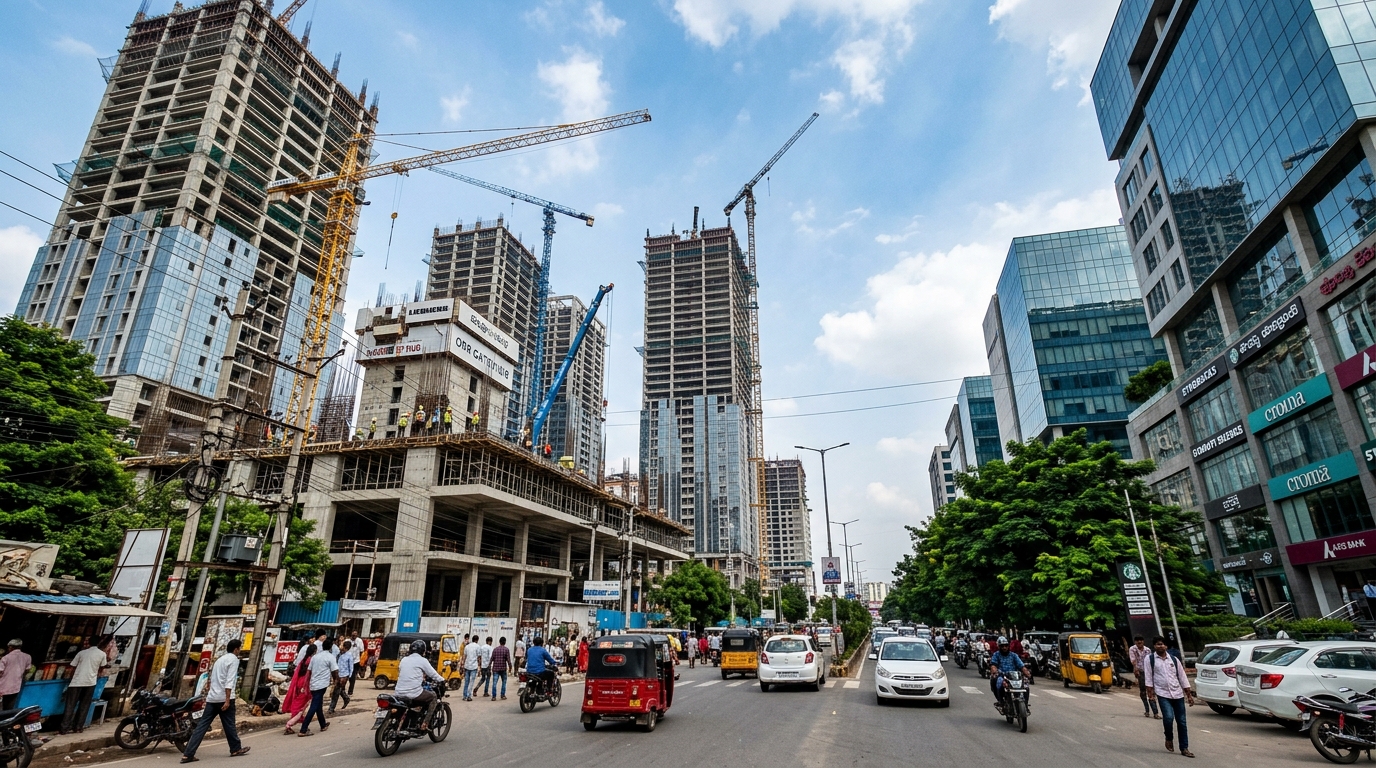
The surge in land values will inevitably impact construction trends. Expect an increased emphasis on vertical development, premium materials, advanced construction technologies, and smart home features to justify higher end-user prices. Projects will need to be meticulously planned and executed to meet the expectations of a discerning, high-net-worth clientele.
The speed of approvals will be a critical bottleneck. Developers will need to proactively engage with local authorities and streamline the approval process to avoid delays that can erode margins. A robust supply pipeline of premium housing and commercial spaces will be crucial to meet the growing demand in these high-value corridors. However, the current pace of construction and regulatory frameworks might struggle to keep up with the accelerated pace of land transactions.
- Increased adoption of pre-fabricated and modular construction for speed and quality.
- Integration of smart technologies and sustainable building practices.
- Streamlining the construction approval process is vital.
- A potential supply-demand mismatch for premium offerings could emerge.
Location-Specific Opportunities: Gachibowli, Kokapet, and the Financial District Nexus
The record land price underscores the immense value of Hyderabad's western IT and financial hubs. Gachibowli, Kokapet, and the Financial District are already established epicenters of economic activity, attracting top talent and global corporations. This creates an inherent demand for high-quality residential and commercial spaces that cater to the affluent workforce and corporate entities.
Developers with access to land in these prime micro-markets are in a commanding position. The opportunity lies in creating integrated developments that offer a live-work-play environment, premium amenities, and seamless connectivity. The high land cost inherently pushes for the development of ultra-luxury residences, premium office spaces, and high-end retail, catering to a segment that values exclusivity and convenience.
- Focus on integrated townships offering residential, commercial, and retail spaces.
- Develop ultra-luxury residential projects targeting HNI individuals and expatriates.
- Premium commercial spaces for MNCs and IT/ITES companies.
- Leverage the proximity to business districts for enhanced project appeal.
Navigating the Risks and Execution Challenges
While the opportunity is significant, the risks are equally substantial. The sheer scale of investment required for land acquisition in these prime locations necessitates robust financial backing and meticulous financial planning. Developers must conduct thorough market research to ensure their project's pricing strategy aligns with the target demographic's purchasing power and the overall economic outlook.
Execution challenges will include securing timely construction financing, managing escalating construction material costs, and attracting and retaining skilled labor. The regulatory environment, while generally supportive in Hyderabad, can still pose hurdles. Furthermore, market downturns or shifts in economic sentiment could impact sales velocity and the ability to achieve projected revenue targets, especially for high-ticket luxury projects.
- Secure adequate funding and conduct rigorous financial feasibility studies.
- Mitigate construction cost escalations through strategic sourcing and contract management.
- Ensure a robust sales and marketing strategy to drive demand for premium products.
- Stay abreast of regulatory changes and maintain strong relationships with authorities.
- Diversify project portfolios to mitigate risks associated with a single high-value development.
Source: Investment Guru India