Hyderabad's Land Surge: ₹269 Crore Per Acre Signals a New Era for Developers
Published: August 2026
Implications for Builders and Landowners: A High-Stakes Game
The staggering ₹269 Crore per acre figure in Hyderabad is not just a headline; it's a clear indicator of intense demand and limited prime land availability. For developers, this translates to significantly higher upfront costs, necessitating a meticulous focus on project economics. Profit margins will hinge on delivering high-value, differentiated products that can command premium pricing. Developers must now perform even more rigorous feasibility studies, factoring in extended ROI timelines and the potential for capital appreciation.
Landowners, particularly those holding prime plots in sought-after micro-markets, are in a position of immense power. The record price validates their asset's worth and opens doors to potentially lucrative joint ventures or outright sales. However, they too must be discerning, understanding the long-term development potential of their land and partnering with developers who possess the financial muscle and execution capability to realize its full value.
- Developers: Re-evaluate project feasibility, focus on premium segment, explore JV opportunities.
- Landowners: Leverage high valuations, partner with credible developers, understand long-term potential.
Construction Trends, Approvals, and the Supply Pipeline
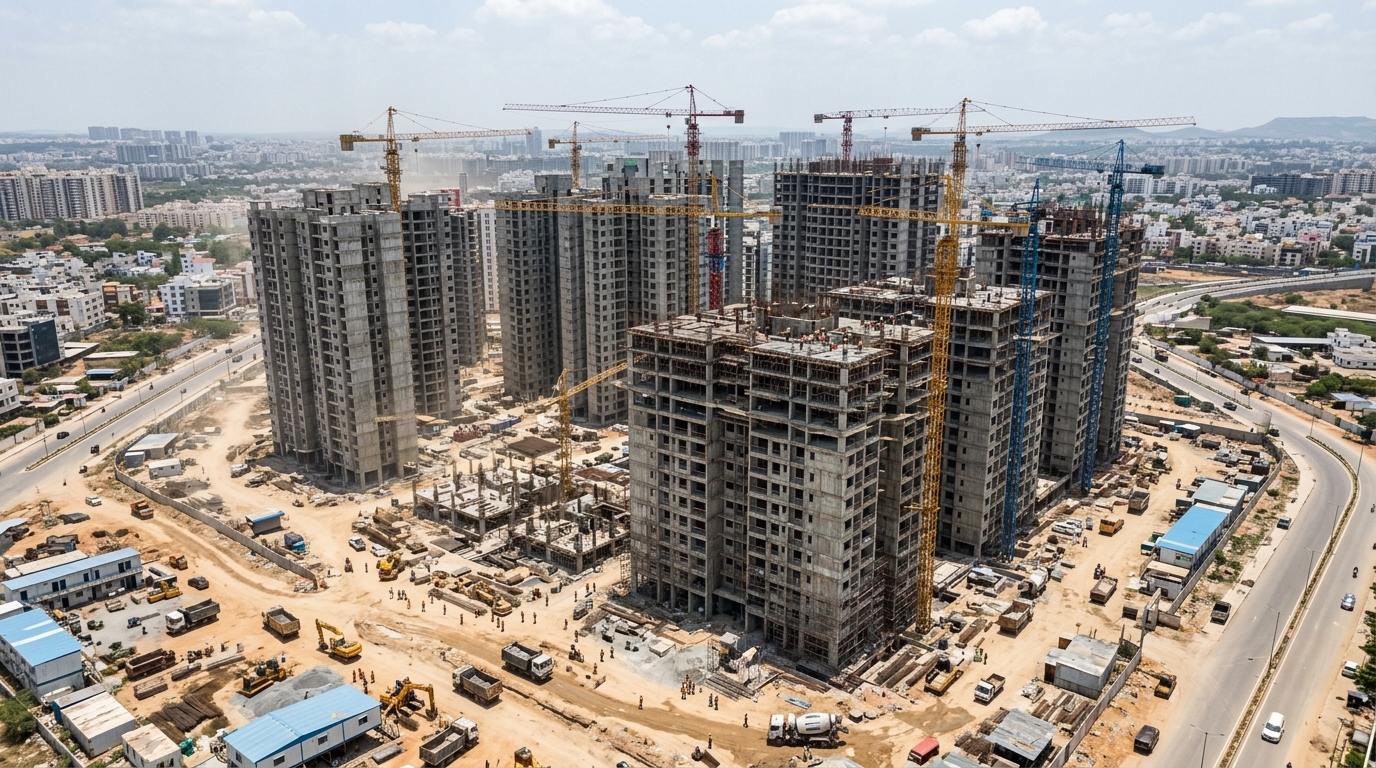
This land price escalation will undoubtedly influence construction trends. Developers will be compelled to maximize the Built-Up Area (BUA) per plot. This might lead to an increased focus on vertical development, particularly high-rise residential and premium commercial spaces. The emphasis will shift towards quality, amenities, and sustainable features that justify higher ticket prices and cater to a discerning clientele. Smaller plot sizes becoming unviable for large-scale developments might also push developers towards integrated townships or mixed-use projects on consolidated land parcels.
Navigating the approval process for projects in such high-value zones becomes even more critical. Streamlined and timely approvals are essential to mitigate holding costs and expedite revenue generation. The supply pipeline needs careful consideration; while demand is evident, the rate at which new, appropriately priced inventory can be brought to market will determine future price sustainability. A significant lag in approvals or construction could exacerbate the supply-demand mismatch, further inflating prices and potentially creating market volatility.
- Focus on high-rise, premium residential and commercial developments.
- Prioritize quality, amenities, and sustainability.
- Expedite approval processes to reduce holding costs.
- Monitor and strategize for the supply pipeline to avoid bottlenecks.
Location-Specific Opportunities: Hyderabad's Hotspots
The record price likely originates from or reflects trends in Hyderabad's most coveted corridors. Areas like Gachibowli, the Financial District, and Kokapet, known for their robust IT infrastructure, premium housing, and excellent connectivity, are prime candidates. These micro-markets are experiencing sustained demand from HNI individuals and corporate relocations, making them attractive for high-density, high-value developments.
Developers looking to capitalize on this trend should meticulously research sub-markets within these zones. Identifying specific pockets with unmet demand for luxury residences, Grade-A commercial spaces, or integrated lifestyle communities will be key. Proximity to established IT hubs, international schools, and healthcare facilities will continue to command a premium. Understanding the specific demographics and spending power within these chosen micro-locations is paramount for successful project conceptualization and execution.
- Gachibowli and Financial District: Ideal for premium residential and Grade-A commercial projects.
- Kokapet: Opportunity for integrated townships and luxury villas.
- Focus on proximity to IT parks, educational institutions, and healthcare.
- Deep dive into micro-market demographics and spending power.
Risks and Execution Challenges: Navigating the High-Price Terrain
While the sky-high land prices signal immense potential, they also amplify execution risks. Developers must contend with significantly increased capital requirements, making project financing a critical factor. Any delays in sales momentum or construction can lead to substantial financial strain. The risk of market correction, though potentially distant given Hyderabad's growth trajectory, cannot be entirely discounted.
Execution challenges also extend to material costs, labor availability, and regulatory changes. Maintaining quality standards at higher construction costs while ensuring profitability requires exceptional project management and supply chain efficiency. Furthermore, competitive bidding for scarce land parcels will only intensify, demanding agile decision-making and a clear understanding of project viability even at elevated acquisition costs. Developers must have robust risk mitigation strategies in place, including diversified product offerings and flexible sales models, to weather potential headwinds.
- Increased capital requirements and financing challenges.
- Risk of project delays impacting financial viability.
- Potential for market correction and its impact on sales velocity.
- Managing rising material and labor costs.
- Intensified competition for land acquisition.
Source: AP7AM