Hyderabad's IT Corridor Shatters Land Price Records: A Deep Dive for Real Estate Investors
Published: June 2026
Unprecedented Land Value Appreciation: The Hyderabad Phenomenon
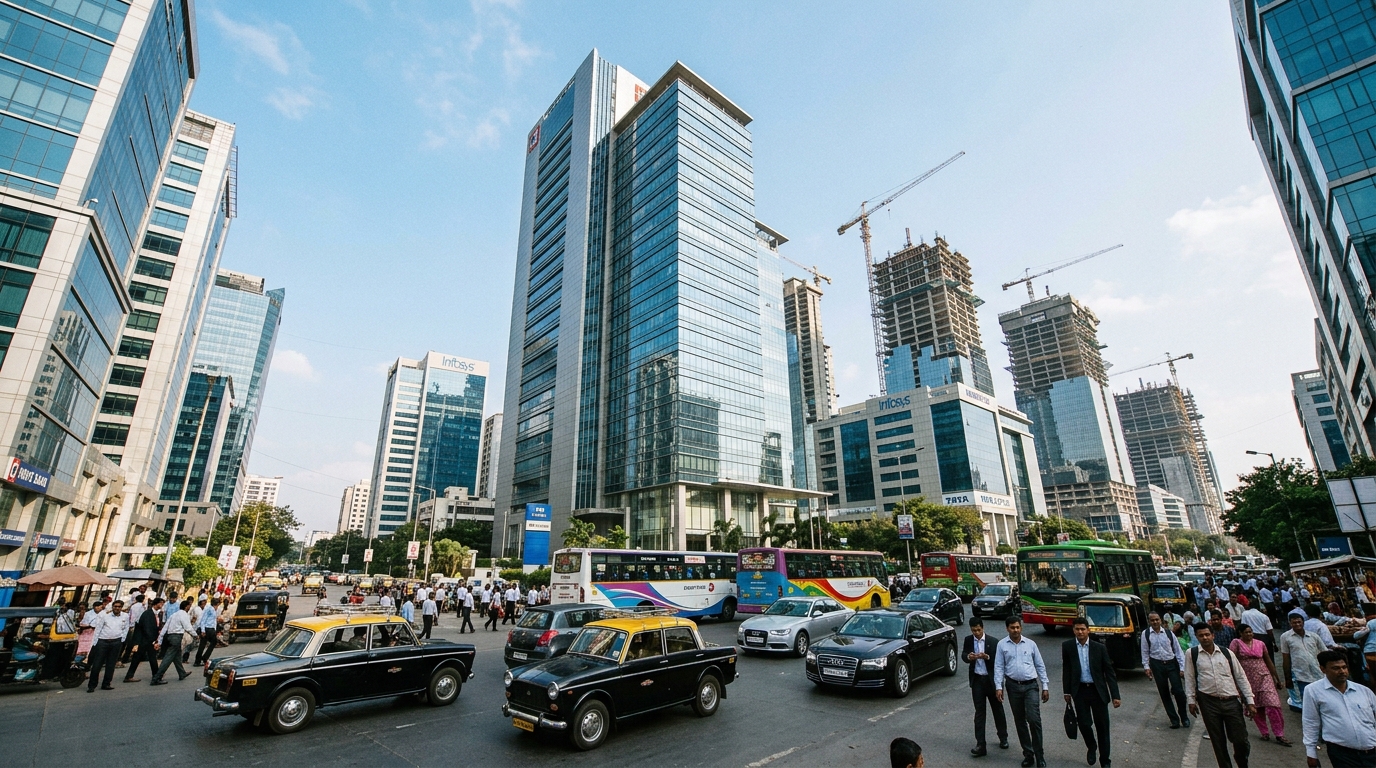
The Hyderabad IT corridor, specifically areas like Gachibowli and Kokapet, has witnessed a remarkable surge in land prices, with a recent transaction reportedly hitting Rs 204 crore per acre. This record-breaking figure far surpasses previous benchmarks and underscores the escalating attractiveness of this micro-market. The consistent upward trend in land values reflects a confluence of factors, primarily driven by sustained demand from IT and IT-enabled services (ITeS) companies seeking prime office spaces, coupled with a constrained supply of developable land in these established and well-connected zones.
This price escalation is not an isolated incident but a testament to the long-term growth trajectory anticipated for Hyderabad's tech ecosystem. The sheer volume of investment and the premium commanded by land here indicate a strong belief in the continued expansion of the IT sector and the ancillary businesses that thrive around it. For developers and investors, this translates to opportunities for high-value projects, provided they can navigate the competitive land acquisition landscape.
- Record land sale of Rs 204 crore per acre in Hyderabad's IT corridor.
- Key micro-markets: Gachibowli, Kokapet, and the Financial District.
- Sustained high demand from IT and ITeS sectors.
Institutional Investor Perspective: Capitalizing on a Growth Hotspot
From an institutional investor's standpoint, these record land prices are a strong signal of market confidence and potential for significant returns. Global and domestic institutional investors are increasingly prioritizing commercial real estate in tier-1 Indian cities, especially those with established tech ecosystems like Hyderabad. The ability to secure land in prime IT corridors, even at these elevated prices, suggests a strategic allocation of capital towards assets with strong rental growth prospects and high capital appreciation potential.
The current market dynamics imply a 'flight to quality' where investors are willing to pay a premium for strategically located land parcels that can support Grade-A office developments. This is driven by the predictable rental income from established IT tenants and the potential for capital gains as the city's economic footprint expands. The trend indicates a continued inflow of foreign direct investment (FDI) into India's commercial real estate, with Hyderabad emerging as a frontrunner.
- Increased institutional investor interest in Hyderabad's commercial real estate.
- Focus on Grade-A office developments in prime IT locations.
- Expectation of strong rental yield and capital appreciation.
- Strategic capital allocation towards high-growth tech hubs.
Micro-Market Dynamics: Gachibowli, Kokapet, and the Financial District
The news specifically points to the IT corridor, with Gachibowli and Kokapet being highly sought-after. These areas have evolved into self-sufficient ecosystems, boasting excellent infrastructure, connectivity, a skilled talent pool, and a concentration of global IT giants. The Financial District, often in close proximity or integrated with these IT hubs, also benefits from this demand spillover, attracting a mix of corporate offices and supporting amenities.
The limited availability of large, contiguous land parcels in these established micro-markets is a primary driver of the escalating prices. Developers are now looking at innovative strategies for land utilization, including vertical expansion and the redevelopment of older assets, to meet the burgeoning demand. The competitive bidding for land in these zones highlights their premium status and the strategic importance for companies looking to establish or expand their presence in Hyderabad.
- Gachibowli and Kokapet as prime IT and business hubs.
- Synergy with the Financial District for integrated development.
- Limited supply of developable land exacerbating price hikes.
- Need for innovative land use strategies by developers.
Policy and Regulatory Environment: Facilitating Growth
While the news doesn't explicitly detail policy impacts, it's crucial to acknowledge that Hyderabad's consistent growth in its IT sector is often supported by a proactive and business-friendly regulatory environment. State governments in such high-growth corridors typically implement policies that encourage foreign investment, streamline land acquisition processes for large-scale projects, and offer incentives for job creation and infrastructure development. This supportive framework indirectly fuels the demand for prime real estate and allows for such record-breaking transactions to occur.
The Telangana government, for instance, has historically focused on ease of doing business and attracting technology investments. Policies related to urban planning, infrastructure development (like outer ring roads and metro connectivity), and the establishment of special economic zones (SEZs) play a vital role in making these micro-markets attractive for both businesses and investors. The sustained high land prices suggest that current policies are effectively facilitating the expansion of the IT sector.
- Proactive government policies supporting IT sector growth.
- Streamlined land acquisition and investment facilitation.
- Infrastructure development (roads, public transport) as a key enabler.
- Overall business-friendly regulatory climate.
Source: NewsMeter