Hyderabad's Infrastructure Surge: A Goldmine for Developers in Gachibowli & Kokapet
Published: November 2026
The Impact on Developers and Landowners
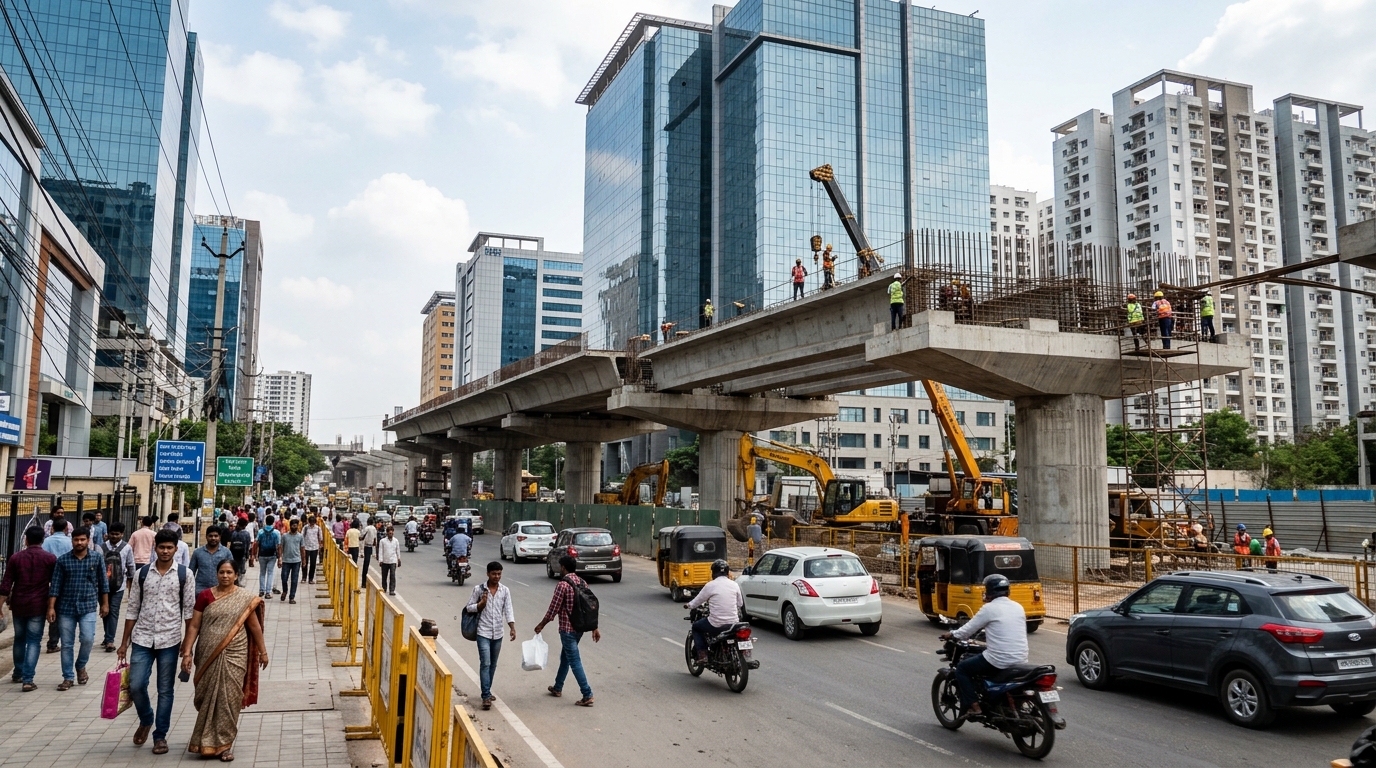
The news highlights a substantial push in infrastructure development around Hyderabad's IT and financial hubs. This translates directly into increased accessibility, improved connectivity, and a broader appeal for residential and commercial real estate in areas like Gachibowli, Kokapet, and the Financial District. For landowners, this surge in development activity signifies a potential appreciation in land value and a heightened demand for their plots. Developers stand to benefit from an expanding market, attracting a wider demographic of end-users and investors drawn to enhanced urban amenities.
The Telangana government's commitment to these projects creates a more predictable and favorable environment for long-term investment. Developers can leverage these upgrades to justify premium pricing and faster sales cycles for projects catering to the IT workforce and businesses establishing a presence in these evolving corridors.
Construction Trends, Approvals, and Supply Pipeline
The infrastructure push will undoubtedly influence construction trends. Expect a greater emphasis on integrated townships, mixed-use developments, and premium residential projects designed to cater to the high-earning professionals in the vicinity. The demand for Grade-A commercial spaces is also set to rise, creating opportunities for office park and co-working space developers.
While the infrastructure news is positive, developers must remain attuned to the pace of project approvals. Streamlined processes for obtaining building permits, especially for large-scale projects, will be crucial. The supply pipeline will need to adapt to the projected demand. Developers who can quickly identify and acquire land, secure necessary approvals, and initiate construction will be best positioned to capture market share before the supply catches up.
- Increased demand for smart homes and sustainable building practices.
- Focus on amenities that support a work-from-home culture.
- Potential for increased construction activity and material demand.
Location-Specific Opportunities: Gachibowli, Kokapet, and Financial District
The Gachibowli and Financial District area, already a magnet for IT companies and a burgeoning residential market, is poised for exponential growth. The improved connectivity from these infrastructure projects will make these locales even more attractive for both living and working. Kokapet, with its proximity and potential for further development, becomes a prime candidate for expansion and diversification of real estate offerings.
Developers should consider niche segments within these areas. This could include affordable luxury housing targeting the mid-level IT employee, premium villas for senior executives, or specialized commercial spaces catering to ancillary services required by the growing corporate ecosystem. The synergy between residential and commercial development in these zones is a key trend to capitalize on.
Risks and Execution Challenges
Despite the bright outlook, developers must navigate potential risks. The primary challenge lies in the execution of the infrastructure projects themselves. Delays or scope changes in these critical upgrades could impact the projected real estate demand and timelines. Furthermore, increased competition will inevitably arise as more developers recognize these opportunities, potentially leading to price wars and increased acquisition costs.
Another critical factor is the affordability aspect. While premium segments are attractive, a significant portion of the IT workforce may require more budget-friendly housing options. Developers need to strike a balance. Ensuring timely project completion, managing rising construction costs due to material and labor demand, and navigating any evolving regulatory landscape are paramount for successful execution.
- Potential for project delays impacting market sentiment.
- Increased competition and land acquisition costs.
- Managing affordability for a diverse workforce.
- Keeping pace with evolving urban planning and environmental regulations.
Source: regnews.in