Hyderabad's Housing Market at a Crossroads: Navigating Rising Costs and Investor Sentiment
Published: October 2026
The Tightrope Walk: Understanding the Price-Cost Imbalance
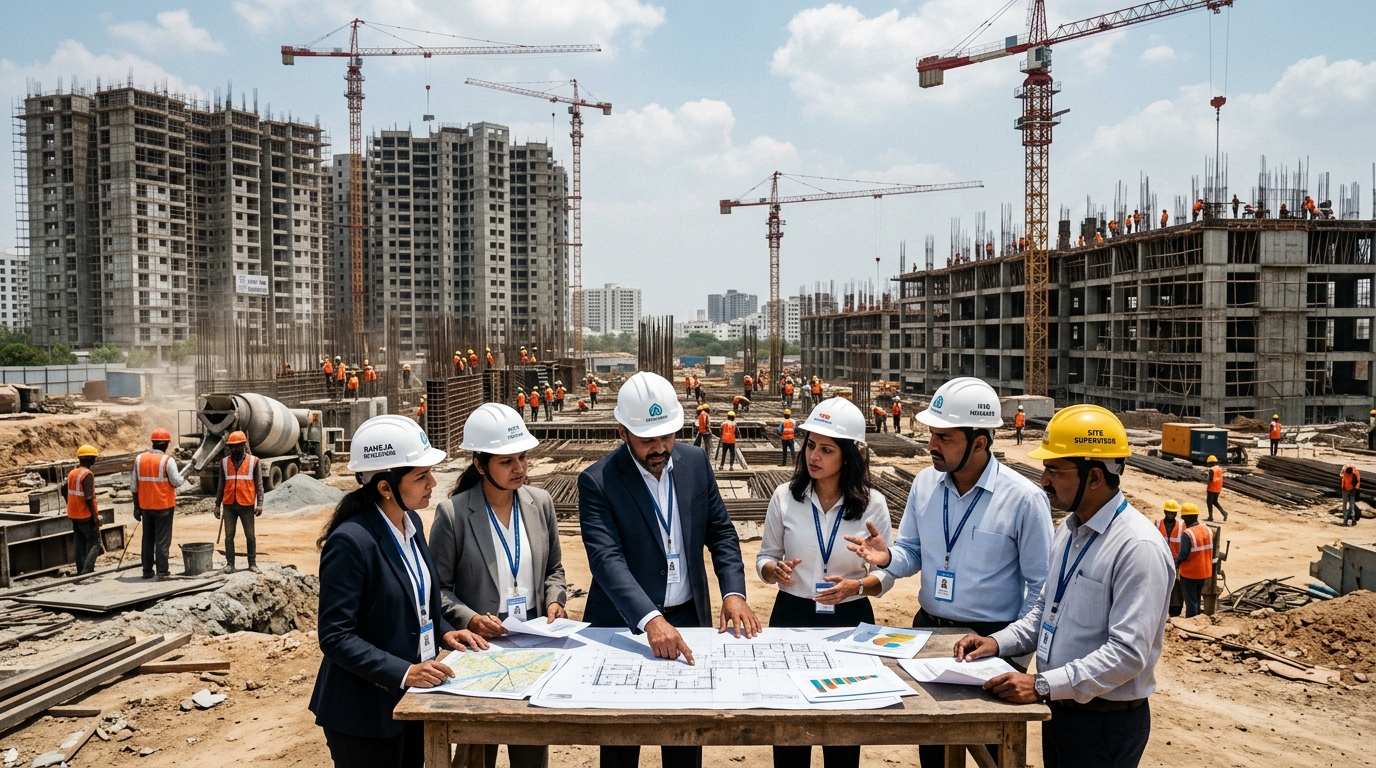
The recent report highlighting rising costs in the Hyderabad housing market signals a significant shift. Construction materials, labor, and land acquisition expenses are all contributing to an upward price trajectory. This is creating a delicate balance for developers and a point of contention for potential buyers and investors. While demand for quality housing in Hyderabad remains robust, fueled by its burgeoning IT sector and a growing population, the ability of the market to absorb further price increases without impacting sales velocity is being tested.
For institutional investors, this presents a nuanced scenario. While the long-term growth story of Hyderabad is compelling, the immediate impact of rising costs necessitates a more granular approach to project selection and investment sizing. A sustained increase in property prices, without a corresponding rise in disposable incomes or a slowdown in construction, could lead to affordability concerns and a potential cooling of demand, impacting rental yields and capital appreciation expectations.
Increased input costs (materials, labor, land) are directly impacting developer margins.
Potential for price resistance from buyers if increases outpace income growth.
Need for developers to manage costs effectively to maintain competitiveness.
Institutional Investor's Lens: Reassessing Capital Allocation
From an institutional investor's perspective, Hyderabad has been a favored destination due to its consistent growth, strong rental demand, and a supportive ecosystem for commercial and residential development. However, the current cost escalation necessitates a deeper dive into the unit economics of projects. Investors will be scrutinizing project feasibility more closely, focusing on developers with a proven track record of cost management and efficient execution. The direction of capital flow might see a shift towards projects with a clear value proposition and strong pre-sales, mitigating some of the price-related risks. Furthermore, the trend of premiumization might be tempered as developers aim to balance aspirational pricing with market realities.
The rise in construction costs also brings to the fore the importance of supply-side efficiencies and innovation. Institutional investors might favor developers who are adopting pre-fabricated construction methods or sustainable building practices that can offer cost savings in the long run, even if initial investments are higher. The overall investment thesis remains strong, but the execution and risk mitigation strategies will need to adapt to this evolving cost landscape.
Increased scrutiny on project economics and developer execution capabilities.
Preference for projects with strong pre-sales and clear value propositions.
Potential for adoption of cost-saving construction technologies.
Re-evaluation of rental yield expectations in light of rising property values.
Micro-Market Dynamics: Gachibowli, Kokapet, and the Financial District
The impact of rising costs will likely be felt across Hyderabad's prime micro-markets, particularly in areas like Gachibowli, Kokapet, and the Financial District. These hubs are characterized by high demand from the IT and BFSI sectors, driving consistent residential uptake. However, the premium pricing in these areas makes them more susceptible to price sensitivity. Developers in these micro-markets will need to carefully calibrate their pricing strategies to avoid alienating a significant buyer base. The allure of these locations remains, but the affordability factor will become a more prominent consideration.
In areas like Kokapet, known for its luxury and integrated developments, the challenge will be to maintain premium positioning while managing escalating construction costs. This could lead to a more phased development approach or a focus on delivering enhanced amenities and value-adds to justify higher price points. The Financial District and Gachibowli, with their sustained demand for rental housing, might see a more resilient pricing power for developers who can deliver quality, well-located units. However, any significant dip in affordability could impact the absorption rates of new launches.
Price sensitivity more pronounced in prime, high-demand micro-markets.
Need for developers to balance premium positioning with market affordability.
Focus on value-addition and amenities to justify higher price points in luxury segments.
Rental market resilience in IT hubs might buffer price pressures to some extent.
Policy and Regulatory Landscape: Aiding or Hindering?
While the news article doesn't explicitly detail policy impacts, it's crucial to consider how regulatory frameworks can influence the Hyderabad housing market amidst rising costs. Government initiatives aimed at streamlining construction permits, promoting affordable housing, or incentivizing the adoption of sustainable building materials can play a vital role in mitigating cost pressures. For instance, policies that reduce land acquisition complexities or offer tax benefits for developers using innovative construction technologies could directly impact the bottom line and, consequently, property prices.
Conversely, any new regulations that increase compliance burdens or add to construction timelines without corresponding cost benefits could exacerbate the current situation. Institutional investors will closely monitor any policy shifts that could affect the ease of doing business, project financing, or the overall investment climate in Hyderabad. A proactive and supportive regulatory environment is key to ensuring the continued health and growth of the market.
Potential for government initiatives to streamline construction processes.
Incentives for sustainable building materials and technologies could offer cost relief.
Impact of compliance burdens and development timelines on project costs.
Importance of a supportive regulatory environment for attracting institutional capital.
Source: newindianexpress.com