Hyderabad's BLISS Project: When Urban Dreams Collide with Nature's Boundaries
Published: July 2026
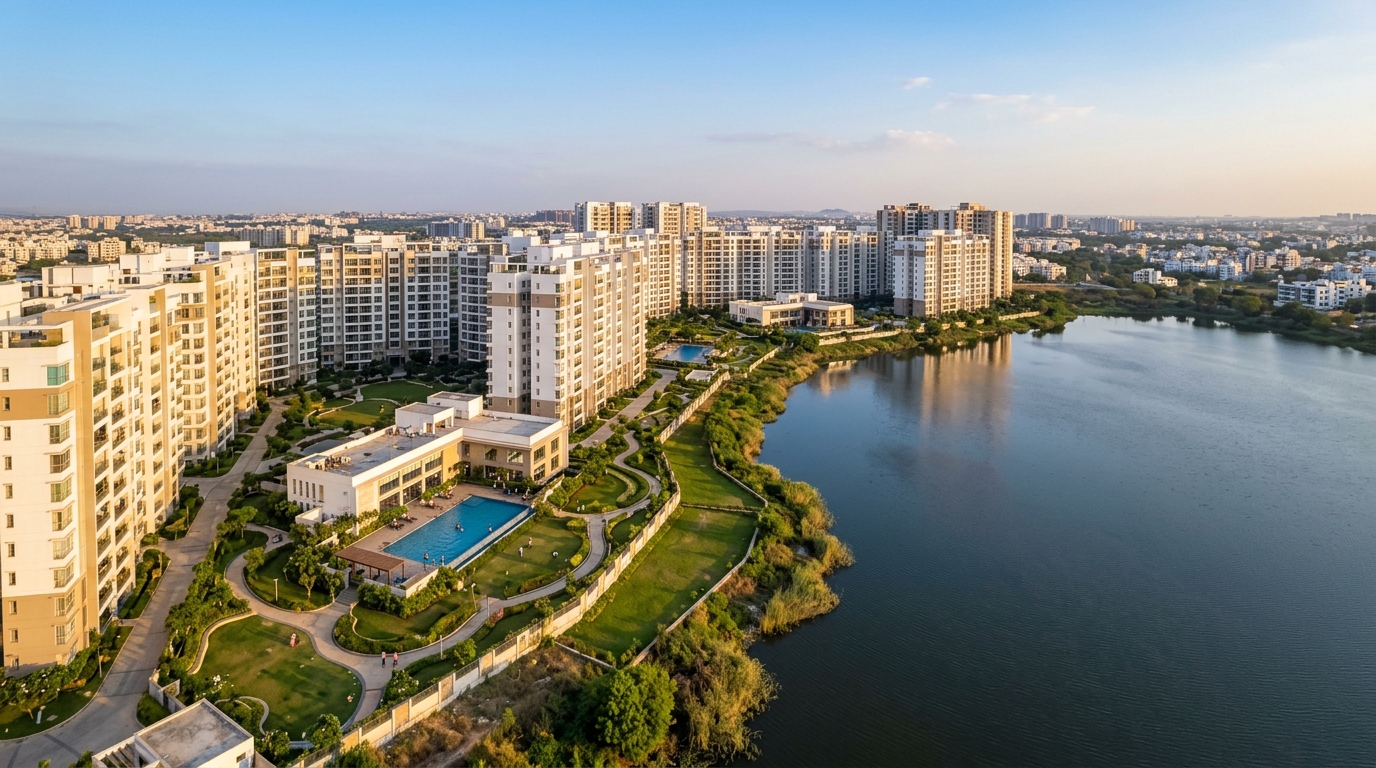
The Shadow Over BLISS: Luxury Meets Controversy
Imagine a postcard-perfect view: sprawling luxury residences, state-of-the-art amenities, and the promise of an elevated lifestyle. This was the vision painted by Hyderabad's BLISS project, a development aiming to redefine upscale living. However, beneath this shimmering facade lies a growing controversy. Reports have emerged suggesting that the project may have encroached upon a vital local lake, casting a dark shadow over its aspirational narrative. This isn't just about concrete and steel; it's about the delicate balance between urban expansion and ecological preservation, a theme increasingly relevant in India's rapidly growing metropolises.
The allegations, detailed in a recent report, point towards a potential violation of environmental norms, with the project's boundaries appearing to blur into the natural water body. For a city like Hyderabad, which has witnessed unprecedented growth in its IT and real estate sectors, such accusations serve as a stark reminder that progress must not come at the cost of the environment. The sanctity of lakes, crucial for groundwater recharge and biodiversity, is paramount, and any perceived transgression demands rigorous investigation and accountability.
Ground-Level Ripples: Buyers, Investors, and Developers Under Pressure
The implications of this controversy are multi-faceted, affecting various stakeholders in Hyderabad's dynamic real estate market. For prospective buyers who have invested their hard-earned money and dreams into BLISS, this news is undoubtedly unsettling. The assurance of a pristine living environment, often a key selling point for luxury projects, is now under a cloud of doubt. This could lead to anxieties about property value depreciation, legal recourse, and the long-term viability of their investment.
Investors, both domestic and international, are keenly watching such developments. Hyderabad has emerged as a prime investment destination, attracting significant capital into its real estate. However, environmental and regulatory concerns can act as deterrents, impacting investor confidence. Developers, on the other hand, find themselves in a precarious position. While the demand for quality housing remains robust, especially in prime areas like Gachibowli and the Financial District, the pressure to adhere to stringent environmental regulations and ethical development practices is mounting. Projects like BLISS, if found to be in violation, could lead to project delays, hefty fines, and significant reputational damage, potentially forcing a reassessment of development strategies.
- Buyers: Anxiety over investment security, potential property value impact, and long-term living environment.
- Investors: Concerns about regulatory risks, potential impact on ROI, and a shift towards more sustainable and compliant projects.
- Developers: Reputational damage, legal challenges, project delays, and increased scrutiny on environmental clearances and land acquisition.
Hyderabad's Future: Sustainable Growth or Environmental Reckoning?
The BLISS project controversy is a microcosm of the larger narrative shaping Hyderabad's urban future. The city's meteoric rise, fueled by its booming IT sector, has led to an insatiable demand for residential and commercial spaces, particularly in burgeoning hubs like Gachibowli, the Financial District, and areas like Kokapet, which are witnessing massive real estate investments. While this growth is a testament to Hyderabad's economic prowess, it also necessitates a more thoughtful approach to urban planning.
Moving forward, the emphasis must shift towards 'green' development. This means prioritizing projects that demonstrate a commitment to environmental sustainability, respect ecological boundaries, and engage in transparent land acquisition processes. Regulatory bodies will need to strengthen their oversight, ensuring strict adherence to environmental impact assessments and lake protection norms. For developers, the future lies in innovation – incorporating sustainable building materials, efficient water management systems, and ensuring their projects are in harmony with the natural landscape. Hyderabad has the potential to be a model for sustainable urban growth, but it requires a collective commitment from developers, buyers, and the government to ensure its expansion doesn't drown its natural treasures.
Source: The New Indian Express