Hyderabad Real Estate: Navigating Security Concerns and Market Dynamics Post-Malkajgiri Incident
Published: June 2026
Implications for Builders and Landowners
While the Malkajgiri incident is a concerning anomaly, it doesn't negate the robust fundamentals of Hyderabad's real estate market. For builders, this underscores the need for enhanced due diligence and potentially more stringent security protocols during project development and sales. Landowners should leverage this period of high demand to secure favorable terms, particularly in well-established and rapidly developing corridors. The focus should remain on delivering quality, community-oriented projects that address the growing aspirations of the city's burgeoning population.
The incident might lead to increased scrutiny on the background checks within the industry. Developers need to ensure transparency and ethical practices in all dealings, fostering trust with both investors and end-users. This is crucial for maintaining the positive momentum of the Hyderabad property market.
- Enhanced due diligence on all stakeholders.
- Focus on community-centric and secure project designs.
- Maintain transparency and ethical business practices.
Construction Trends, Approvals, and Supply Pipeline
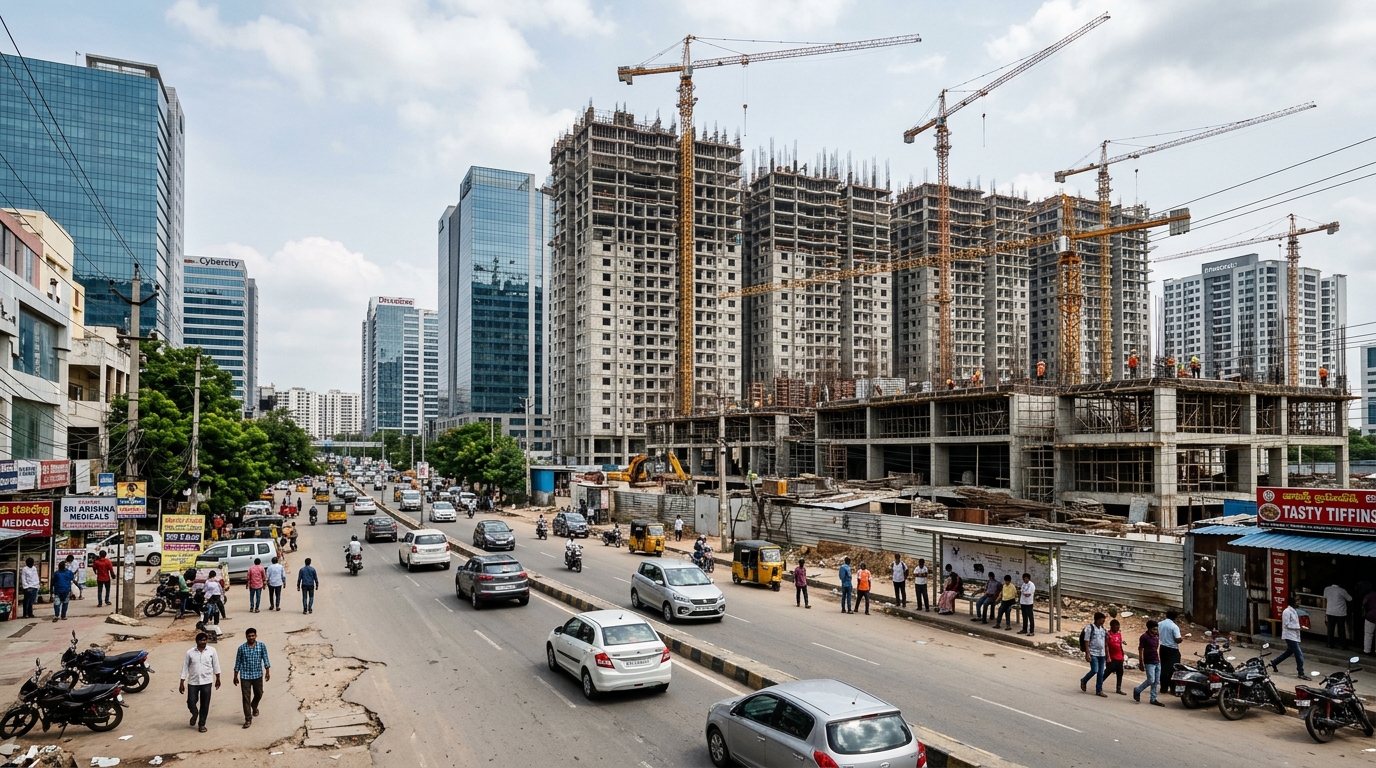
Hyderabad's construction sector continues to be driven by a strong demand for residential and commercial spaces. Approval processes, while sometimes lengthy, are generally efficient in key development zones like Gachibowli and the Financial District. The supply pipeline remains robust, with numerous projects underway. However, there's a growing demand for sustainable and smart construction technologies, which developers should integrate to stay competitive.
The current supply pipeline is largely catering to the mid-to-high segment, driven by IT professionals and business executives. Developers focusing on affordable luxury or niche segments might find an underserved market. Any perceived instability, however localized, emphasizes the importance of clear and timely project execution to maintain investor confidence and avoid potential delays in the supply chain.
- Integrate sustainable and smart construction technologies.
- Explore niche market segments beyond the usual offerings.
- Ensure efficient project execution to maintain supply chain integrity.
Location-Specific Opportunities: Gachibowli, Kokapet, and Financial District
These prime Hyderabad micro-markets continue to be the epicenters of growth, fueled by IT expansion, infrastructure development, and a high concentration of disposable income. Gachibowli, the Financial District, and the emerging hub of Kokapet offer immense potential for integrated townships, premium residential complexes, and Grade A commercial spaces. The demand for housing in these areas is directly linked to job creation and the influx of professionals.
Land availability, though scarce, presents lucrative opportunities for developers with a vision to create landmark projects. The government's continued focus on infrastructure development in these corridors further solidifies their long-term investment appeal. Developers can capitalize on this by offering a blend of modern amenities, strategic locations, and a secure living environment.
- Focus on integrated townships in Gachibowli and Financial District.
- Develop premium residential and commercial spaces in Kokapet.
- Leverage infrastructure development for project positioning.
Risks and Execution Challenges
Beyond the unfortunate incident highlighting potential personal risks and the need for industry-wide integrity, other risks for developers include fluctuating material costs, labor availability, and adherence to evolving regulatory frameworks. Project execution challenges often stem from land acquisition complexities, delays in regulatory approvals, and competition. A potential supply-demand mismatch could emerge if new project launches do not align with evolving market preferences or affordability.
Mitigating these risks requires robust financial planning, strong project management capabilities, and a keen understanding of market sentiment. Developers must be agile and adaptable to changing economic conditions and consumer demands. Building strong relationships with local authorities and suppliers is also paramount for smooth execution.
- Manage material cost fluctuations and labor availability proactively.
- Navigate land acquisition and approval complexities efficiently.
- Monitor market sentiment and adapt to evolving consumer preferences.
Source: The News Minute