High Streets Reclaim Dominance: Unpacking the Rent Growth Surge in Indian Retail Real Estate
Published: April 2026
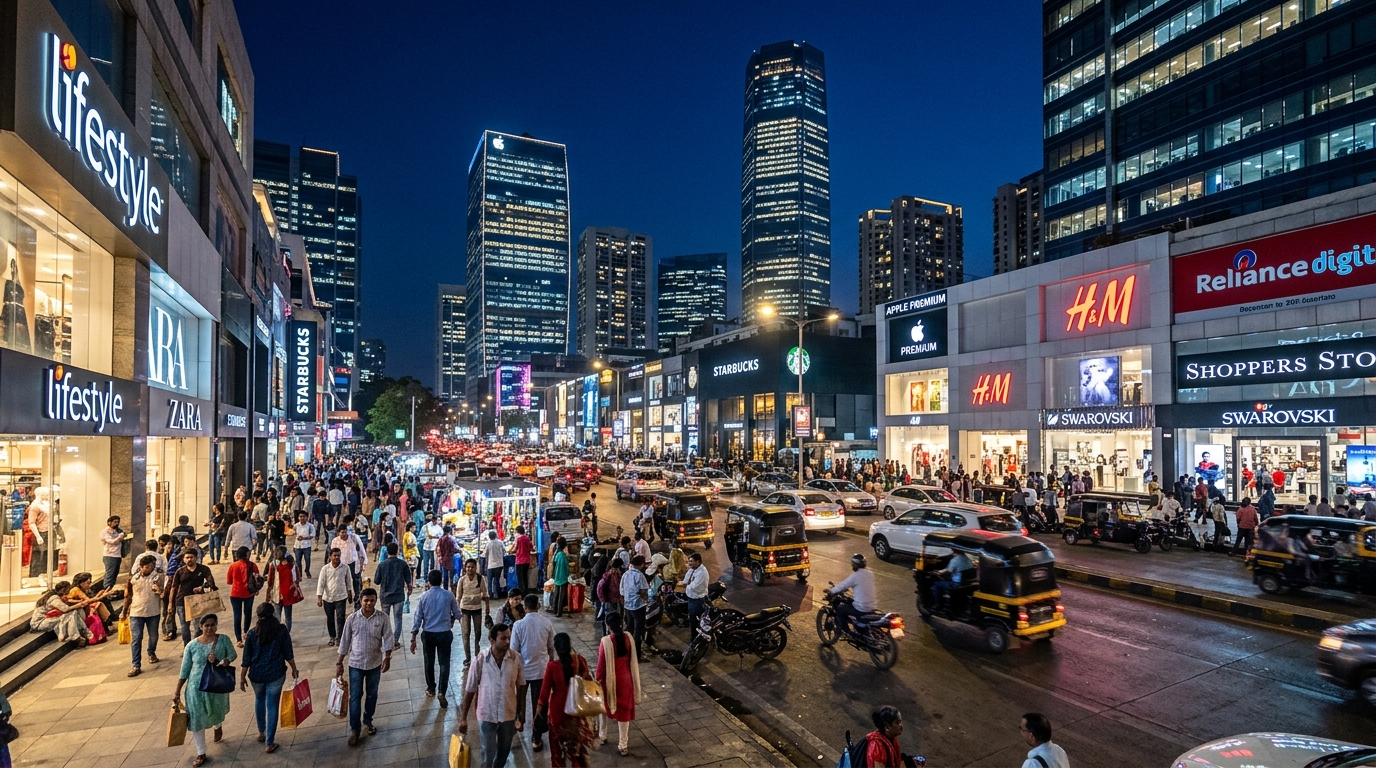
The High Street Renaissance: A Data-Driven Perspective
Recent reports, as highlighted by The Economic Times, indicate a significant acceleration in rental growth across India's prime high street locations. This phenomenon is a departure from the post-pandemic narrative that predominantly favored enclosed retail spaces. The data suggests that established, well-located high streets are experiencing robust demand from retailers looking for visibility, accessibility, and a unique brand proposition.
This resurgence is attributed to several factors. Firstly, the inherent character and established consumer familiarity of these locations provide a distinct advantage. Secondly, the controlled supply of prime high street real estate limits the impact of oversupply, a concern often associated with mall developments. As a result, landlords in these coveted micro-markets are able to command higher rents, reflecting the strong transactional demand and limited availability of premium spaces.
- Outperformance in rental growth compared to malls.
- Driven by strong retailer demand and established consumer familiarity.
- Limited supply of prime high street spaces driving rental appreciation.
Institutional Investor Appetite and Capital Allocation Shifts
This robust rental growth is not going unnoticed by institutional investors. The improved yield potential and lower capital expenditure requirements compared to developing new malls are making high street assets increasingly attractive. We are observing a growing interest from global and domestic funds in acquiring prime high street retail portfolios, particularly in established consumption hubs.
The focus for institutional capital is likely to be on well-anchored, high-footfall locations with a diverse tenant mix. Investors are seeking assets that offer a blend of established brands and emerging D2C (Direct-to-Consumer) players looking to establish a physical presence. This trend suggests a potential recalibration of investment strategies, with a greater emphasis on curated retail experiences that high streets inherently offer.
- Increased interest from institutional investors due to improved yield potential.
- Focus on acquiring prime high street retail portfolios.
- Attraction to established consumption hubs with high footfall.
- Potential shift in capital allocation away from oversupplied mall segments.
Policy and Regulatory Landscape: An Enabling Environment?
While the news doesn't explicitly detail policy interventions, the underlying trend of high street revival can be indirectly influenced by urban planning and zoning regulations. Policies that encourage mixed-use development, pedestrianization, and the preservation of heritage retail districts can further bolster the attractiveness of high streets. For instance, initiatives to improve public transport connectivity to these areas or streamline permits for facade upgrades can create a more conducive environment.
From a regulatory standpoint, the relative ease of managing and redeveloping existing high street properties compared to the extensive approvals required for large-scale mall projects could also be an attractive factor for developers and investors alike. This implies that while not directly driven by new policies, the existing regulatory framework might be more conducive to high street regeneration.
- Urban planning policies can indirectly support high street revival (e.g., pedestrianization, mixed-use development).
- Streamlined regulations for facade upgrades and retail enhancements.
- Existing regulatory framework may favor high street regeneration over new mall development.
- Importance of public transport connectivity to high street locations.
Micro-Market Dynamics and Emerging Opportunities
While the article highlights national trends, the success of high streets is inherently micro-market dependent. Established retail hubs in metropolitan cities like Delhi (Khan Market) and Mumbai will naturally lead this charge. However, the principles of high street revival can be observed and replicated in emerging consumption centers.
For instance, in cities like Hyderabad, while established malls in areas like Gachibowli, Kokapet, and the Financial District continue to attract institutional investment, the burgeoning demand for curated retail experiences could see the emergence of premium high street concepts. Developers and investors would do well to identify pockets within these rapidly developing micro-markets that possess the right characteristics for high street retail – good existing infrastructure, strong catchments, and a potential for pedestrian-friendly environments. The focus will be on creating unique retail narratives that resonate with the evolving consumer preferences.
- Micro-market specific performance is crucial.
- Established hubs like Khan Market and Linking Road lead the trend.
- Potential for high street concepts in emerging consumption centers.
- Identifying prime locations within rapidly developing micro-markets like Hyderabad's Gachibowli, Kokapet, and Financial District.
- Emphasis on creating unique retail experiences and narratives.
Source: The Economic Times