Gachibowli's Rs 33 Crore Land Deal: A Blueprint for Developer Success in Hyderabad's Premium Corridor
Published: April 2026
Unlocking Value: What This Means for Builders and Landowners
This Rs 33 crore transaction in Gachibowli is a clear indicator of the premium placed on strategically located commercial land in Hyderabad. For developers, it underscores the potential for significant returns on investment when acquiring land in high-growth corridors. The per-square-yard price, exceeding Rs 2.2 lakh, suggests a mature market where scarcity of prime land drives up values and justifies ambitious project planning. Landowners in and around Gachibowli, Kokapet, and the Financial District should view this as a prime opportunity to monetize their assets, either through direct sales to developers or joint development agreements that leverage their land's inherent value.
The demand for commercial spaces in these areas is driven by a confluence of factors, including Hyderabad's status as a major IT and R&D hub, its robust economic growth, and a burgeoning population seeking employment and amenities. Developers must therefore focus on projects that cater to this demand, offering modern, well-connected commercial spaces that align with the aspirations of global corporations and local enterprises alike.
- Developers: Strategize acquisitions in prime corridors, focusing on high-density commercial or mixed-use developments.
- Landowners: Explore monetization through outright sales or JDA opportunities, informed by prevailing market rates.
- Identify micro-locations within Gachibowli, Kokapet, and Financial District with the highest potential for appreciation and demand.
Construction Trends, Approvals, and the Supply Pipeline
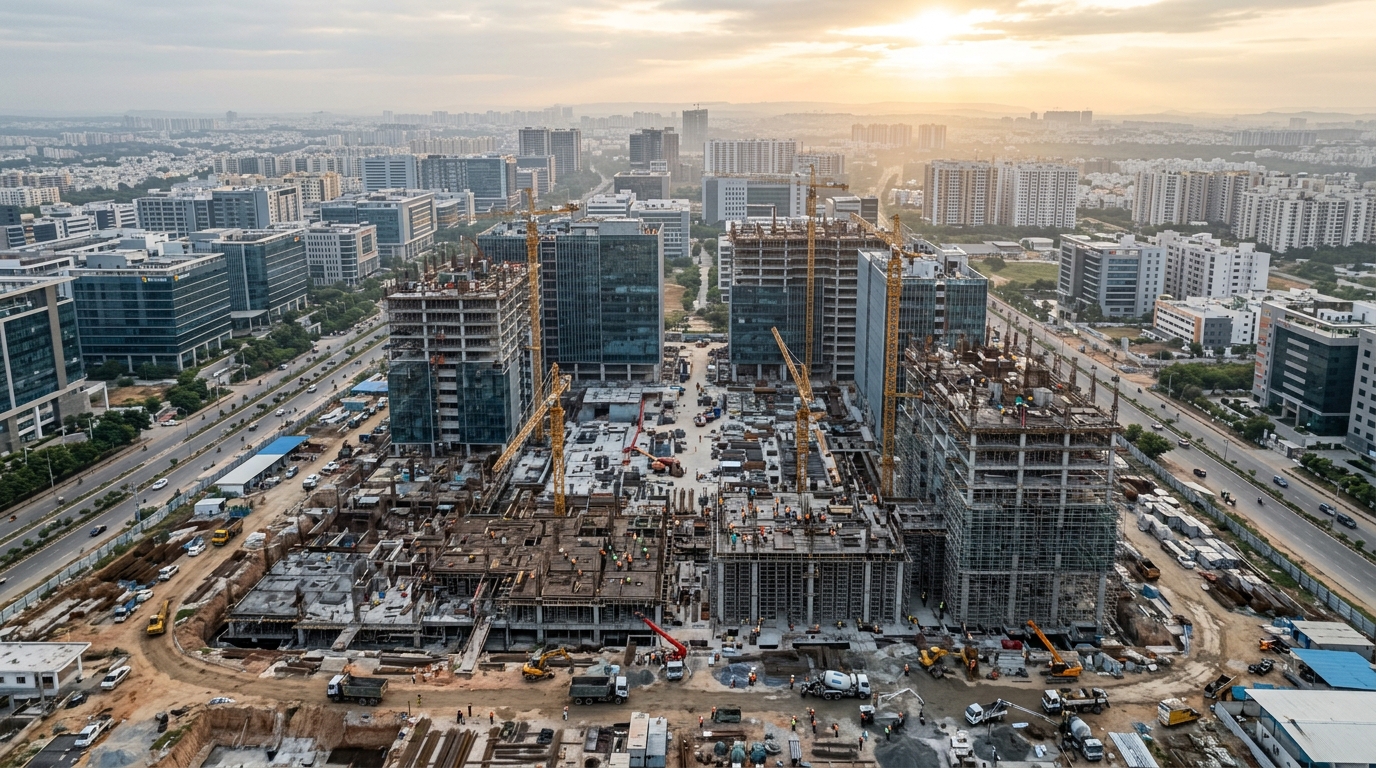
The escalating land prices are a direct consequence of demand outpacing supply, especially for Grade-A commercial spaces. This creates a favorable environment for construction, encouraging developers to move forward with ambitious projects. However, navigating the approval process remains a critical factor. Streamlined regulatory frameworks and efficient project clearances are essential to capitalize on this momentum. Developers should factor in potential delays and ensure robust project management to maintain construction timelines. The supply pipeline needs to be continuously evaluated; any bottleneck in approvals or construction materials can exacerbate the existing demand-supply imbalance.
Innovations in construction technology, sustainable building practices, and smart building features will be key differentiators. Projects that offer a compelling value proposition beyond just square footage, incorporating amenities and a focus on occupant well-being, are likely to command premium rents and higher occupancy rates. The rapid pace of development in Hyderabad necessitates agility and foresight in planning the supply chain for construction materials and skilled labor.
- Prioritize projects that align with current construction technology and sustainability trends.
- Engage early with regulatory bodies to ensure a smooth approval process.
- Develop contingency plans for potential supply chain disruptions and labor shortages.
- Focus on creating integrated developments that offer a complete ecosystem for businesses and their employees.
Location-Specific Opportunities: Hyderabad's Golden Corridor
Gachibowli, with its established IT infrastructure and growing residential catchment, is a proven performer. The Rs 2.2 lakh per square yard figure solidifies its position as a prime commercial hub. Adjacent areas like Kokapet and the Financial District are also experiencing significant growth, driven by spillover demand and the establishment of new business parks. Developers looking to replicate or enhance this success should consider the unique attributes of each micro-market. Kokapet, for instance, offers newer development potential, while the Financial District is attracting major BFSI players.
The interconnectedness of these zones via robust infrastructure, including expressways and proposed metro extensions, further enhances their appeal. Any development strategy must leverage this connectivity. The success of large-scale, integrated projects in these areas, offering a blend of commercial, retail, and hospitality, has set a precedent that future developments should aim to emulate. Understanding the specific tenant profiles and growth trajectories of each of these sub-markets is crucial for targeted development.
- Gachibowli: Focus on Grade-A office spaces and niche retail/F&B opportunities.
- Kokapet: Explore large-format commercial parks and mixed-use developments with a focus on future-proofing.
- Financial District: Cater to the specific needs of BFSI and corporate headquarters, emphasizing premium office environments.
Navigating Risks and Execution Challenges
While the current market sentiment is overwhelmingly positive, developers must remain cognizant of the inherent risks. High land acquisition costs, coupled with rising construction material and labor expenses, can put pressure on project margins. Executing large-scale projects on time and within budget requires meticulous planning and robust financial management. The market is not immune to global economic fluctuations or shifts in corporate real estate strategies, which could impact demand for commercial spaces in the medium to long term.
Furthermore, ensuring the quality of construction and adherence to environmental and safety regulations are paramount. Building a strong reputation for timely delivery and quality assurance will be critical in securing future projects and investor confidence. Developers who can effectively mitigate these risks through proactive planning, strong partnerships, and a deep understanding of the local market dynamics will be best positioned for sustained success in Hyderabad's competitive real estate landscape.
- Conduct thorough due diligence on land parcels, considering zoning and development potential.
- Maintain rigorous cost control measures throughout the construction lifecycle.
- Diversify project portfolios to mitigate risks associated with a single asset class or location.
- Build strong relationships with contractors, suppliers, and financial institutions to ensure smooth execution.
Source: MSN