Global Giants Descend on Hyderabad: Tribeca & Ira Realty's ₹2,000 Cr Mega Project Signals a New Era for Developers
Published: August 2026
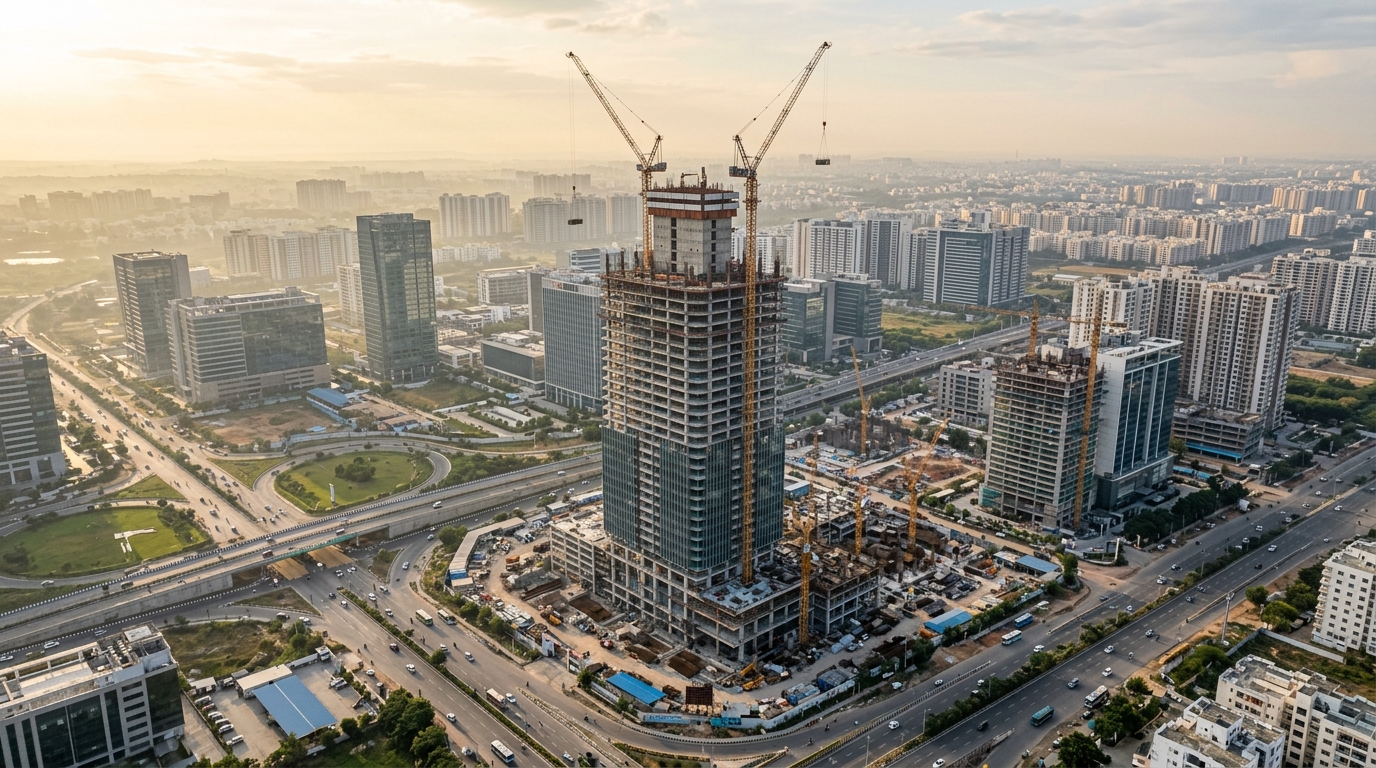
Opportunities Unveiled: For Builders and Landowners
The ₹2,000 crore investment by Tribeca and Ira Realty in a 65-storey, Vaastu-compliant project in Hyderabad is a powerful endorsement of the city's real estate potential. For local developers, this influx of global capital and expertise signifies a new benchmark. It presents a dual opportunity: either to collaborate with these international players, leveraging their experience and funding, or to innovate and differentiate their offerings to compete in an increasingly sophisticated market. Landowners in prime Hyderabad micro-markets, particularly those near the Financial District, Gachibowli, and Kokapet, stand to gain significantly from increased demand for strategic parcels of land suitable for high-rise, mixed-use developments. This development will likely drive up land values and create a competitive bidding environment for premium sites.
The project's emphasis on a 65-storey, Vaastu-compliant structure points towards a growing demand for aspirational living and working spaces. Developers should consider how to integrate such high-specification amenities and design principles into their own upcoming projects. This includes exploring vertical construction techniques, advanced structural engineering, and sophisticated interior design to cater to a discerning buyer base. Furthermore, the 'Vaastu-compliant' aspect highlights a cultural sensitivity that resonates deeply with the Indian buyer, a factor that should not be overlooked in design and marketing strategies.
- Strategic land acquisition in high-growth corridors of Hyderabad.
- Partnership opportunities with international developers for knowledge and capital infusion.
- Focus on niche segments like ultra-luxury, integrated townships, and ESG-compliant developments.
- Upskilling and adopting advanced construction technologies to meet new benchmarks.
Construction Trends, Approvals, and Supply Pipeline
The sheer scale and height of this project will undoubtedly push the boundaries of local construction capabilities. Developers need to anticipate increased demand for specialized construction materials, advanced formwork, and high-capacity vertical transportation systems. This could strain the existing supply chain, creating opportunities for new suppliers and manufacturers to emerge, but also posing potential lead time and cost challenges for all stakeholders. Approvals for such mega-projects are typically complex and time-consuming, involving multiple government agencies. The successful navigation of these regulatory pathways by Tribeca and Ira Realty could set precedents and streamline processes for future large-scale developments, but developers must be prepared for rigorous scrutiny and adherence to stringent building codes, environmental regulations, and urban planning norms.
The 'supply pipeline' will be tested. We can expect a surge in demand for skilled labor in specialized areas like high-rise construction, façade engineering, and advanced MEP (Mechanical, Electrical, and Plumbing) systems. Builders who have invested in training and development will be well-positioned. Concurrently, developers should proactively engage with their existing supplier networks and explore diversification to mitigate potential bottlenecks in materials like high-strength concrete, specialized steel, and advanced façade systems.
- Invest in pre-construction planning and material procurement to secure supply.
- Foster strong relationships with government bodies to navigate approval processes efficiently.
- Explore pre-fabrication and modular construction techniques to improve speed and quality.
- Focus on talent acquisition and retention for specialized construction roles.
Hyderabad's Premium Corridors: Gachibowli, Kokapet, and Financial District
The strategic choice of Hyderabad, particularly areas like Gachibowli, Kokapet, and the Financial District, is no accident. These are rapidly evolving hubs for IT, finance, and premium residential living, attracting a high-net-worth demographic and a burgeoning expatriate population. This project's location capitalizes on existing and planned infrastructure, the presence of global corporations, and a lifestyle-oriented consumer base. For developers, these micro-markets offer unparalleled growth potential, but also intense competition. Differentiating through design, amenities, and a superior customer experience will be paramount. The success of this project will likely spur further development and infrastructure upgrades in these already prime zones, potentially creating new sub-markets within these established corridors.
The 'Vaastu-compliant' aspect, while seemingly niche, taps into a significant cultural preference that can be a strong selling point. Developers in these areas should consider how to integrate traditional architectural principles with modern design and sustainability to appeal to a wider spectrum of buyers. This could involve incorporating principles of natural light, ventilation, and spatial harmony in contemporary designs, rather than strictly adhering to outdated conventions.
- Identify adjacent or upcoming areas with similar growth potential but lower entry barriers.
- Develop integrated projects that offer residential, commercial, and retail components to capture full value.
- Focus on creating 'smart' and 'sustainable' living environments that align with the aspirations of the target demographic.
- Leverage the established brand value of these districts in marketing campaigns.
Navigating Risks and Execution Challenges
While the investment signals strong confidence, significant execution challenges lie ahead. The construction of a 65-storey building in India involves complex engineering, rigorous safety protocols, and the need for specialized equipment. Any delays in approvals, material procurement, or labor availability can have cascading effects on timelines and budgets. Furthermore, the market sentiment can be volatile, and unforeseen economic shifts could impact demand for premium properties. Developers must conduct thorough due diligence on market absorption rates and maintain a robust financial model that accounts for contingencies.
The 'Vaastu-compliant' requirement, while a selling point, can also introduce design constraints and increase construction complexity and costs if not managed efficiently. Ensuring compliance without compromising on modern functionality and aesthetics will be a key execution challenge. Moreover, competition from other upcoming luxury projects in Hyderabad, and potential future entrants, will require continuous innovation and a strong value proposition to sustain sales momentum and investor confidence throughout the project lifecycle.
- Implement robust project management methodologies and risk mitigation strategies.
- Build strong relationships with reliable contractors and suppliers with proven track records in high-rise construction.
- Develop flexible marketing and sales strategies to adapt to market dynamics.
- Ensure transparency and clear communication with stakeholders, including investors, buyers, and regulatory bodies.
Source: hindustantimes.com