Global Financial Giant CIBC's Hyderabad Leap: A Signal of Maturing Flexible Office Demand in India
Published: August 2026
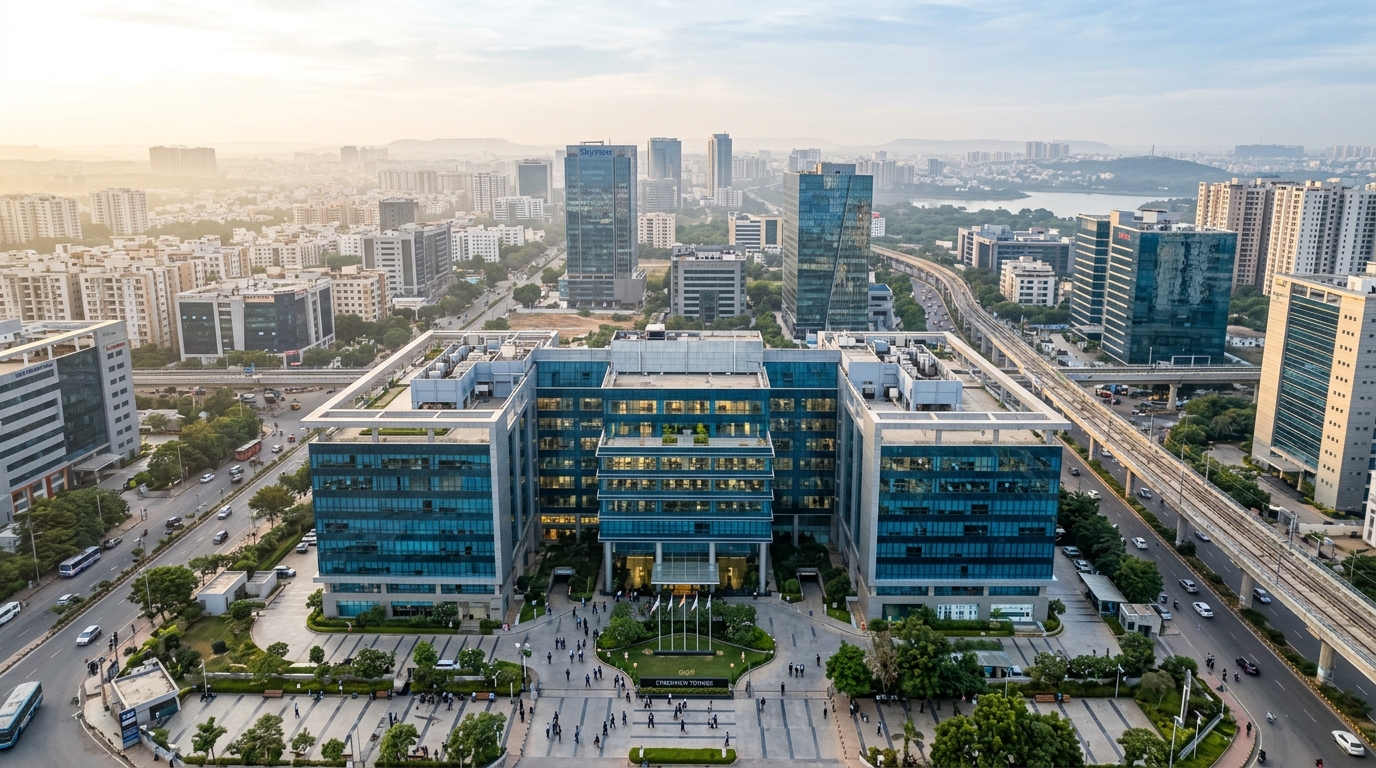
Market Implications: Demand Surges, Supply Adapts
The recent announcement of CIBC leasing a significant 1.21 lakh sq ft of flexible office space in Hyderabad for its Global Capability Centre (GCC) over a 5-year period, reportedly valued at ₹180 crore, is a powerful indicator of evolving corporate real estate strategies. This substantial commitment from a major global financial institution highlights a burgeoning demand for flexible workspace solutions, moving beyond traditional long-term leases. It suggests that companies are prioritizing agility, scalability, and cost-efficiency in their office footprints, particularly for their offshore support and development centers.
This demand surge is not occurring in a vacuum. It is being met by a dynamic supply side that is increasingly catering to these flexible needs. While specific details of the landlord and micro-market within Hyderabad are not provided in the news, such large-scale leases typically gravitate towards established or rapidly developing commercial corridors. This trend is likely to put upward pressure on rental values in prime locations, especially those offering high-quality, tech-enabled, and well-connected flexible office spaces. The ₹180 crore valuation over five years suggests a healthy annual rental rate, reflecting the premium attached to such flexible arrangements and the strategic importance of Hyderabad as a GCC destination.
Increased demand for agile workspace solutions from large MNCs.
Potential for upward rental pressure in prime Hyderabad micro-markets.
Growing acceptance of flexible office models as a core real estate strategy.
Positive impact on ancillary services and infrastructure development in targeted areas.
Institutional Investor Perspective: Capital Flows and Risk Appetite
From an institutional investor's viewpoint, CIBC's decision is a strong vote of confidence in the Indian commercial real estate market, specifically in the flexible office segment. Such a significant lease by a globally recognized financial institution validates the long-term growth narrative of India as a preferred destination for GCCs. This reduces perceived risk and can attract further foreign direct investment (FDI) into Grade A office assets and co-working providers.
The ₹180 crore deal over five years, while primarily a tenant commitment, has broader capital flow implications. It encourages institutional investors to allocate more capital towards assets that can accommodate such flexible leasing models. This could translate into increased investment in build-to-suit facilities for GCCs, or partnerships with established flexible workspace operators who can demonstrate stable occupancy and revenue streams. The presence of a large tenant like CIBC de-risks these investments and potentially leads to higher yields and capital appreciation for the underlying real estate assets. This move signals a growing appetite for diversified income streams within the commercial real estate portfolio.
Validation of India's commercial real estate potential for institutional capital.
Increased attractiveness of flexible office assets for FDI.
Potential for higher yields and capital appreciation in targeted micro-markets.
Diversification of investment strategies within the office sector.
Micro-Market Relevance: Hyderabad's Ascendancy
Hyderabad, particularly its western corridor encompassing Gachibowli, the Financial District, and newer emerging hubs like Kokapet, has consistently been a frontrunner in attracting IT/ITeS and BFSI (Banking, Financial Services, and Insurance) sector investments. The CIBC lease further solidifies this reputation. These micro-markets offer a compelling combination of a large, skilled talent pool, robust infrastructure, and a pro-business environment, making them ideal locations for GCC operations.
The choice of a flexible office space suggests that CIBC might be looking at options within these established or rapidly developing zones, where providers are equipped to offer adaptable layouts and services. This could mean leases in existing Grade A office buildings with flexible space components, or dedicated flexible workspace campuses. The success of such a large lease in Hyderabad will likely spur further development and expansion of flexible office inventory in these specific micro-markets, potentially attracting more domestic and international players seeking similar operational advantages.
Reinforces Hyderabad's position as a premier GCC hub.
Highlights the importance of Gachibowli, Financial District, and Kokapet for corporate leasing.
Stimulates development of flexible office infrastructure in these key areas.
Contributes to the ecosystem of supporting services around these commercial zones.
Policy and Regulatory Environment
While the news does not explicitly mention policy or regulatory impacts, the increasing attractiveness of India for global companies like CIBC is often supported by favorable government policies. Initiatives aimed at promoting ease of doing business, offering incentives for setting up IT/BFSI centers, and developing urban infrastructure play a crucial role. The Telangana government, for instance, has been proactive in creating a conducive environment for IT and related industries. Such large-scale corporate leases indirectly validate the effectiveness of these policies and encourage their continuation and enhancement. The consistent influx of FDI into the real estate sector, particularly for commercial properties, also signals a stable and predictable regulatory landscape.
Furthermore, the demand for flexible office spaces aligns with evolving work policies that might be influenced by broader discussions around hybrid work models and sustainability. While not directly regulatory, these shifts are shaping corporate real estate decisions and are likely to be supported by urban planning and development frameworks that encourage diverse workspace solutions. The ability of cities like Hyderabad to accommodate such large-scale flexible leases is a testament to their adaptive infrastructure and regulatory responsiveness.
Indirect validation of supportive government policies for FDI and business growth.
Potential for continued focus on ease of doing business and infrastructure development.
Alignment with evolving global work models and their impact on corporate real estate.
Indicates a stable regulatory environment for commercial real estate investments.
Source: Hindustan Times