GCC Boom Fuels Bengaluru & Hyderabad Real Estate: Your Developer's Advantage
Published: July 2026
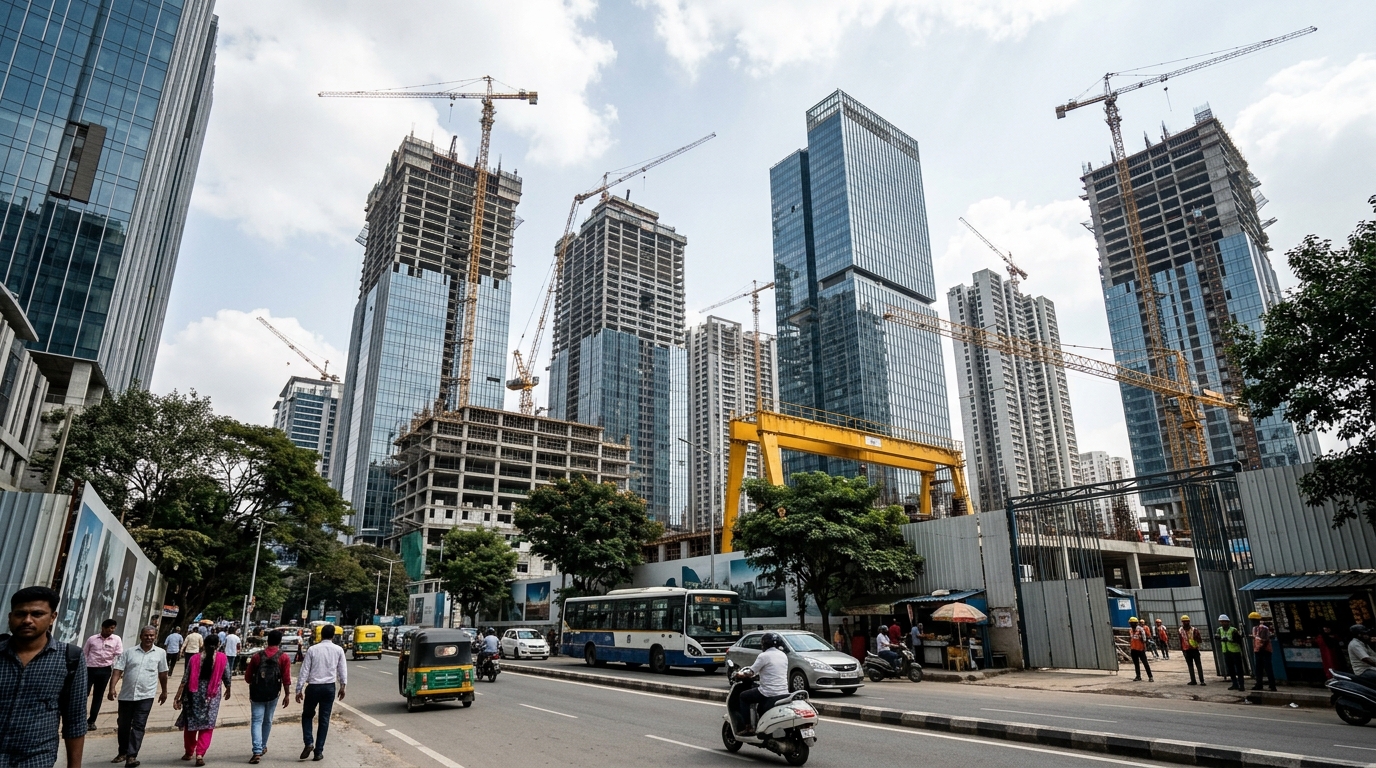
The GCC Surge: A Game Changer for Builders and Landowners
The explosive growth of Global Capability Centers (GCCs) in Bengaluru and Hyderabad, as highlighted by Bloomberg, presents an unprecedented opportunity for real estate developers and landowners. These centers are not just about office space; they are catalysts for comprehensive urban development, driving demand across residential, retail, and hospitality sectors. For builders, this translates into a robust demand pipeline for high-quality office spaces, co-working solutions, and a burgeoning need for premium residential projects to house the expanding workforce. Landowners in and around these key growth corridors stand to benefit from significantly enhanced land values and increased development potential. Proactive land acquisition and strategic partnerships will be crucial to capitalize on this escalating demand.
The influx of talent and capital associated with GCCs creates a multiplier effect. It fuels job creation, boosts disposable incomes, and consequently, drives demand for ancillary services and amenities. Developers who can anticipate and cater to the evolving lifestyle preferences of this high-earning demographic, from modern apartments to integrated townships with best-in-class facilities, will secure a competitive edge. This is not merely about building; it's about creating integrated ecosystems that attract and retain top talent, directly benefiting from the sustained growth of the GCC sector.
Identify prime land parcels in proximity to existing and planned GCC hubs.
Forge strategic alliances with corporates and co-working providers for pre-leasing of office spaces.
Develop diversified portfolios catering to residential, retail, and premium rental segments.
Understand and adapt to the evolving lifestyle needs of the GCC workforce.
Construction Trends, Approvals, and the Supply Pipeline
The surge in GCC-backed demand necessitates an accelerated pace of construction and streamlined approval processes. Developers must leverage advanced construction technologies and efficient project management to meet the rapid deployment timelines expected by corporate clients. This includes embracing pre-fabricated components, smart building technologies, and sustainable construction practices to ensure both speed and quality. The supply pipeline needs to expand considerably, particularly in the Grade A office segment and high-density residential areas. Regulatory bodies in both Bengaluru and Hyderabad are increasingly attuned to this growth, and developers who maintain strong relationships and proactively engage with authorities can navigate the approval landscape more effectively. A proactive approach to understanding zoning regulations and environmental impact assessments will be critical.
The supply-demand mismatch is a tangible reality. While demand for commercial and residential spaces is soaring, the pace of new supply needs to catch up. This presents an opportunity for developers to secure early mover advantages by initiating projects that directly address this gap. Focus on mixed-use developments that integrate office, retail, and residential components will be highly sought after. Furthermore, the demand for flexible office spaces, adaptable to the dynamic needs of GCCs, is on the rise, indicating a trend towards more agile and responsive real estate solutions. Developers need to be agile themselves, ready to pivot and innovate based on market signals.
Invest in modern construction technologies for faster project execution.
Prioritize sustainable building practices to meet ESG requirements of GCCs.
Engage proactively with local authorities to expedite approvals.
Focus on developing mixed-use projects and flexible office formats.
Location Spotlight: Hyderabad's Untapped Potential
Hyderabad, particularly its emerging corridors like Gachibowli, Kokapet, and the Financial District, is emerging as a significant beneficiary of the GCC boom. These areas are rapidly transforming into self-sustaining micro-markets, offering a compelling proposition for developers. The concentration of IT parks and the government’s focus on developing world-class infrastructure have made them prime targets for GCCs. Developers can capitalize on the demand for both premium office spaces and modern residential units in these locales. The integrated approach to urban planning in these zones, with ample green spaces and connectivity, makes them attractive not just for businesses but also for the talent they employ.
Kokapet, with its planned development and proximity to the Financial District, is particularly ripe for high-end residential and commercial projects. Gachibowli continues to be a strong performer, benefiting from its established IT ecosystem. The Financial District, true to its name, offers immense potential for premium office developments and related amenities. Developers who can secure land in these strategic locations and deliver projects that align with the aspirations of the GCC workforce will witness substantial returns. The ongoing infrastructure development, including improved road networks and public transport, further enhances the attractiveness of these areas, creating a virtuous cycle of growth.
Prioritize developments in Gachibowli, Kokapet, and the Financial District.
Focus on high-quality residential projects to cater to the expat and high-earning workforce.
Explore opportunities for premium retail and lifestyle amenities in these zones.
Leverage the government's infrastructure development initiatives in these corridors.
Navigating Risks and Execution Challenges
While the GCC-driven boom offers immense promise, developers must remain acutely aware of the inherent risks and execution challenges. Intensified competition for prime land parcels can drive up acquisition costs, potentially impacting project profitability. The rapid pace of development also increases the risk of cost overruns due to material price volatility and labor shortages. Ensuring timely project completion while maintaining quality standards is paramount, especially when dealing with the stringent expectations of global corporations. Developers need robust financial planning and risk mitigation strategies to navigate these complexities. Building strong relationships with reliable contractors and suppliers will be essential to ensure smooth execution.
Furthermore, changes in global economic conditions or shifts in corporate investment strategies could impact the sustained growth of GCCs. Developers must conduct thorough due diligence on potential clients and diversify their revenue streams to mitigate such macro-economic risks. Regulatory changes, although often supportive of growth, can also introduce unforeseen challenges. A flexible and adaptive business model, coupled with a deep understanding of local market dynamics, will be crucial for sustained success. Proactive stakeholder engagement and a commitment to ethical business practices will build trust and ensure long-term viability in these fast-paced markets.
Mitigate land acquisition cost risks through early strategic planning.
Implement strong cost control measures and contingency planning for material and labor fluctuations.
Diversify client base and revenue streams to hedge against economic downturns.
Stay abreast of regulatory changes and maintain strong government relations.
Source: Bloomberg.com