From Vineyards to Skylines: Hyderabad's Shifting Landscape and the Price of Progress
Published: August 2026
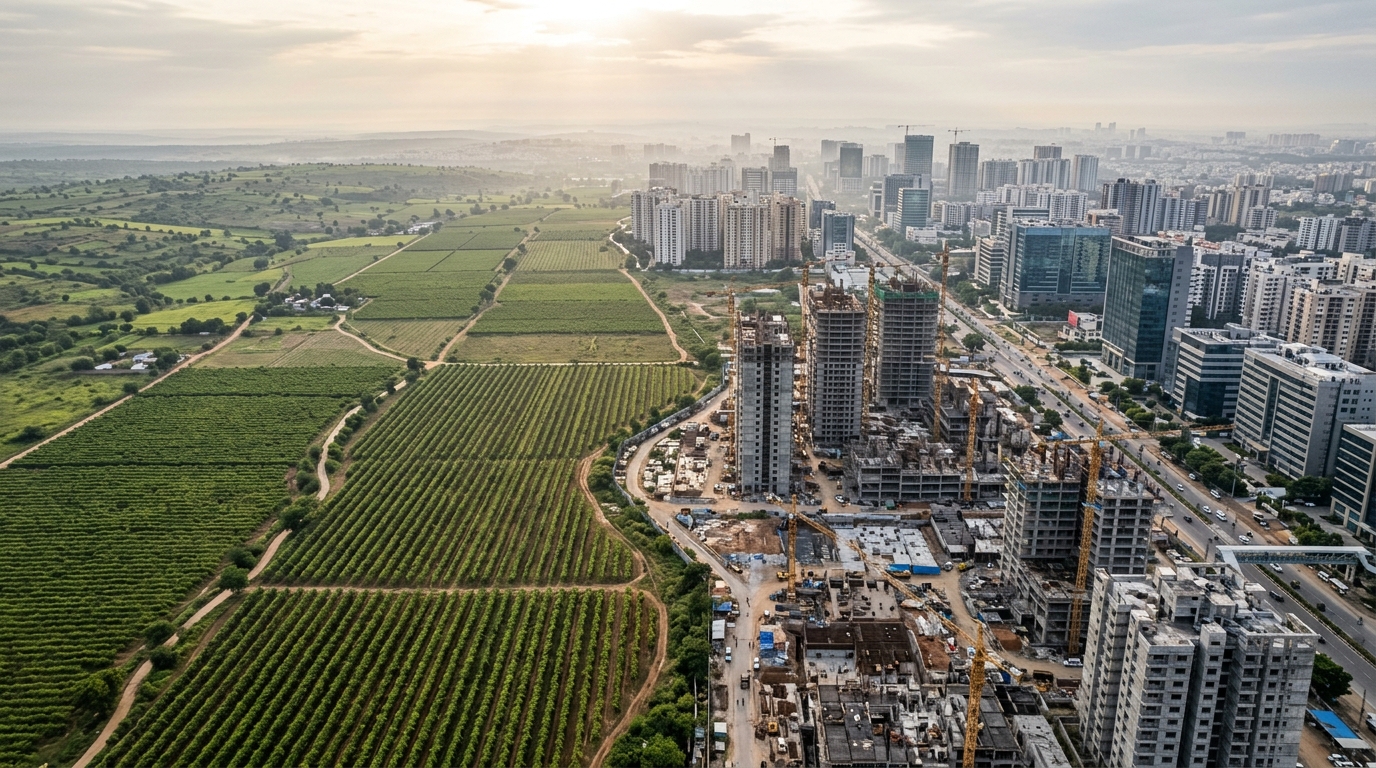
The Fading Aroma of Grapes: A Tale of Two Hyderabads
The Times of India paints a poignant picture: the once-fertile lands that nurtured Hyderabad's vineyards are now succumbing to the relentless march of concrete and steel. For generations, these sprawling estates were not just agricultural hubs but sources of livelihood and a unique identity for the city's periphery. Imagine the quiet mornings, the careful tending of vines, and the sweet, earthy scent of ripening grapes, a stark contrast to the cacophony of construction that now defines these areas.
This isn't just about lost agricultural land; it's about the erosion of a way of life. Families who have cultivated these vineyards for decades are finding their ancestral lands eyed by developers. The narrative is one of economic pressure, where the allure of quick, substantial profits from land sales often outweighs the slower, more traditional returns from viticulture. This forces a difficult choice: adapt or be displaced.
Ground Zero: The Impact on Buyers, Investors, and Developers
For homebuyers and investors, this shift presents a double-edged sword. On one hand, the relentless development fuels demand for residential and commercial spaces, particularly in emerging growth corridors. Areas that were once sleepy hamlets are now being re-imagined as prime real estate destinations. Developers, naturally, are at the forefront, acquiring land at escalating prices and launching ambitious projects. This often leads to a surge in property values, a boon for those who bought early.
However, the displacement of vineyards also raises questions about sustainability and the long-term character of the city. The increased competition for land can drive up acquisition costs for developers, potentially impacting affordability for end-users in the long run. Furthermore, the loss of green spaces, even agricultural ones, contributes to environmental concerns like increased temperatures and reduced biodiversity. For local communities who were once farmers, the transition can be challenging, often leading to a need for reskilling and adaptation to new economic realities.
Buyers: Face rising property prices but gain access to modern infrastructure and amenities in newly developed zones.
Investors: Can capitalize on appreciating land values and rental yields, but need to navigate the speculative nature of the market.
Developers: Benefit from high demand and land availability (though increasingly contested), but face rising input costs and regulatory hurdles.
The Evolving Hyderabad: Future Hotspots and Emerging Trends
Hyderabad's growth trajectory shows no signs of slowing. The city's established IT hubs like Gachibowli and the Financial District continue to attract talent and businesses, driving demand for premium residential and commercial properties. These areas, having already undergone significant transformation, are now characterized by high-rise apartments, corporate parks, and a bustling urban lifestyle.
Beyond these established centers, the former vineyard lands are themselves becoming the new frontier. Areas adjacent to Gachibowli and the Financial District, particularly those like Kokapet, are witnessing rapid development. This is driven by the availability of large contiguous land parcels and strategic government planning. Expect to see more mixed-use developments, integrated townships, and high-end residential projects emerging in these revitalized landscapes. The challenge for the city will be to balance this rapid urbanization with the preservation of green cover and the creation of sustainable, livable communities that offer more than just concrete.
Source: The Times of India